

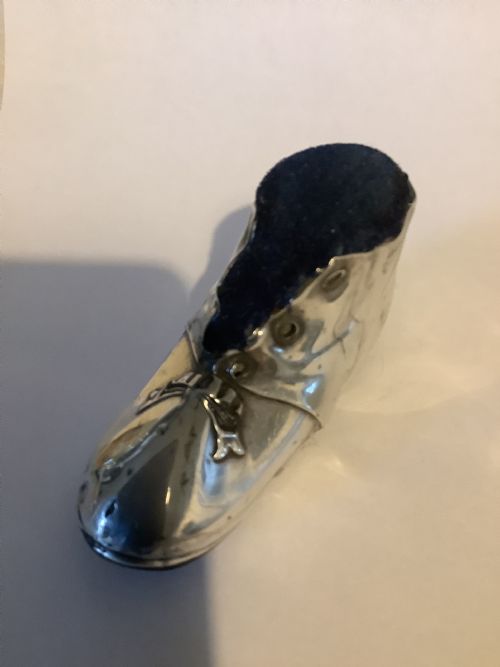


Silver Shoe Novelty
A silver shoe novelty brings a touch of whimsy to the desk or dressing table, offering both decorative charm and practical function.
Silver Shoe Novelty
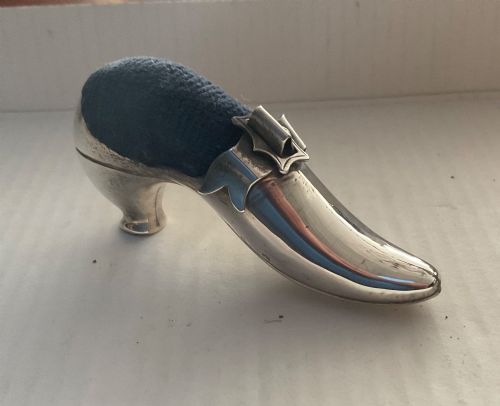
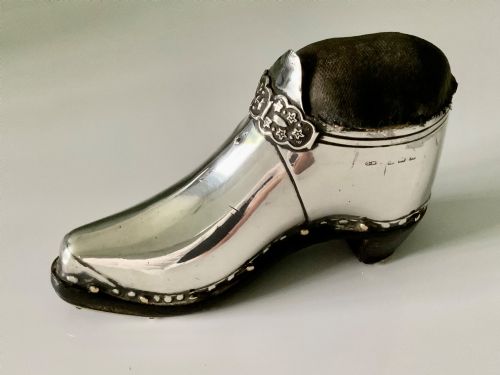
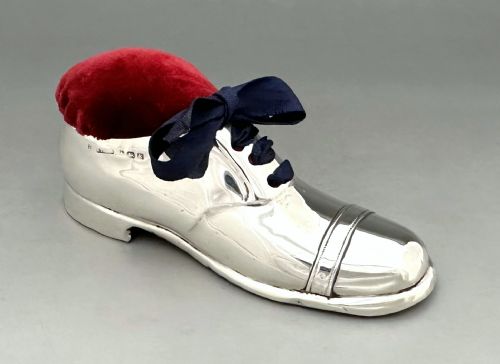
A silver shoe novelty takes the form of a miniature boot, clog, or roller skate, often serving as a pin cushion or small container. These pieces date principally from the Victorian and Edwardian periods, reflecting a Victorian appetite for playful silver objects.
Originating largely from British workshops and silversmiths, these items combine utilitarian purpose with detailed miniature craftsmanship. Collectors find them in both solid sterling silver and silver plate.
Assessing quality and detail
The distinction between tiers rests on the crispness of the chasing and stamping, which defines the laces, stitching, and texture of the miniature shoe. Pieces with distinct maker marks and clear hallmarks command greater attention from collectors.
The condition of the interior velvet and the absence of distortion to the thin silver walls dictate the overall desirability of a pin cushion. Finer examples retain their original structural integrity and full definition in the metalwork.
Some Edwardian silversmiths went so far as to craft miniature roller skates complete with tiny metal wheels and velvet pads.
Adie & Lovekin·Levi & Salaman·S. Blanckensee & Sons·Elkington
The Silver Shoe Novelty Glossary
- Hallmark
- Official marks stamped on precious metals indicating the standard of purity, the assay office, and the year of manufacture. These stamps allow historians to date silver shoe novelties accurately.
- Pin cushion
- A small stuffed pad designed to hold pins and needles securely. In novelty silver, these pads are fitted snugly into the cavity of the shoe.
- Sterling silver
- An alloy of silver containing 92.5 percent mass of silver and 7.5 percent mass of other metals, usually copper. This standard is frequently encountered in Edwardian shoe pieces.
- Silver plate
- A layer of silver applied to a base metal such as copper, nickel silver, or electroplated nickel silver. It offered a bright finish at a lower cost than solid sterling.
- Chasing
- The art of embossing or indenting metal from the front using hammer and punches. Silversmiths used this technique to delineate buckles and seams on miniature boots.
Silver Shoe Novelty: Frequently Asked Questions
What were silver shoe novelties used for?
These items served functional roles on dressing tables and desks, frequently acting as pin cushions for sewing or as small trinket containers.
Their whimsical designs brought lighthearted character to domestic spaces while maintaining practical utility for the owner.
How do I identify an Edwardian piece?
Edwardian items often display hallmarks corresponding to the reign of King Edward VII, spanning from 1901 to 1910.
The style tends to mirror late Victorian exuberance, focusing heavily on detailed miniature forms and novelty sewing accessories.
Are these shoes made of solid silver?
The materials vary between solid sterling silver and silver plate over nickel silver or other base metals.
Assay office hallmarks on the exterior generally confirm solid silver construction, whereas unmarked pieces often prove to be plated.
How should I clean my silver shoe?
Gentle dusting with a soft cloth preserves the delicate metal surfaces and any original velvet inserts.
Harsh silver dips can damage fabric components and remove desirable patination built up over decades of handling.