


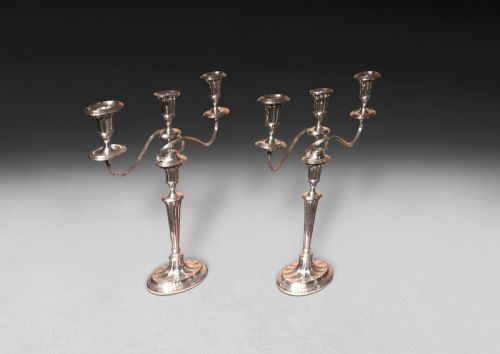


Silver Sheffield Plate Candelabra
Silver sheffield plate candelabra bring the warm lustre of fused metal and period proportion to a dining table.
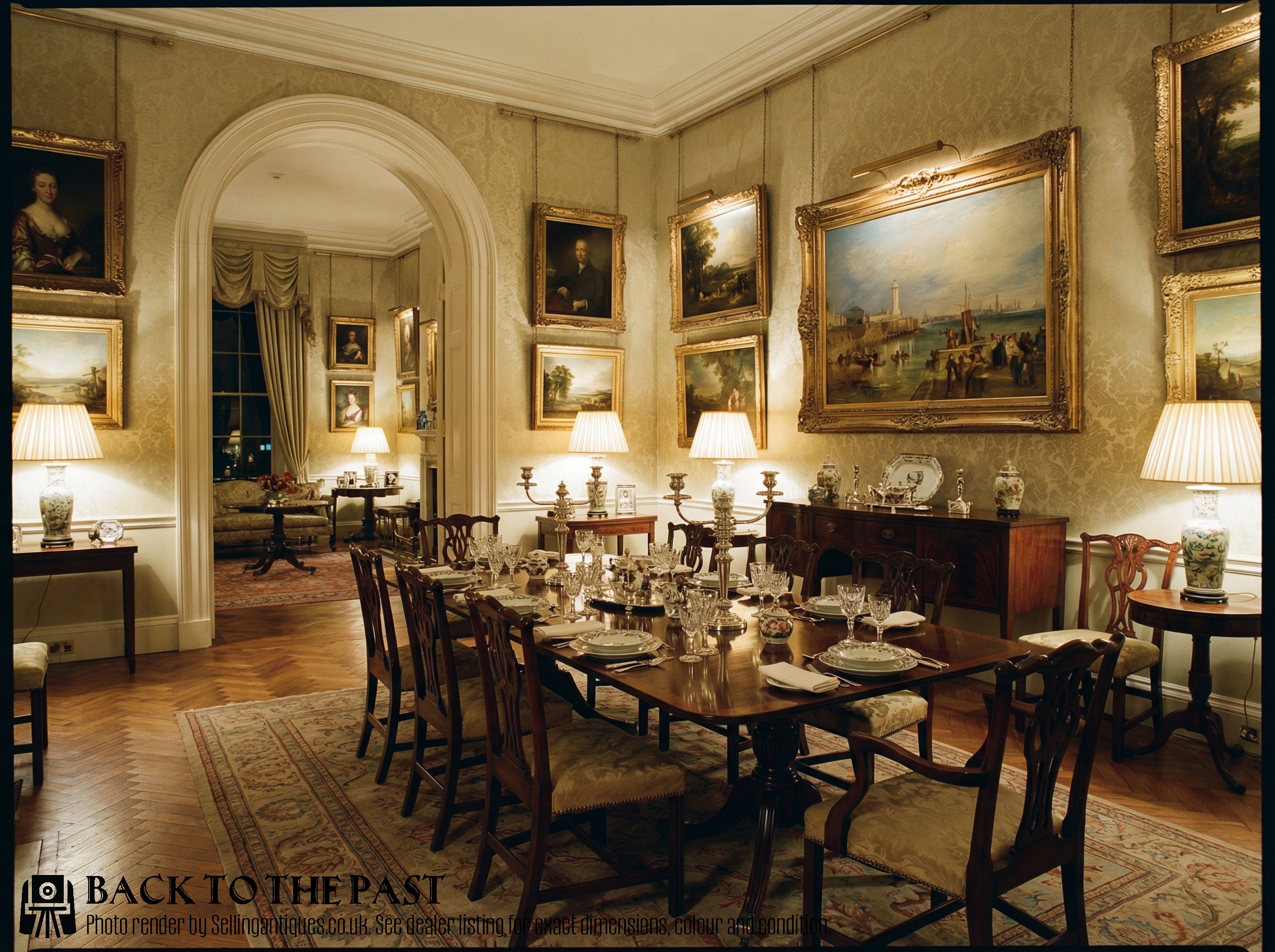
Silver Sheffield Plate Candelabra
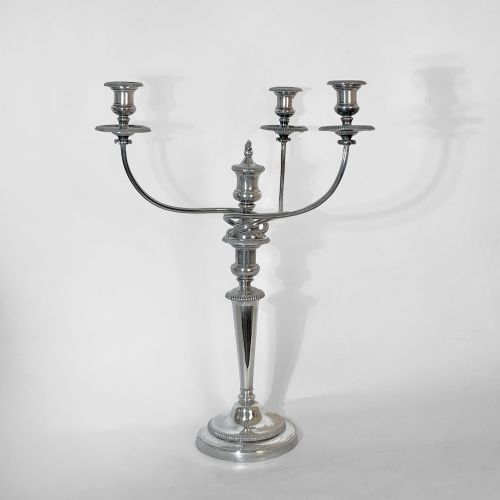
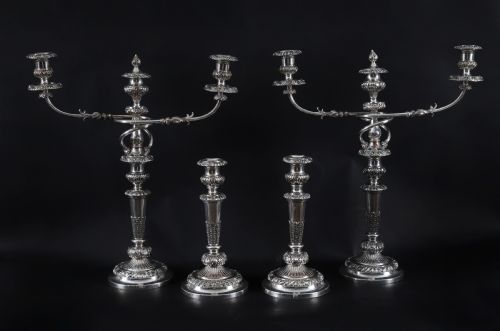
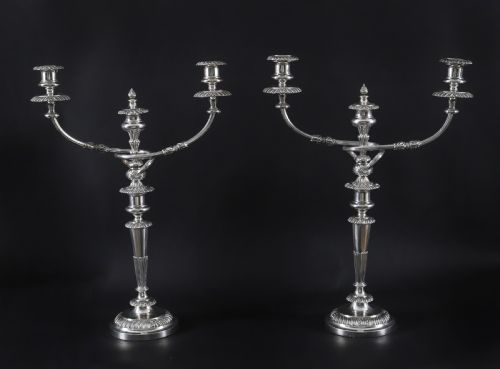
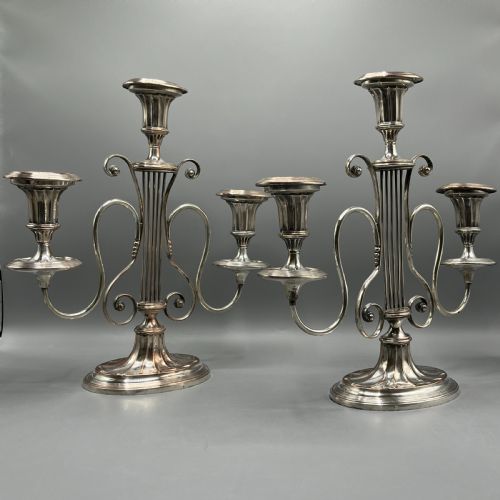
You will encounter pairs, suites, and individual examples taking the form of three-light and four-light candelabra, alongside convertible candlesticks with branch extensions. Forms range from lyre-shaped centrepieces to palm tree dishes and circular based designs originating from Sheffield.
The aesthetic vocabulary draws heavily on neoclassical restraint and later Victorian naturalism, matching the decorative tastes of their original dining room settings.
Method and material
Old Sheffield plate relies on a mechanical fusion process where a thin sheet of silver is fused to a thicker copper ingot under heat and pressure before being rolled into sheets. This composite metal was then beaten, spun, or shaped into branches and shafts.
Later nineteenth-century examples often utilise EPNS, which is electroplated nickel silver, replacing the older fusion technique with an electrical deposition method. Cast elements such as nozzles and drip pans were soldered to the main body.
Listings feature materials ranging from traditional copper and Old Sheffield Plate to later silver plate and EPNS.
Assessing the work
The distinction between tiers rests upon the crispness of the chased and applied ornamentation and the retention of the original silver layer over the copper base. Heavier gauge metal provides structural stability to the branching arms, preventing the drooping often seen in lighter examples.
Makers who incorporated copper wire edging or carefully concealed seams demonstrate superior workshop competence. The integrity of the conversion components, where detachable branches meet the socket, also indicates the level of original care.
Matthew Boulton·Blagden Hodgson And Co·Elkington·F Green And Sons
The Silver Sheffield Plate Candelabra Glossary
- Old Sheffield Plate
- A composite material made by fusing silver and copper together before rolling, developed in the eighteenth century. It forms the foundation of the earliest pieces in this category.
- EPNS
- Electroplated nickel silver, introduced in the nineteenth century as a modern alternative to fusion plating. It provides a uniform surface appearance.
- Candelabra
- A branched candlestick designed to hold multiple taper candles simultaneously. They often feature removable branch units that allow the base to function as a single candlestick.
- Drip pan
- A small saucer-shaped collar placed beneath the candle nozzle to catch melting wax. These components are frequently detachable for cleaning.
- Beading
- A decorative chased or applied border consisting of small hemispherical dots resembling beads. It appears commonly on Georgian and Regency mounts.
Silver Sheffield Plate Candelabra: Frequently Asked Questions
Are the branches removable?
Many three-light and four-light examples feature central finials or socket inserts that allow the upper branch assembly to lift clear of the lower candlestick base.
This modular construction was common practice, permitting owners to use the lower portion as a simple single candlestick when dining arrangements required lower lighting.
How do I spot electroplate versus fused plate?
Look closely at exposed edges or wear points where the underlying metal shows through; old fused plate reveals a reddish copper tint, whereas electroplate typically displays a greyish nickel or brassy base.
Fused pieces also frequently exhibit subtle manufacturing scars or doubling lines where the silver sheet met during fabrication.
What period are most pieces from?
The inventory spans the late eighteenth century through the Victorian era, with significant representation from the Georgian and Regency periods.
Design motifs such as neoclassical urns or heavy floral naturalism help anchor individual items within these broader historical brackets.