

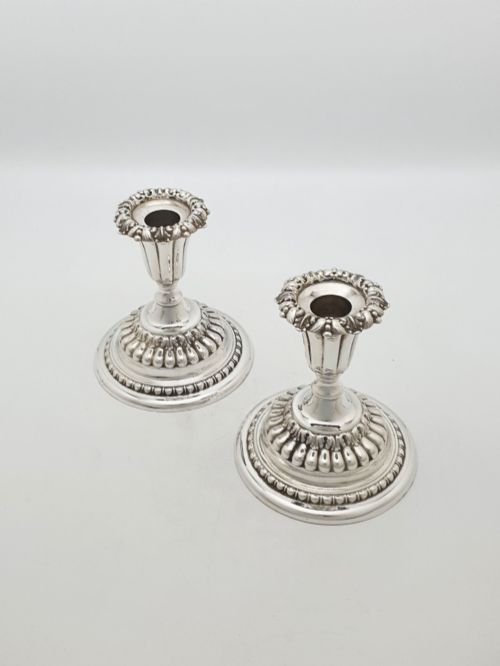
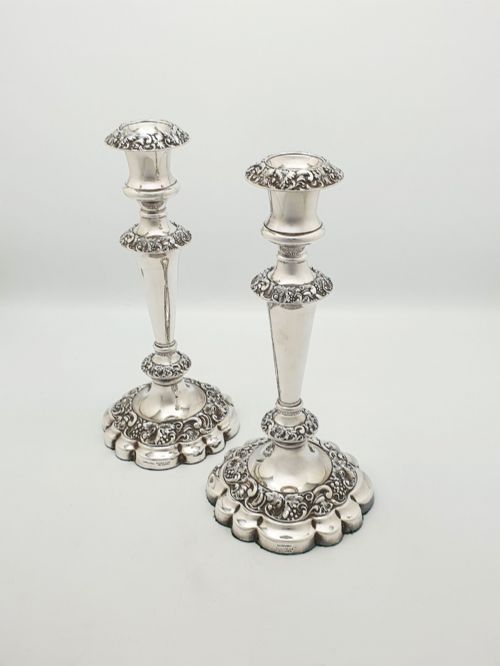
Silver Plate Candlestick Pair
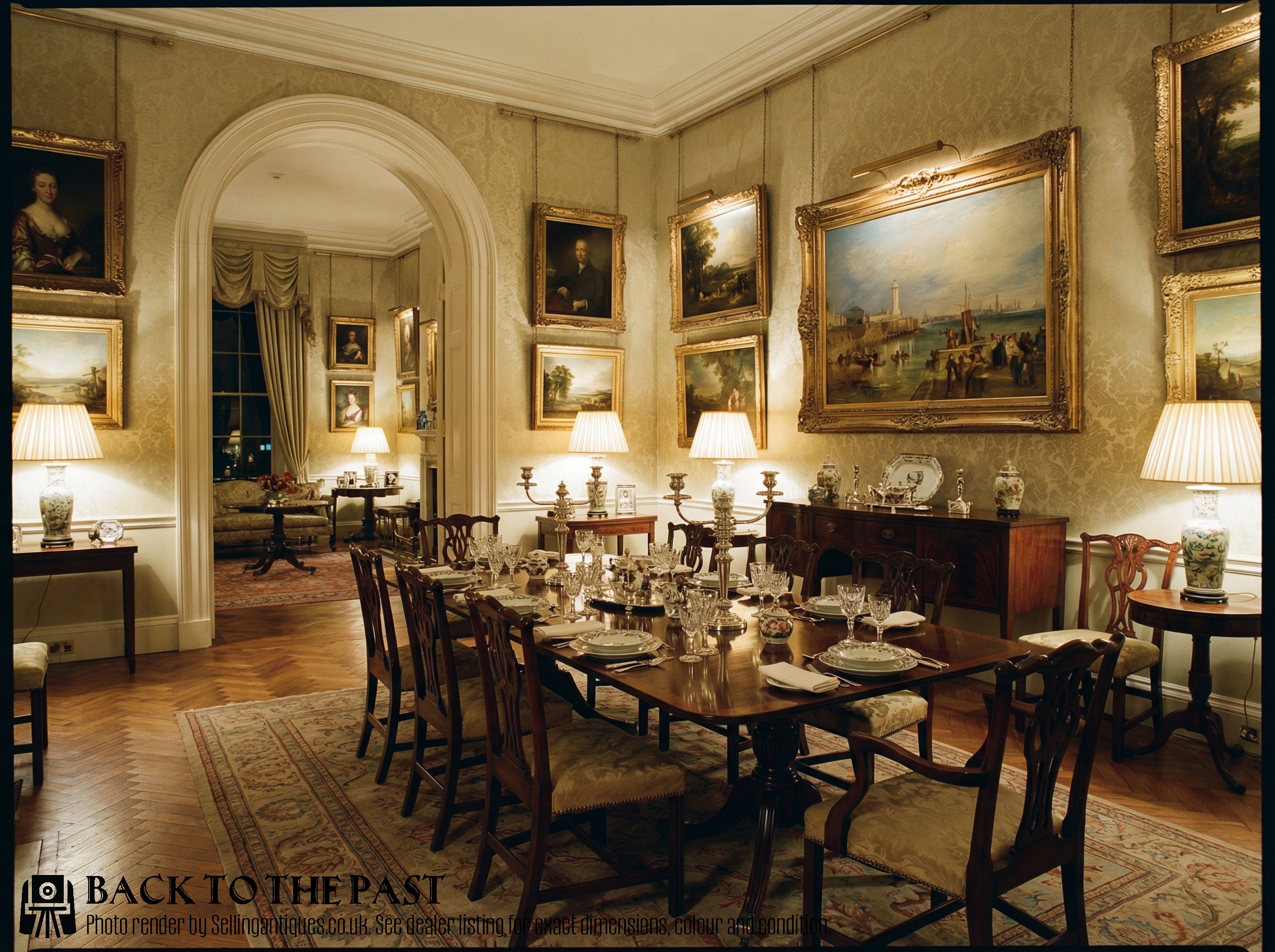
A silver plate candlestick pair brings period presence to a dining table or mantelpiece, spanning elegant Georgian engineering to ornate Victorian designs.
Silver Plate Candlestick Pair
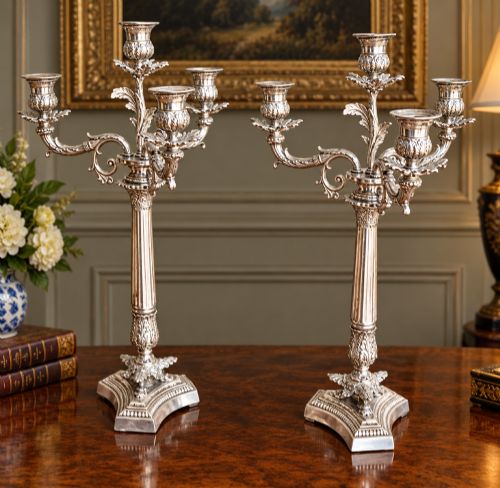
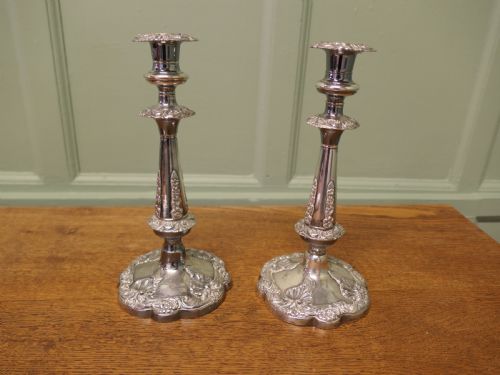
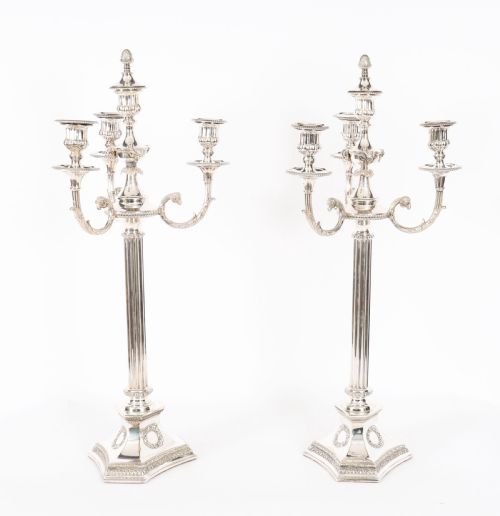
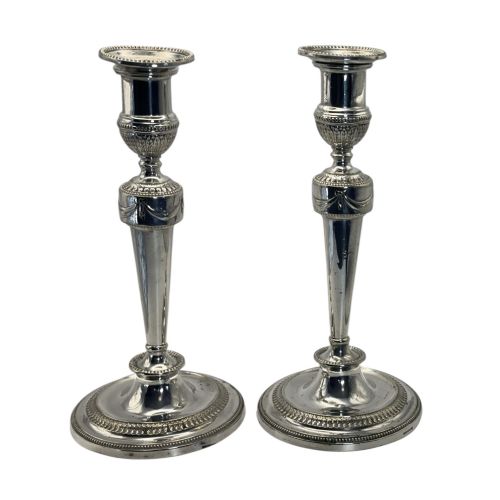
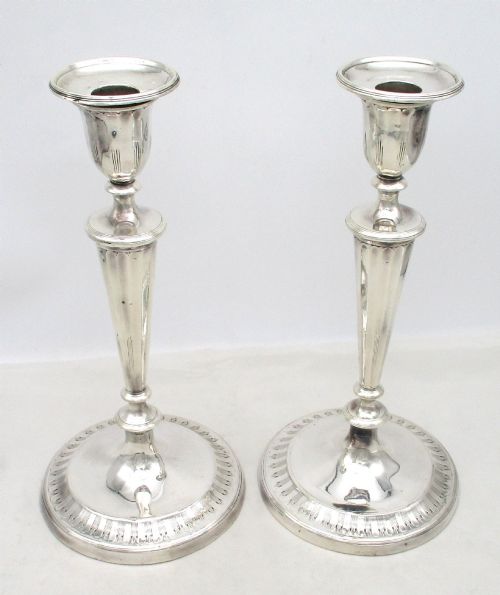
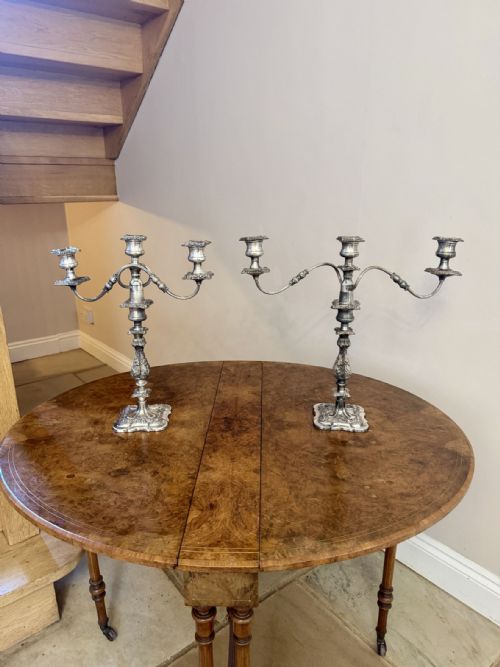
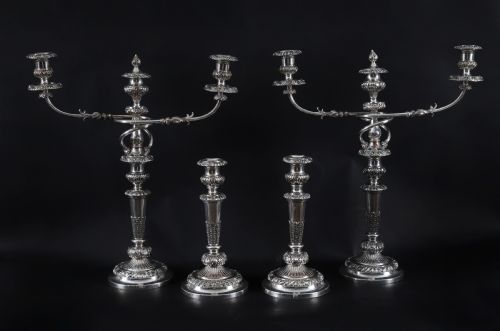
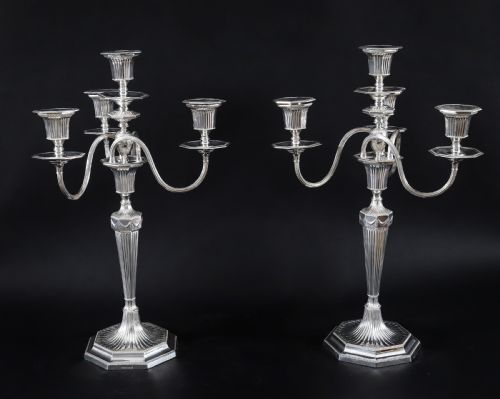
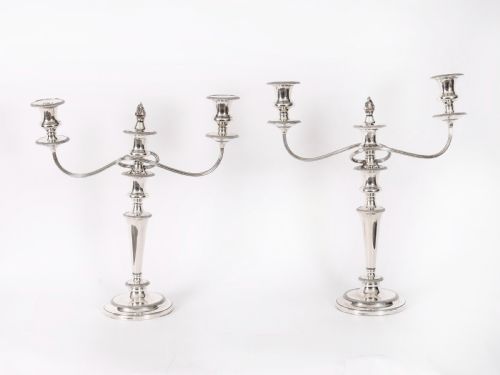
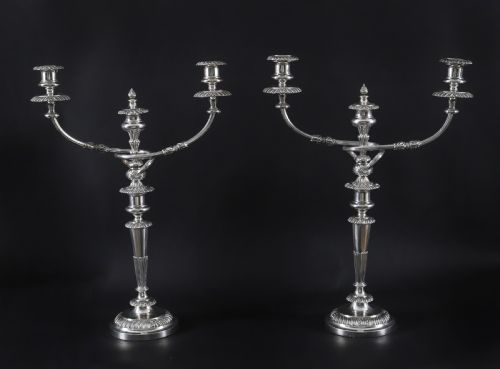
A silver plate candlestick pair brings together matched illumination pieces created across the eighteenth, nineteenth, and early twentieth centuries. The selection on this page shows everything from modest chamber sticks to towering column forms and multi-branch candelabra suites. Georgian and Old Sheffield examples share space with heavily cast Victorian revival pieces and clean-lined Art Deco interpretations.
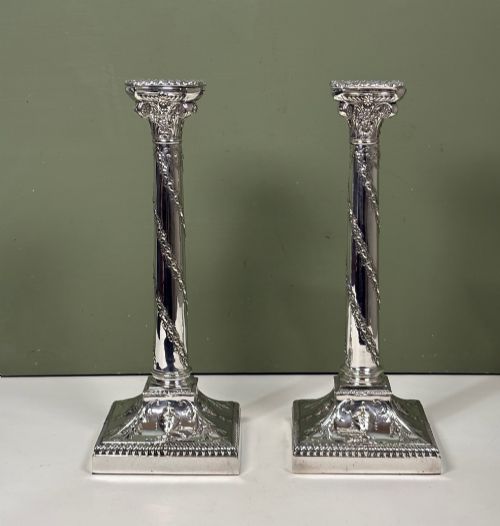
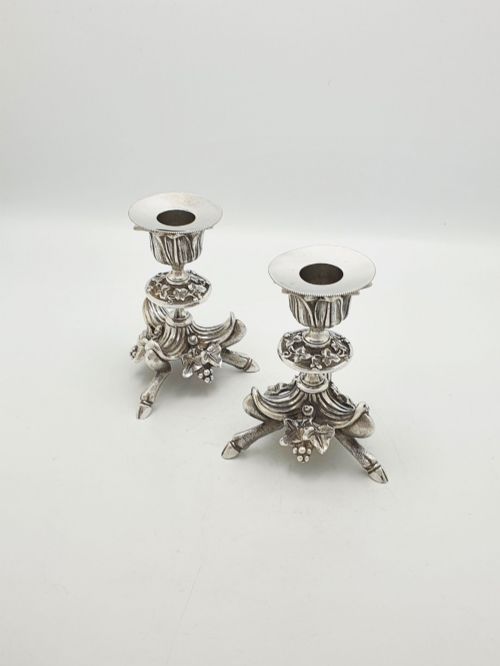
Most pieces encountered here originate from the Victorian and Edwardian eras, reflecting domestic demand for formal dining accessories. These pairings frequently include convertible elements, allowing a standard shaft to accept branch attachments for multiple candles. Buyers also discover miniature examples, travelling sets, and architectural Corinthian column designs intended for formal reception rooms.
Construction and Materials
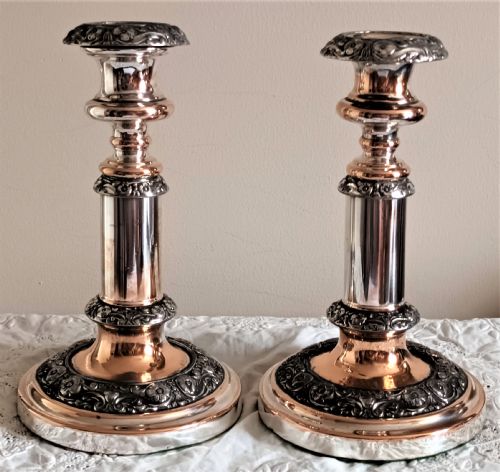
Early items rely heavily on Old Sheffield Plate, a technique fusing a thin sheet of silver to a thicker copper core by heat and pressure. Later production adopts electroplated nickel silver, applying silver via an electrical current over base metal alloys like copper or brass.
Manufacturers reinforced hollow shafts with weighted materials such as resin, pitch, or wooden inserts to provide stability on the table. Component parts including capitals, stems, and heavy weighted bases were soldered or fitted together before final plating and chasing.
Listings feature pieces spanning the 18th Century through to the 1930s, utilising materials from copper and brass to electroplated nickel silver.
Judging Quality
The standard of a silver plate candlestick pair rests in the crispness of its cast detail and the integrity of the underlying metal. Superior examples exhibit deep, clean chasing on foliage, fluting, or figural elements rather than softened contours from worn dies.
Weight distribution indicates quality, with better items offering a heavy, balanced feel rather than a light, tinny construction. The survival of the original silver layer across high-wear ridges and edges distinguishes carefully preserved specimens from heavily scrubbed or re-plated alternatives.
Mappin & Webb·Hawksworth Eyre·Garrard & Co·Matthew Boulton·WMF·Walker & Hall·Elkington & Co·Thomas Bradbury·William Hutton
The Silver Plate Candlestick Pair Glossary
- Old Sheffield Plate
- A composite material formed by fusing silver to a copper base before rolling into sheets, visible where copper shows through wear along edges.
- Electroplated Nickel Silver
- A base alloy of copper, nickel, and zinc coated with a layer of pure silver through an electrolytic process.
- Corinthian Column
- A classical architectural column form featuring acanthus leaves around the capital, widely used for Victorian and Edwardian shafts.
- Chamber Candlestick
- A low candle holder fitted with a pan to catch dripping wax and a ring handle for carrying from room to room.
- Candelabra
- A decorative lighting fixture featuring multiple branching arms extending from a central stem to support several candles.
Silver Plate Candlestick Pair: Frequently Asked Questions
What is Old Sheffield Plate?
Old Sheffield Plate is an early manufacturing method created by fusing a thin layer of silver directly onto a copper ingot. Craftsmen then rolled the combined metals into workable sheets.
This technique predates nineteenth-century electroplating and produces a subtle warmth where the copper undertone peeks through high points.
Are these candlesticks filled?
Most antique candlesticks are hollow to save metal and cost, requiring an interior core of resin, plaster, pitch, or wood for stability. This weighting keeps the centre of gravity low so the piece stands securely.
Original green baize or felt covering the base often conceals the weighted interior and protects furniture surfaces.
How can I date my candlesticks?
Dating relies on stylistic clues, manufacturing techniques, and any maker marks stamped into the metal base. Georgian pieces favour neoclassical lines, while Victorian examples often embrace heavier rococo or column revivals.
The transition from fused Old Sheffield Plate to electroplating around the mid-nineteenth century provides a reliable chronological marker.