


Silver Serving Fork Spoon
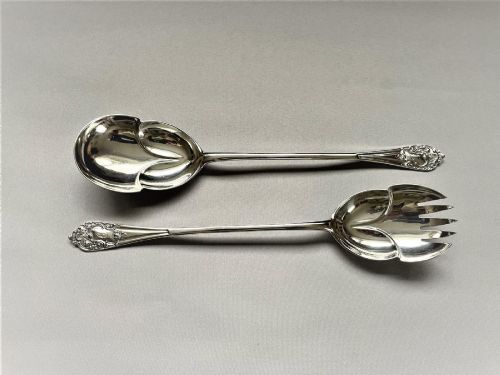
These silver serving fork spoon pieces bring distinction to any dining table, pairing practical utility with enduring craftsmanship.
Silver Serving Fork Spoon
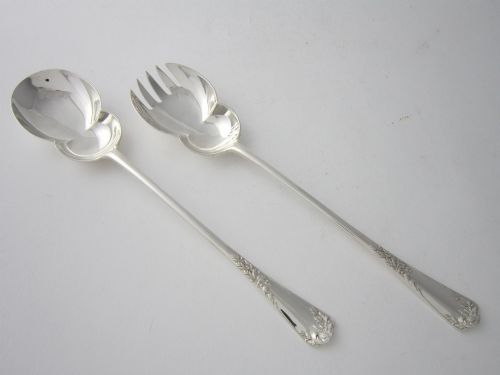
A silver serving fork spoon set represents the functional elegance of dining across multiple historical periods, appearing most frequently in forms designed for salads, cold meats, and condiments. Buyers exploring this category encounter paired utensils intended for formal hospitality, often matched in design and occasionally housed in bespoke presentation cases.
The selection encompasses Victorian and Edwardian examples alongside George III pieces and continental work from Russian and French makers. Salad servers dominate the available forms, accompanied by smaller condiment sets and comprehensive canteens of cutlery that include dedicated serving implements.
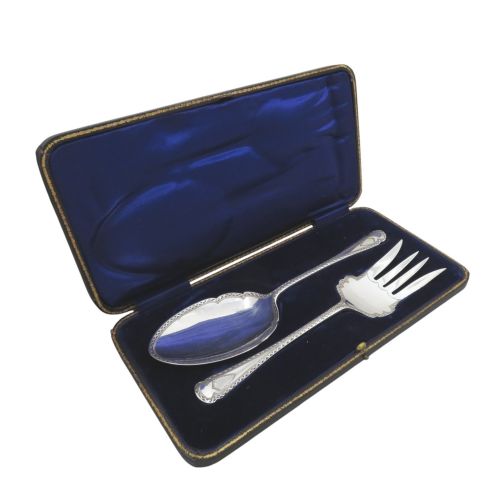
Materials extend beyond standard metalwork to incorporate glass, horn, enamel, and cut crystal elements, reflecting the diverse manufacturing approaches of the nineteenth and early twentieth centuries. Original fitted cases lined with silk, velvet, or leatherette frequently accompany these sets, preserving the pieces through generations.
Materials and construction methods
Sterling silver and standard silver form the primary structural base for these utensils, shaped through traditional smithing and casting techniques. Handles often integrate decorative motifs, rat tail reinforcements, or cloisonne enamel work to elevate the visual appeal of the metal.
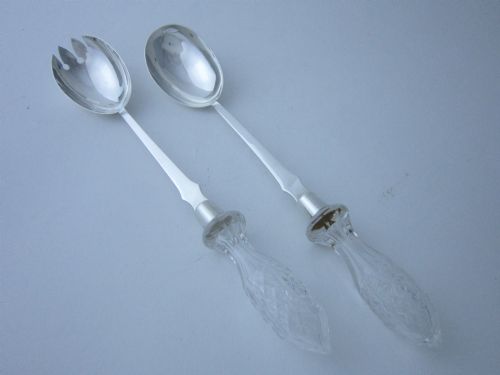
Complementary materials such as cut glass, polished horn, and crystal combine with the silver components, particularly in salad servers where bowls require alternative textures. Artisans utilised fitted boxes lined with velvet and silk to house these delicate sets securely.
Materials appearing across the inventory include sterling silver, cut glass, velvet, silk, leatherette, enamel, and horn.
Distinctions in quality and execution
Quality in these implements rests upon the weight of the silver, the crispness of any chased or enamelled decoration, and the integrity of the joints between handles and bowls or tines. Superior examples display balanced proportions and maker marks that denote reputable workshops.
The inclusion of original fitted cases lined with silk or leatherette alters the desirability of a set, as does the survival of secondary materials like glass or horn in undamaged condition. Pieces exhibiting careful hand-finishing stand apart from mass-produced equivalents.
Walter and John Barnard·Thomas Bradbury and Sons·Gilmer of Bath
The Silver Serving Fork Spoon Glossary
- Rat tail
- A strengthening tongue of metal running down the back of a spoon bowl from the handle. This traditional feature provides structural reinforcement to frequently used serving implements.
- Cloisonne
- An enamelwork technique where thin metal wires form compartments on a silver surface before coloured glass paste is applied and fired. It creates vibrant, patterned ornamentation.
- Trefid end
- A spoon or fork terminal shaped like a three-lobed fan, characteristic of late seventeenth and early eighteenth-century cutlery designs. This distinct silhouette appears in revival pieces.
- Canteen
- A fitted box or chest designed to store a complete set of cutlery and serving utensils securely. These containers are often lined with velvet or silk.
- Serveware
- Utensils and vessels specifically created for serving food at the table rather than individual dining. This category includes large forks, spoons, and combined sets.
Silver Serving Fork Spoon: Frequently Asked Questions
What were silver serving fork spoon sets used for?
These matched sets were designed for transferring food from communal dishes to individual plates during formal meals. Salad servers and cold meat forks handled specific courses with appropriate scale and decorum.
Larger gatherings demanded specialised cutlery to maintain dining etiquette. The inclusion of matching spoons and forks ensured a cohesive tablescape during Victorian and Edwardian dinners.
How do I care for antique silver serving utensils?
Regular, gentle cleaning with a specialist silver cloth maintains the lustre of the metal without abrasive wear. Storing pieces in their original fitted cases protects them from tarnishing agents in the air.
Avoiding harsh chemical dips preserves any delicate enamel, horn, or glass components attached to the silver. Hand washing in warm, soapy water is recommended after occasional use.
Are fitted cases common with these sets?
Many Edwardian and Victorian serving sets survive within their original velvet, silk, or leatherette lined boxes. These fitted enclosures kept the fork and spoon secure between formal dining occasions.
Finding a set complete with its period case enhances the historical context of the pieces. The interior lining often bears the stamp of the original retailer.
How can I tell Victorian pieces from Edwardian ones?
Victorian silver often displays heavier ornamentation and robust construction reflecting mid-to-late nineteenth-century tastes. Hallmarks stamped into the metal provide exact assay office years and maker identities for precise dating.
Edwardian designs tend toward lighter, neoclassical or revival aesthetics following the turn of the twentieth century. Comparing the hallmarked date letters against standard reference tables resolves any uncertainty.