





Silver Service Urn
A silver service urn brings a dignified centrepiece to the table, combining heavy metalwork with practical tea-making tradition.
Silver Service Urn
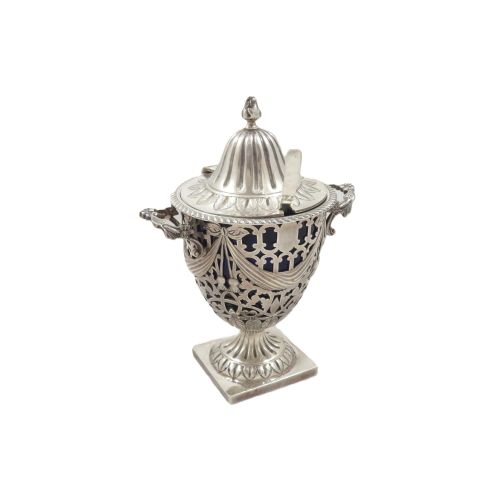
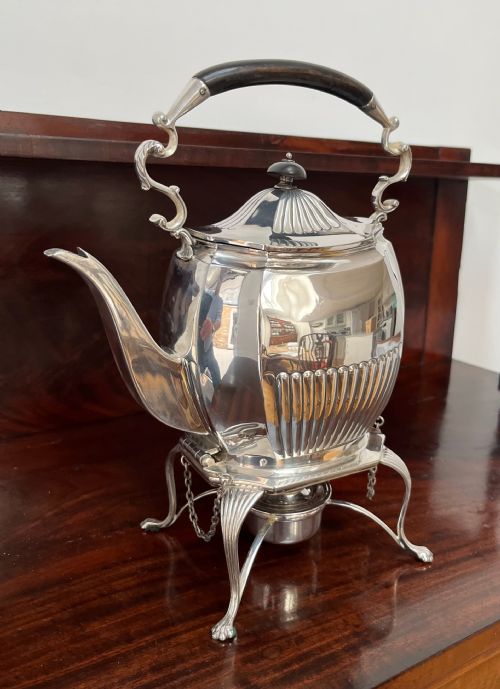
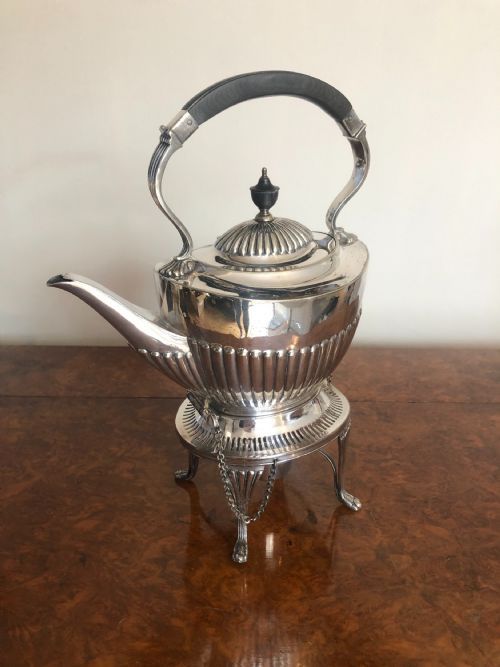
When you search for a silver service urn, you are looking at substantial vessels designed for heating water or serving tea at the table. These pieces include spirit kettles on stands with burners, sugar baskets with lids, and tea kettles.
You are most likely to meet Edwardian spirit kettles on stands, alongside Victorian examples dating back to eighteen eighty. These items combine silver plate or sterling silver with functional metal frames and heating burners.
The selection ranges from nineteen hundred productions to nineteen thirty designs, showing how tea service equipment evolved in form while keeping its metal construction.
How they were made
Makers shaped these vessels using sterling silver and silver plate over base metal, creating durable bodies capable of holding boiling water. Frames and stands integrate sturdy metal engineering to support the weight of the filled kettle above a spirit burner.
Detailing often incorporates contrasting elements such as ebony, bone, or cobalt glass inserts. These materials provide heat insulation for handles and add refined decorative accents to the metalwork.
Silver Service Urn Retail Price Guide 2026
Typical asking prices for silver service urn among the pieces listed under this phrase on Sellingantiques today, from the lower quarter to the upper quarter. They describe what is for sale here now, not the wider market.
Listings feature items spanning from eighteen eighty through the Edwardian era up to nineteen thirty.
What varies in quality
The distinction between standard production and superior craftsmanship rests in the weight of the metal and the integrity of the stand mechanism. Finer examples retain complete matching burners and secure framing that holds the kettle firmly without wobble.
Maker attribution elevates certain pieces, with workshops like Fenton Brothers or Frederik Ellis Tim demonstrating higher precision in their silver plating and structural balance.
Fenton Brothers·Frederik Ellis Tim And Co
The Silver Service Urn Glossary
- Spirit Kettle
- A water kettle mounted on a dedicated metal stand above a small spirit burner for heating. This apparatus allowed hosts to keep water boiling at the tea table.
- Silver Plate
- A thin layer of silver bonded to a base metal foundation. It provided the visual appeal of solid silver at a more accessible cost.
- EPNS
- Electroplated Nickel Silver, a common base metal composition used under silver plating. It formed the robust structure for many Edwardian tea vessels.
- Sugar Basket
- An open or lidded container designed for holding sugar lumps as part of a formal tea service. These often matched the aesthetic of the accompanying kettle and stand.
Silver Service Urn: Frequently Asked Questions
What is a spirit kettle?
A spirit kettle is a tea kettle mounted on a metal stand with an integrated burner underneath. It was designed to keep water hot throughout a long tea service.
The burner typically runs on methylated spirit, allowing the host to boil or warm water directly at the table without returning to the kitchen.
How do I date these pieces?
Dating relies on hallmarks stamped on sterling silver or style markers found in Edwardian and Victorian designs. Silver plate items often rely on registration marks or maker stamps rather than official assay office dates.
Examining the construction of the stand and the materials used for handle insulators also helps place a piece within its manufacturing era.
Are these kettles functional?
Many spirit kettles remain structurally sound and capable of holding water, though modern users often treat them as decorative display items. The burners can sometimes be fired, but older plating requires careful cleaning.
Checking the interior for corrosion and ensuring the tap or pivot mechanism operates smoothly determines its readiness for actual use.
What is the difference between sterling and plated?
Sterling silver is a solid precious metal alloy containing a high purity standard throughout the entire object. Silver plate applies a thin coating of silver over a supportive base metal like nickel silver.
Heavier vessels often utilise silver plate for structural stability while maintaining the bright appearance of solid silver.