



Silver Service Tray
A silver service tray anchors a formal table, offering a polished stage for tea, coffee, and spirits from the Victorian, Edwardian, and Art Deco eras.
Silver Service Tray
A silver service tray brings structure to entertaining, functioning as both a practical carrier and a decorative centrepiece. When searching for a silver service tray, a buyer encounters forms ranging from grand tea platters to compact cocktail trays and miniature sets.
The pieces on this page span the late nineteenth century through to the mid-twentieth century, with Edwardian and Art Deco examples appearing frequently. Makers and workshops of this period produced serving trays, salvers, and complete drink services in various shapes and sizes.
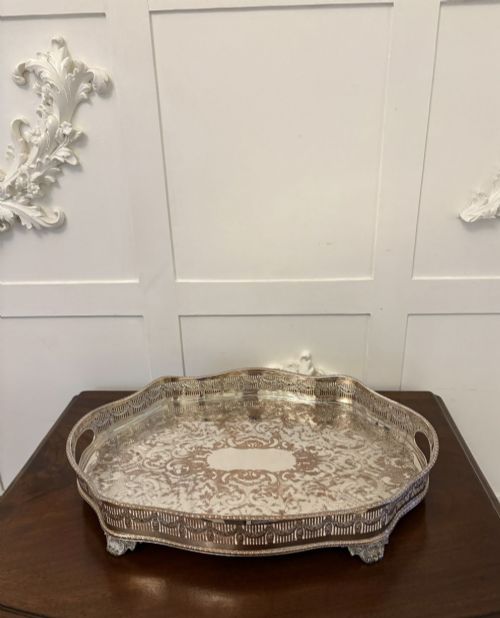
Originating primarily from British workshops, these trays often feature handles, raised rims, and engraved surfaces designed to catch the light. They range from sterling silver display pieces to heavy silver plate and electroplated nickel silver designed for regular use.
How they were made
Silversmiths utilised sterling silver or applied silver plate over base metal and copper foundations, often employing electroplated nickel silver for durability. Manufacturing techniques included hand engraving, casting for raised rims and handles, and integrating porcelain or crystal glass elements into specific serving sets.
Artisans executed intricate surface decoration by hand, scoring detailed floral, geometric, or Secessionist patterns across the metal. Workshops such as Elkington and Mappin and Webb applied rigorous plating standards to ensure long-lasting lustre on base metal cores.
Several makers produced miniature silver tea sets complete with tiny trays, perfectly scaled for dollhouses or cabinet displays.
What varies in quality
Quality rests in the weight of the metal, the crispness of the chased or engraved decoration, and the integrity of the plating over the base metal or copper. Substantial gauge silver and deep, hand-cut engraving separate superior examples from lighter, machine-stamped alternatives.
Makership dictates distinction, as evidenced by established marks from notable workshops whose balanced proportions and secure handle construction ensure both aesthetic and structural endurance. The preservation of the original surface finish without excessive repolishing preserves the integrity of the piece.
Elkington and Co·Mappin and Webb·Walker and Hall·Edward Barnard·Thomas Latham
The Silver Service Tray Glossary
- Salver
- A flat tray, usually round and supported on small feet, used for serving drinks or presenting cards.
- Electroplated Nickel Silver
- A base metal alloy of copper, nickel, and zinc coated with a layer of pure silver through an electrolytic process.
- Gallery tray
- A serving tray featuring a pierced or solid upright metal gallery border around the edge to secure glassware.
- Chasing
- A metalsmithing technique where designs are hammered into the front surface of the metal rather than cut away.
- Sterling silver
- An alloy consisting of pure silver and other metals, traditionally copper, standardised for strength and purity.
Silver Service Tray: Frequently Asked Questions
What is a silver service tray used for?
These trays serve liquids, glassware, and tea or coffee pots during formal gatherings. They protect furniture while offering a stable surface for transport.
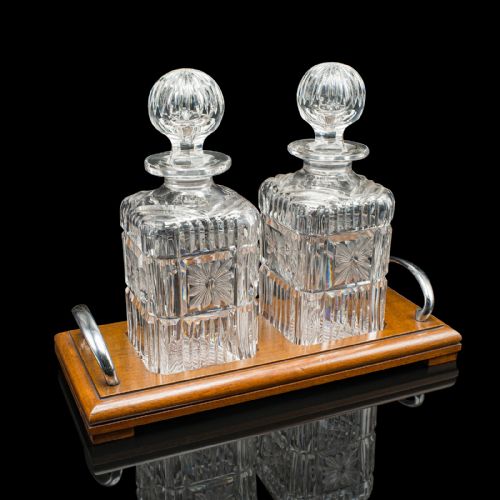
Beyond utility, they function as decorative display pieces on sideboards and coffee tables. Collectors often pair them with matching teapots or decanters.
How do I date a silver tray?
Hallmarks stamped into sterling silver provide specific date letters, assay office symbols, and maker marks. These codes allow precise tracing to the year of manufacture.
Silver plated items rely on style cues, registration numbers, and maker stamps for approximate dating. Art Deco geometric lines and Edwardian floral motifs offer clear period indicators.
Are silver plated trays durable?
Quality silver plate uses a thick layer of silver over a robust base metal like copper or nickel silver. These trays withstand regular handling when cared for properly.
Wear typically appears first on high-friction surface areas where the base metal shows through. Selecting pieces with heavier original plating ensures greater longevity.