



Silver Salt and Pepper Pots
Silver salt and pepper pots bring both refinement and everyday utility to the dining table, taking many forms from standard shakers to playful animal figures.
Silver Salt and Pepper Pots
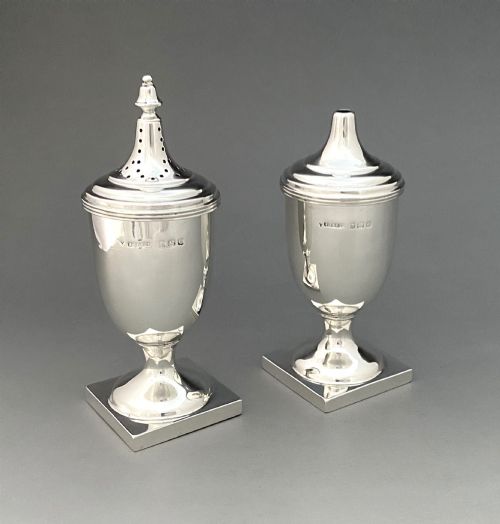
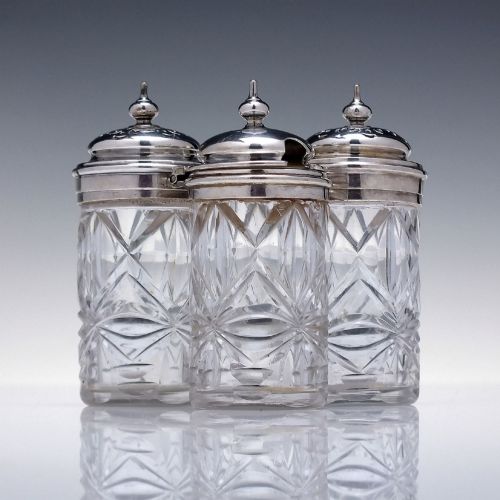
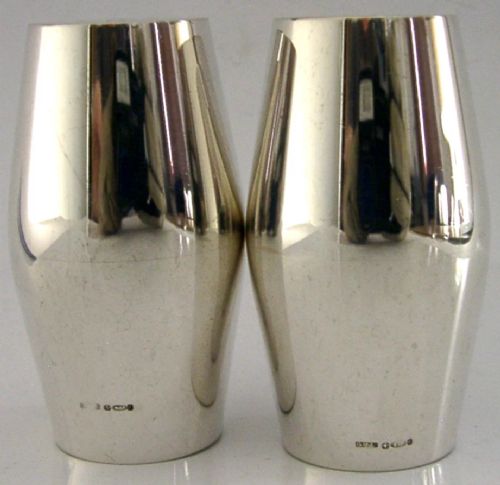
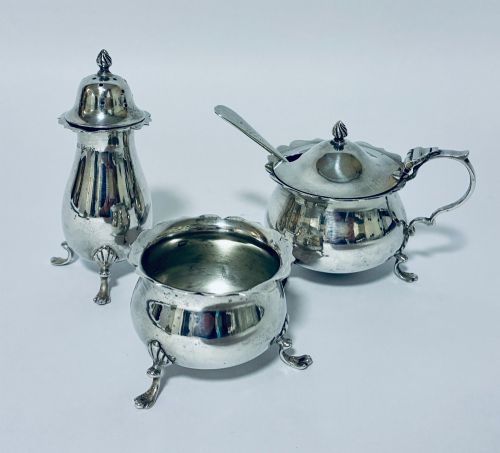
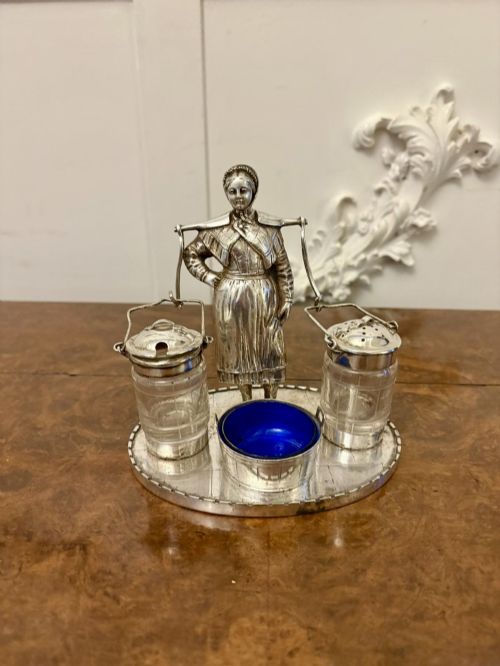
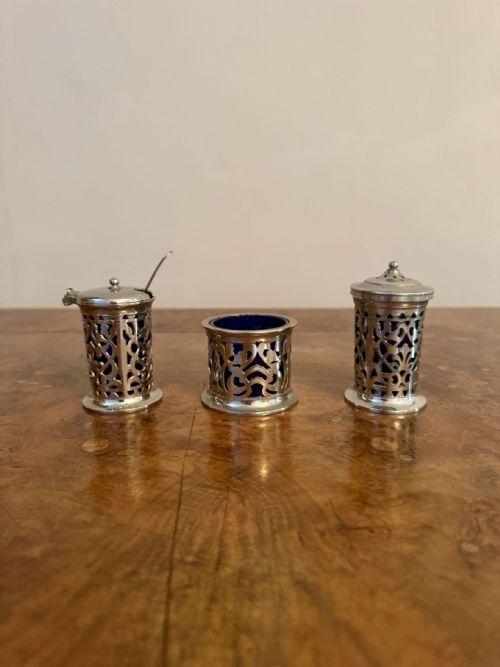
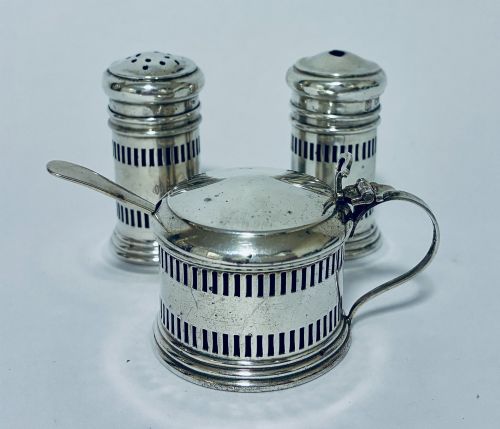
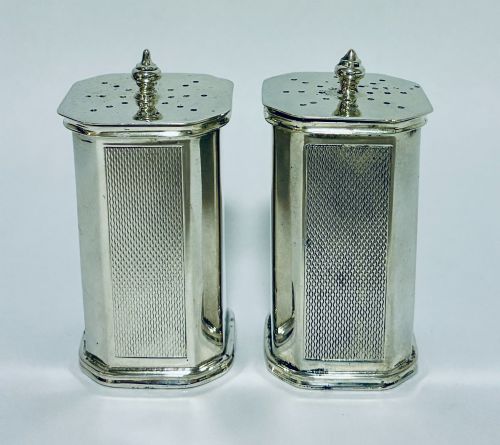
Silver salt and pepper pots appear across multiple periods, with Edwardian and Victorian examples forming a large portion of the selection alongside later Art Deco and mid-century pieces. Buyers encounter various configurations, ranging from individual pepperettes and pairs of table salts to complete cruet sets containing multiple condiment containers.
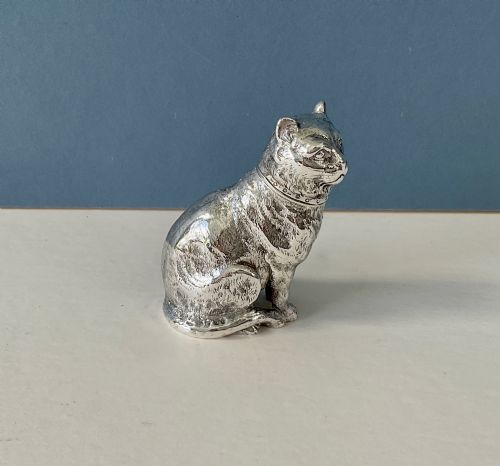
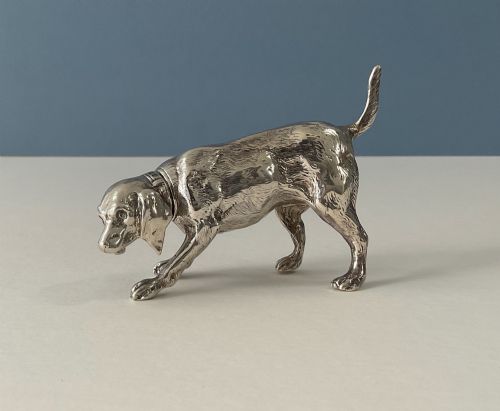
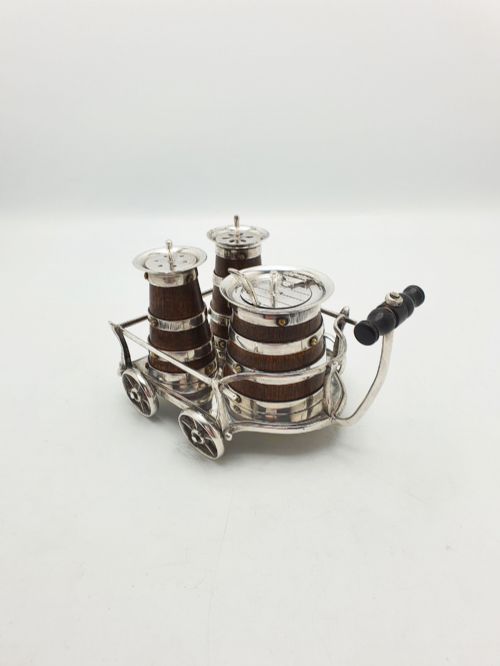
Novelty pieces take whimsical shapes including owls, chicks, dogs, cats, and even carriages or barrels. These functional items served a decorative purpose on the dining table as well as holding seasonings.
Materials and construction
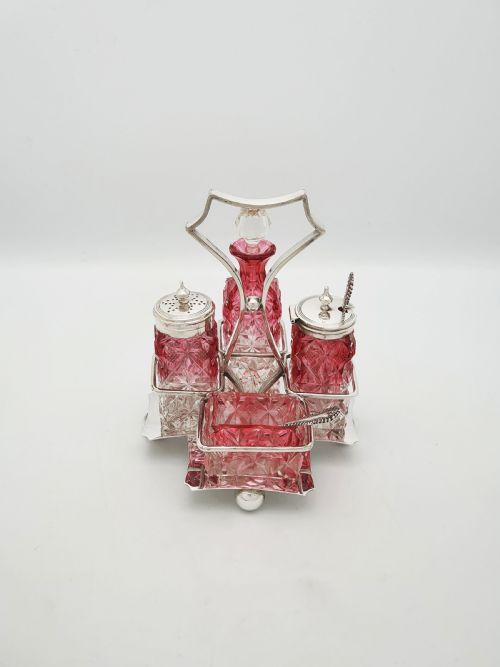
The listings feature sterling silver and silver plate alongside glass components such as cut glass, cobalt glass, cranberry flashed glass, and satin glass. Some examples incorporate velvet linings or wooden elements like oak barrels to house the metal vessels.
Manufacturing techniques include casting, piercing, and hammering, particularly in figural novelty items and structured cruet frames. Makers also combined metals with fitted glassware to create multi-bottle condiment stands.
Silver Salt and Pepper Pots Retail Price Guide 2026
Typical asking prices for silver salt and pepper pots among the pieces listed under this phrase on Sellingantiques today, from the lower quarter to the upper quarter. They describe what is for sale here now, not the wider market.
Listings feature items from the Victorian and Edwardian eras through to the mid-twentieth century, utilising sterling silver, silver plate, and cut glass.
Craftsmanship and distinction
Quality rests upon the crispness of detail in cast figural pieces, such as feather definition on owl or chick pepper pots, compared to softer, worn castings. Maker attribution and well-preserved hallmarks provide clearer distinction among standard sets.
The integration of materials also affects the standard, as seen in heavy sterling silver constructions versus silver plate, and the clarity of cut glass bottles paired with metal stands.
William Neale·Bricks and Sons·Wilmot Manufacturing Co·Sampson Mordan·Berthold Muller·Viners
The Silver Salt and Pepper Pots Glossary
- Cruet set
- A matched collection of containers for holding table condiments such as salt, pepper, mustard, and oil, usually housed in a metal or wooden frame.
- Pepperette
- A small tabletop container designed specifically for dispensing ground pepper, often featuring a pierced domed top and a shaker base.
- Salt tub
- An open cellar or small bowl used to hold salt before the invention of free-flowing table salt, often paired with a tiny spoon.
- Silver plate
- A base metal, such as copper or Britannia metal, coated with a thin layer of silver through electroplating or older fusion methods.
Silver Salt and Pepper Pots: Frequently Asked Questions
What is a cruet set?
A cruet set is a matched collection of containers designed to hold table condiments like salt, pepper, mustard, and vinegar. These sets often sit within a dedicated metal stand or frame for easy transport to the dining table.
Historically, they kept essential seasonings organised during meals, ranging from simple domestic sets to elaborate dining table centrepieces.
How do I clean silver salt and pepper pots?
Silver condiment containers benefit from gentle cleaning with a specialised silver cloth or mild, non-abrasive polish to remove tarnish without scratching the metal surface. Care should be taken around glass inserts and velvet linings to avoid moisture damage.
Regular, light maintenance preserves the original hallmarked details and prevents chemical buildup from stored salt.
What are novelty pepper pots?
Novelty pepper pots are functional shakers modelled into figurative shapes such as animals, birds, humans, or objects like carriages and barrels. Popular Victorian and Edwardian examples include owls, chicks, and dogs with removable heads for filling.
These pieces combined practical dining accessories with whimsical display ornaments that sparked conversation among dinner guests.
How can I tell sterling silver from silver plate?
Sterling silver items usually bear hallmarks indicating the standard of purity, such as a lion passant for British silver, along with maker marks and date letters. Silver plate often shows unmarked base metals or stamps indicating the plating technique.
Closer inspection of high-wear areas may reveal the underlying base metal showing through worn silver plating.