




Silver Recipe Shaker
A silver recipe shaker brings the interactive novelty of Art Deco barware straight to your home bar with built-in drink formulas.
Silver Recipe Shaker
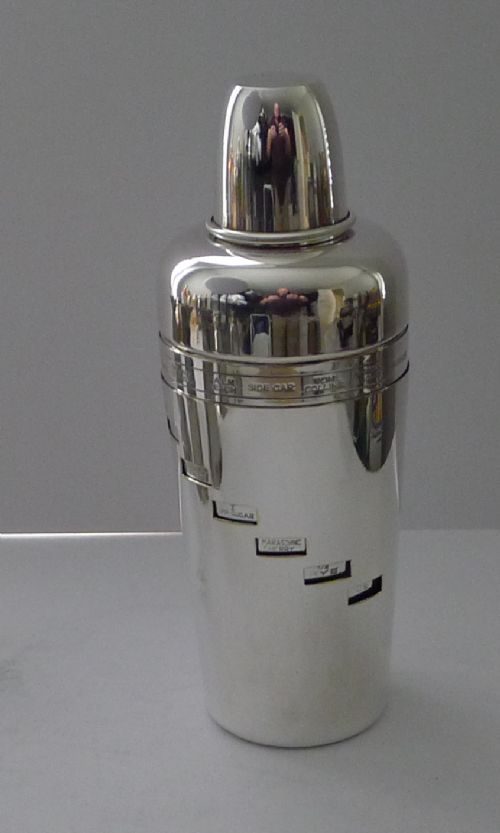
A silver recipe shaker combines functional barware with instructional novelty, presenting drink formulas directly on the body of the vessel. When collectors search for a silver recipe shaker, they encounter cylindrical, bullet-shaped, and novelty forms designed to dispense cocktail combinations.
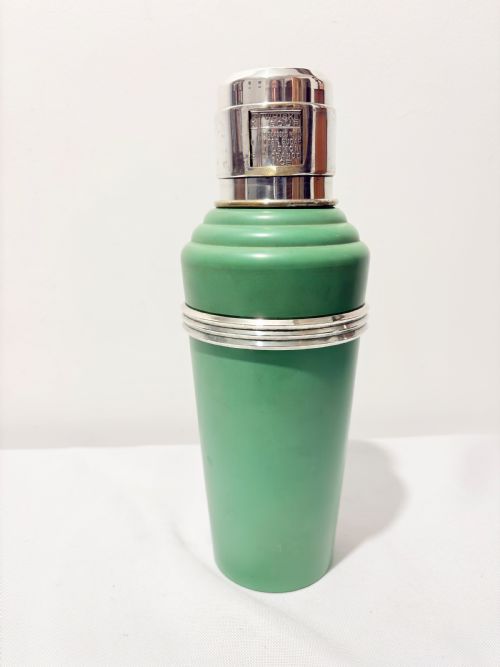
The Art Deco style dominates these pieces, emerging from European workshops and English makers during the decades between the nineteen-twenties and nineteen-forties. Most examples rely on silver plate over metal, though variations incorporate glass bodies, gilt highlights, and contrasting Bakelite elements.
Italian, English, and French makers produced these vessels, utilising rotating mechanisms, dials, or engraved panels to reveal specific drink ingredients. These interactive devices reflect the jazz age enthusiasm for home entertaining and sophisticated cocktail culture.
What varies in quality
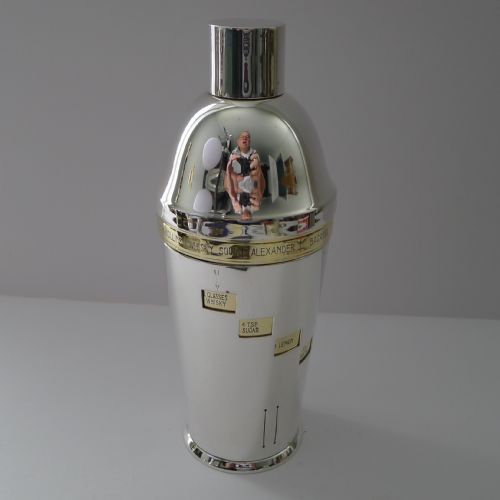
The precision and smoothness of the mechanical components define the upper tier of these shakers. Shakers featuring intricate rotating dials, patent mechanisms, or combination silver and gold plating demonstrate superior manufacturing effort compared to simply engraved vessels.
Maker attribution and material composition also separate standard production items from distinguished pieces. Recognised studios and solid silver construction elevate an example above basic silver-plated metal wares.
Listings feature silver-plated metal, brass, gilt metal, glass, and Bakelite across pieces dated to the nineteen-twenties, thirties, and forties.
Angelletti, Rome·C S Green·Keith Murray for Mappin & Webb
The Silver Recipe Shaker Glossary
- Silver Plate
- A thin layer of silver bonded to a base metal core. This technique allowed manufacturers to produce substantial barware at a lower cost than solid silver.
- Bakelite
- An early synthetic phenol-formaldehyde resin utilised for handles, lids, and decorative rings. Its bright colours provided striking contrast against polished silver surfaces.
- Gilt Metal
- Metal treated with a thin layer of gold applied to the surface. This finish accented specific engraved details and added contrasting warmth to silver vessels.
- Art Deco
- The dominant design style of the interwar period characterised by geometric symmetry, streamlined forms, and stylised motifs. Barware from this era embraced modern industrial aesthetics.
Silver Recipe Shaker: Frequently Asked Questions
How do the recipe mechanisms work?
Most recipe shakers feature an outer rotating sleeve or a central dial marked with various cocktail names. Aligning the window with a specific drink title reveals the correct proportions of ingredients through cut-out slots or engraved panels.
These mechanical elements required precise engineering during manufacture to ensure smooth rotation without jamming during cocktail preparation.
Are the recipes on the shakers still usable?
The engraved or printed formulas list classic cocktail ingredients such as gin, vermouth, and various liqueurs. While standard measures have evolved over the decades, the historic proportions remain entirely functional for mixing traditional drinks.
Collectors often test these vintage formulas to experience authentic flavours from the interwar drinking culture.
How do I identify an Art Deco recipe shaker?
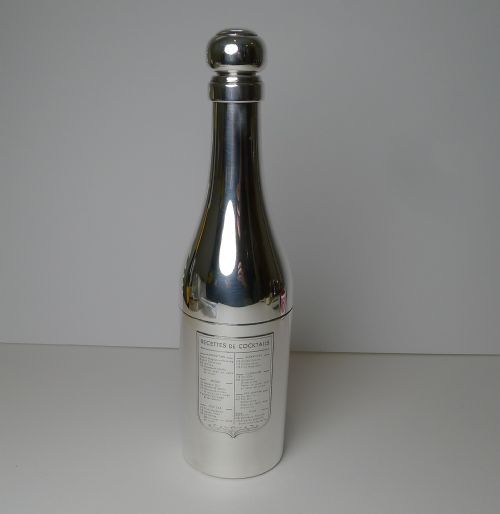
Art Deco examples display characteristic geometric engraving, streamlined silhouettes like bullets and champagne bottles, and stylised typography. These aesthetic traits reflect the modernist design movements of the nineteen-twenties and nineteen-thirties.
Makers frequently paired polished silver surfaces with contrasting black or green Bakelite details to reinforce the modern industrial look.