

Silver Platters and Trays
Silver platters and trays bring weight and surface to a room, offering functional elegance that bridges Georgian formality and mid-century design.
Silver Platters and Trays
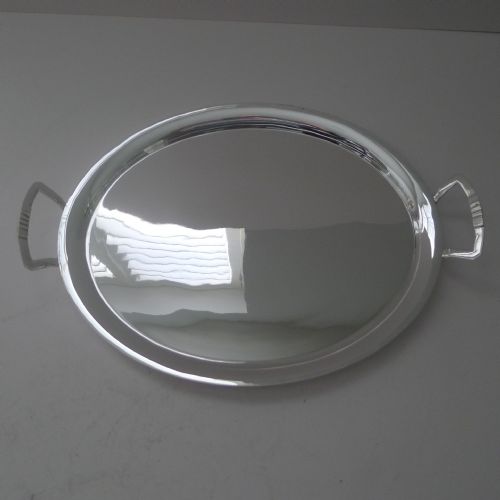
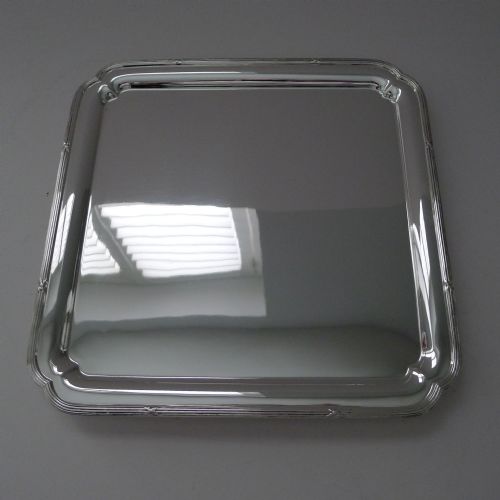
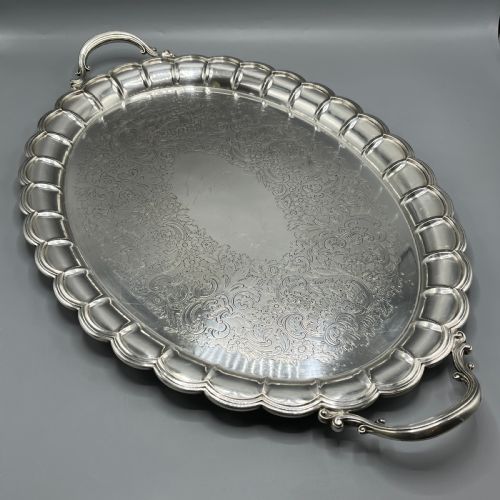
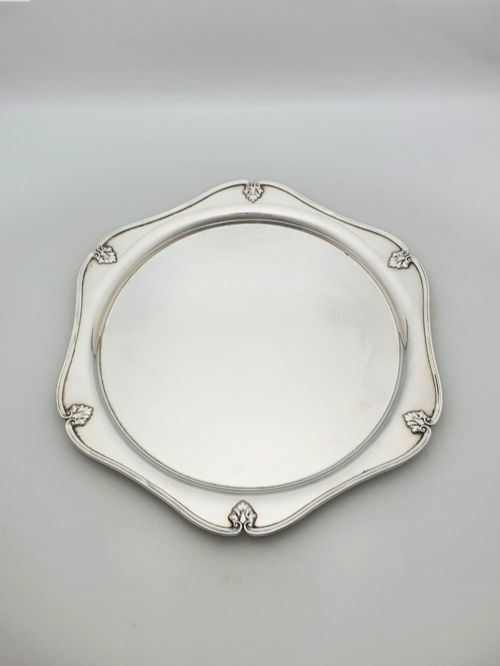
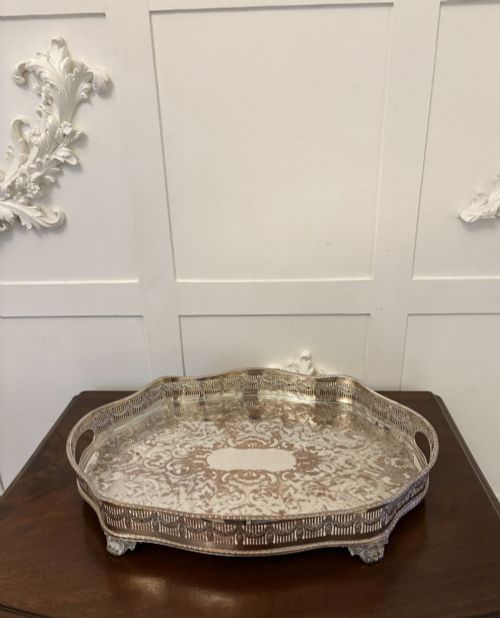
Silver platters and trays serve as functional metalware designed for carrying drinks, serving food or displaying decorative objects. The forms range from small circular salvers to large oval gallery trays fitted with handles and raised borders.
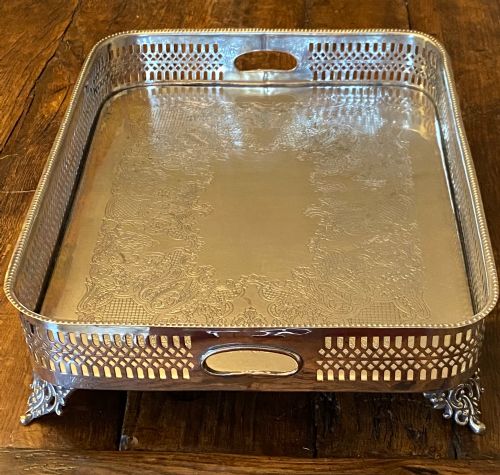
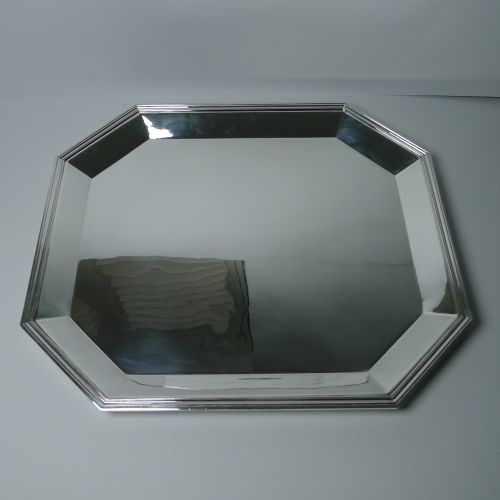
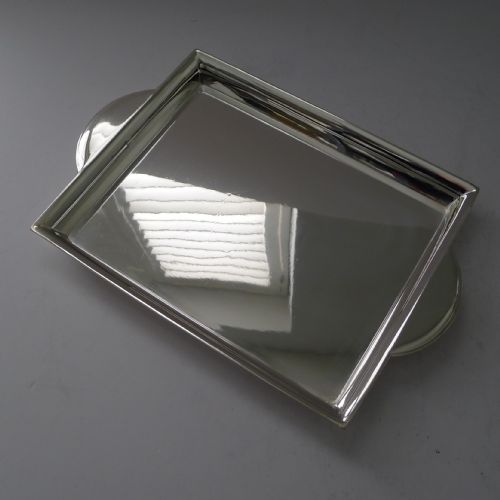
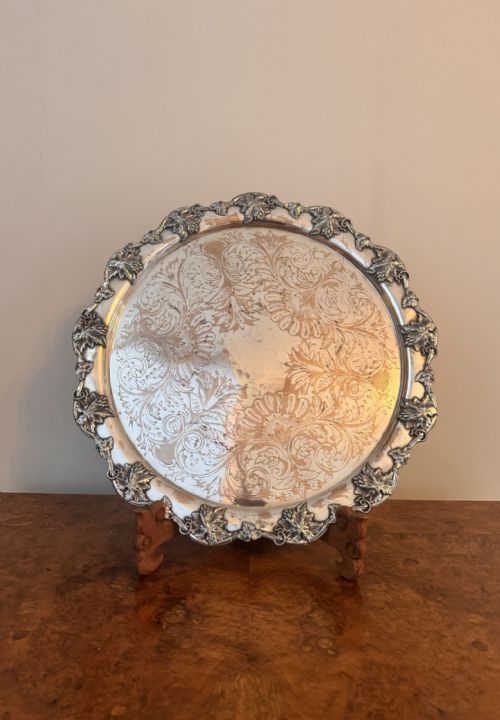
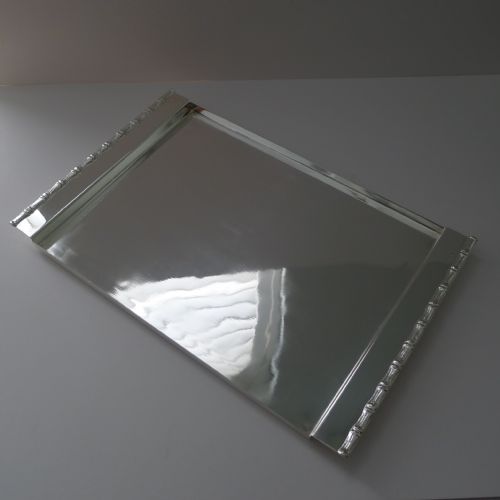
Collectors encounter pieces spanning several centuries, with a notable presence of Edwardian and Victorian silver-plated examples alongside Georgian sterling silver items. Styles shift from rococo floral repoussé to clean geometric Art Deco and modernist lines.
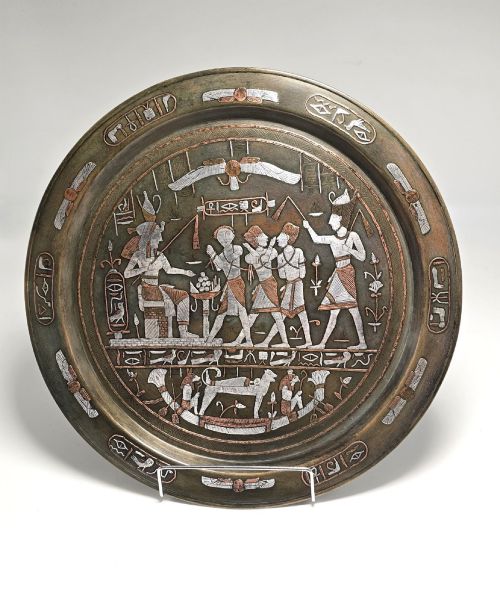
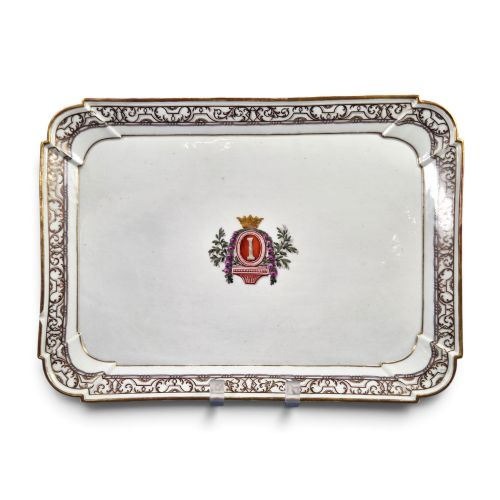
The selection includes specialised items such as cocktail trays, engraved tea trays, and Middle Eastern copper dishes with silver inlay. Each piece reflects the social rituals of its period, from formal afternoon tea to evening drinks.
How they were made
Makers utilised sterling silver, solid silver, and various plated methods including Sheffield plate and electroplated nickel silver over base metal. Copper forms the foundation for patinated Middle Eastern wares and Cairo ware chargers.
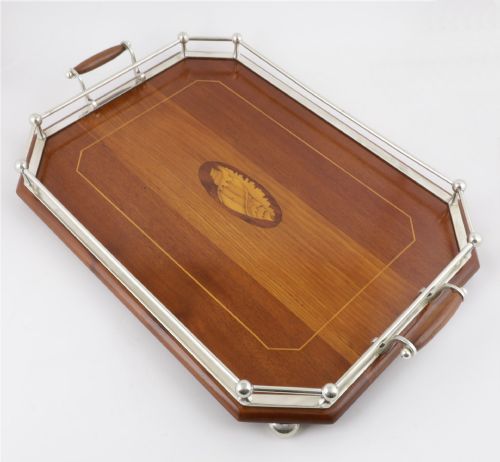
Techniques combine hand engraving, piercing, and repoussé work with structural elements like applied gallery rails, wooden bases, and shell inlay. Surface decoration often includes elaborate floral motifs, crests, and geometric borders applied by skilled artisans.
Silver Platters and Trays Retail Price Guide 2026
Typical asking prices for silver platters and trays among the pieces listed under this phrase on Sellingantiques today, from the lower quarter to the upper quarter. They describe what is for sale here now, not the wider market.
Materials range from solid sterling silver and heavy Sheffield plate to porcelain, cut glass mirror, and bamboo-handled silver-plated brass.
What varies in quality
Quality rests in the weight of the metal, the crispness of the hand engraving, and the structural integrity of applied borders and handles. Heavier gauge silver and thick silver plate endure decades of use without losing definition in the chased patterns.
Design coherence separates standard production from exceptional pieces, visible in the balance of a gallery rail, the execution of cast feet, and the integration of handles. Maker attribution to established firms like Mappin & Webb or Christofle often indicates higher manufacturing standards.
John Schofield·Christofle Paris·Mappin & Webb·James Deakin·William Hutton & Sons·Thomas Bradbury & Sons·John Harrison·Walker & Hall·Robert Breading·Harrison Bros
The Silver Platters and Trays Glossary
- Salver
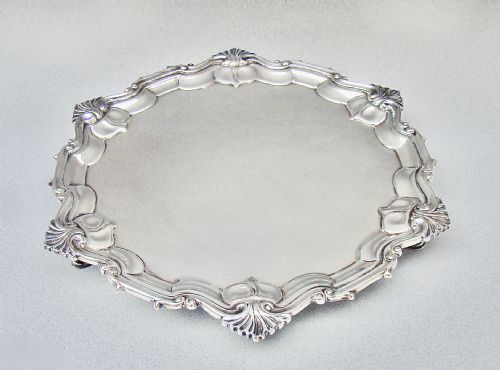
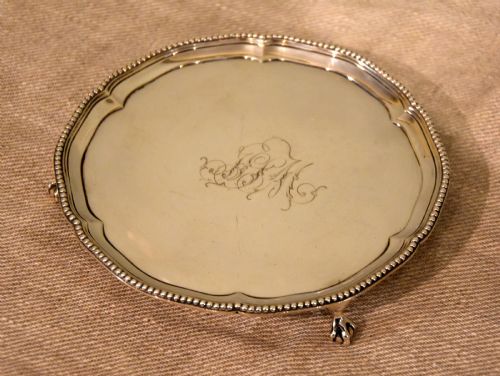
- A flat tray, usually circular and supported on small feet, traditionally used for presenting letters or glasses. These items date primarily from the eighteenth and nineteenth centuries.
- Gallery tray
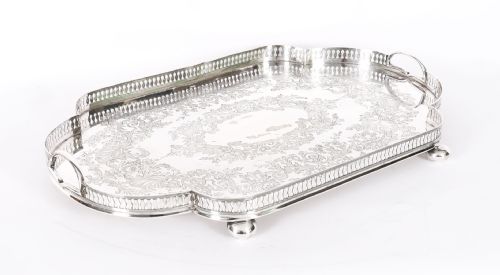
- A tray featuring a pierced or solid upright metal gallery border around the edge, designed to prevent decanters and glasses from sliding off. They frequently incorporate wooden bases and sturdy handles.
- Sheffield plate
- An early plating technique created by fusing a sheet of silver to a copper core before rolling them together into sheets. This method produced durable wares before electroplating became common in the nineteenth century.
- Repoussé
- A metalworking technique where the artisan hammers the design from the reverse side to form a raised pattern on the front. It is common on Victorian and Edwardian floral trays.
- EPNS
- Electroplated nickel silver, a common base material coated with a layer of pure silver using an electrical current. It provided an affordable alternative to solid sterling silver during the Victorian era and beyond.
Silver Platters and Trays: Frequently Asked Questions
What is the difference between a salver and a tray?
A salver is traditionally a smaller, circular serving plate raised on feet, primarily used for handing round drinks or letters. Platters and trays are generally larger, flatter surfaces designed for carrying multiple items or food.
Many antique listings use the terms interchangeably, but historical form usually dictates whether the piece has short feet or flat handles.
Can I use silver plated trays for serving food?
Silver plated and sterling silver trays are suitable for serving dry foods, pastries, and bottled or glass-held beverages. Acidic foods like citrus should not sit on antique silver for extended periods to avoid surface tarnishing.
Ensure the silver plate layer remains intact without underlying base metal showing through before serving food directly on the surface.
How do I date a silver tray without hallmarks?
Examine the overall style, weight, construction methods, and any engraved monograms to narrow down the period. Art Deco pieces show geometric lines and stepped borders, while Edwardian items frequently feature pierced galleries and neoclassical motifs.
Base metal composition and plating techniques also indicate whether a piece originates from the nineteenth century or the mid-century modern era.