


Silver Plated Spoon Set
A silver plated spoon set brings matched utility and table theatre into the dining room across Victorian, Edwardian, and Art Deco designs.
Silver Plated Spoon Set
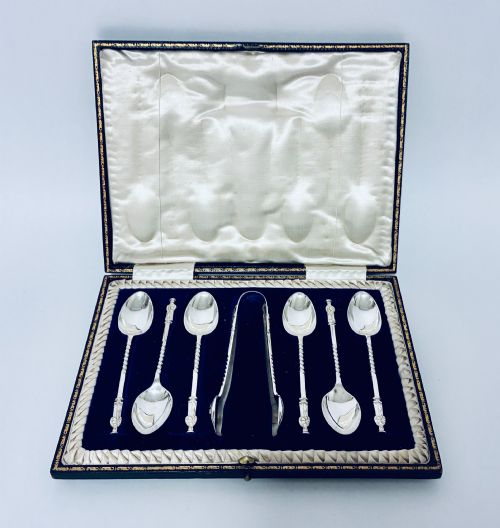
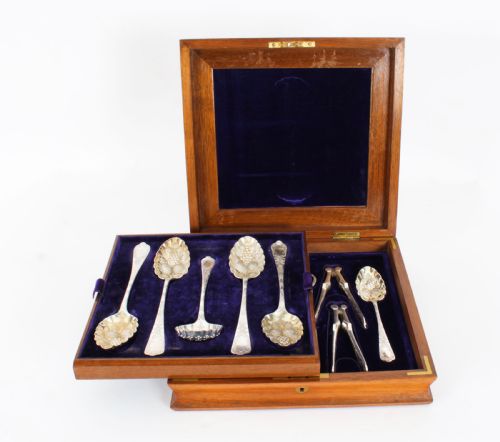
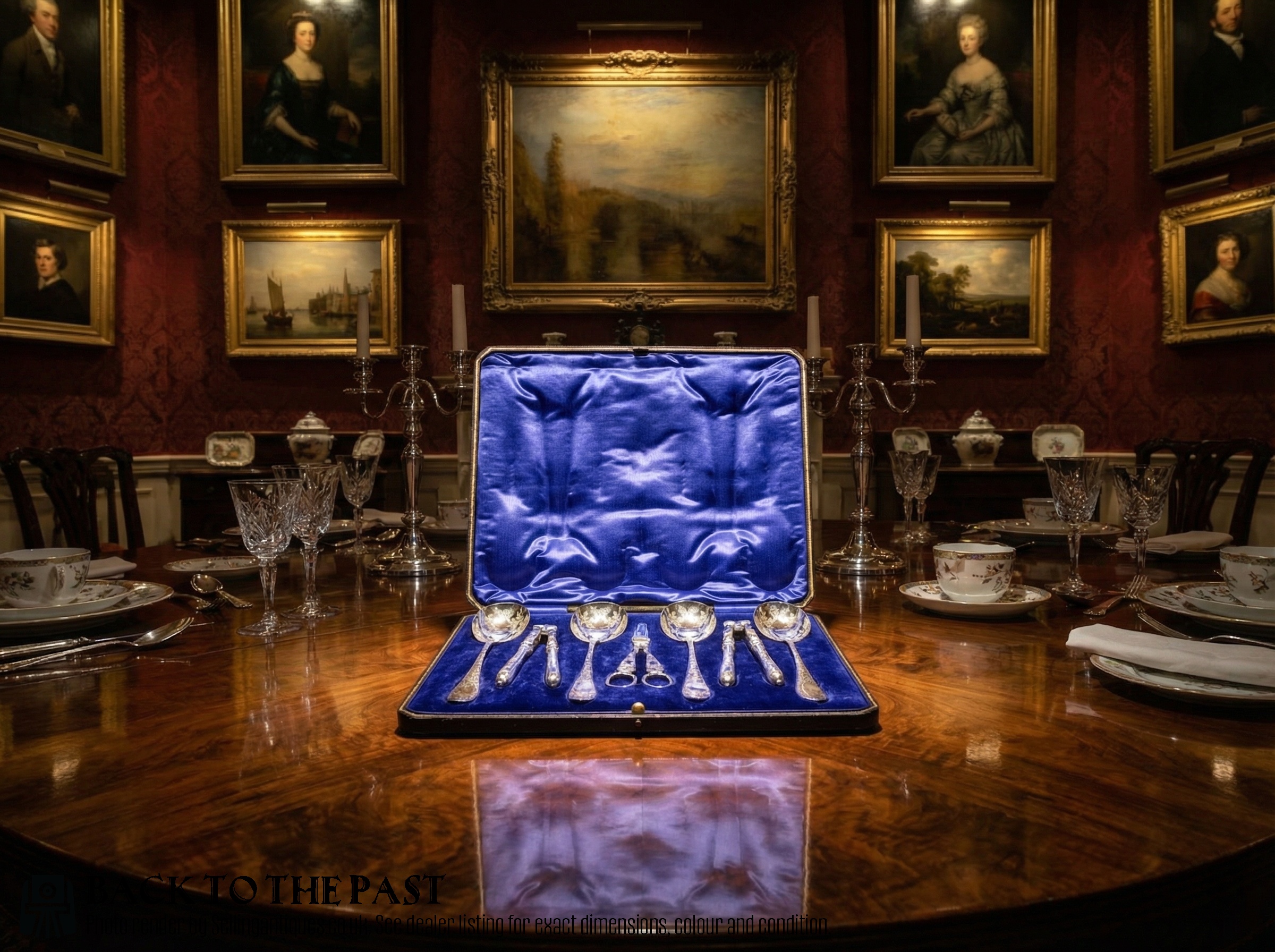
A silver plated spoon set encompasses matched groups of cutlery designed for specific dining rituals, from fruit serving and grapefruit consumption to berries and afternoon tea. These ensembles frequently arrive in fitted presentation boxes lined with velvet, silk, or leatherette, preserving the utensils when not displayed on the dining table.
The most common iterations on this page include cased sets of six apostle spoons, fruit serving knives and forks alongside spoons, and elaborate cruet or egg sets incorporating condiment containers. Buyers encounter pieces spanning the late nineteenth century through the mid-twentieth century, including distinctive Scandinavian and French modernist designs.
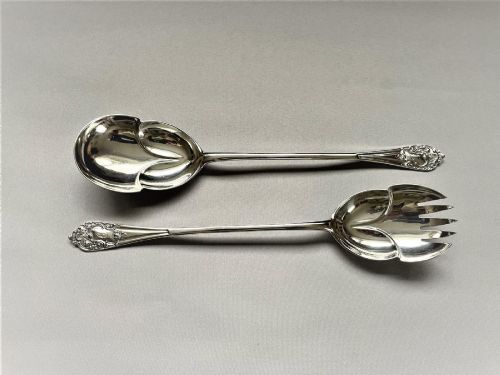
Forms extend beyond simple flatware into specialised serveware such as caviar ice servers, salad servers, and condiment stands. Whether traditional Victorian patterns or geometric Art Deco editions, each grouping reflects the formal dining habits of its period of origin.
Assessing quality and craftsmanship
Quality reveals itself in the thickness of the silver deposit over the base metal and the crispness of cast decorative details such as apostle figures or handle patterns. Superior sets maintain intact plating across high-wear zones like bowl interiors and tine tips, whereas lesser examples show thinning where the base metal begins to show through.
The integrity of the presentation housing influences desirability, with original fitted boxes retaining their internal silk or velvet linings commanding greater attention from collectors. Matching hallmarks, maker stamps, and uniform patination across all pieces in a set indicate a cohesive original assembly rather than a later composite grouping.
Listings feature silver plated spoon sets spanning the Victorian, Edwardian, Art Deco, and Scandinavian Modern periods.
Christofle·David Andersen·Hukin and Heath·Martin Hall·Elkington and Co·WMF Germany·Thomas Harwood and Co
The Silver Plated Spoon Set Glossary
- Silver Plate
- A base metal coated with a thin layer of silver through electrodeposition. This technique became widespread in the nineteenth century to produce accessible domestic tableware.
- Cruet Set
- A matched collection of bottles, castors, or jars for holding condiments, typically housed in a dedicated silver plated frame with carrying handles.
- Apostle Spoon
- A spoon featuring the figure of an apostle cast or engraved on the handle terminal. These traditional designs saw notable revival periods during the late nineteenth and early twentieth centuries.
- Jugendstil
- The German manifestation of Art Nouveau, characterised by flowing organic lines and natural motifs. Pieces from this movement often date to the early twentieth century.
- Rat-Tail
- A prominent ridge running down the reverse of a spoon bowl, originating from the base of the handle. This traditional strengthening feature appears on utilitarian flatware and soup spoons.
Silver Plated Spoon Set: Frequently Asked Questions
How do I clean an antique silver plated spoon set?
Use a specialised silver cloth or mild, non-abrasive silver polish applied gently to remove tarnish without wearing away the plated surface. Avoid harsh chemical dips, which can strip residual plating and damage organic elements like velvet or oak components.
Store the pieces inside their original fitted presentation boxes or wrap them in acid-free tissue paper. Minimising exposure to ambient air and humidity helps prevent rapid re-tarnishing between uses.
Can I use these antique spoons for daily dining?
Many sets remain structurally robust enough for regular use, provided they receive careful hand washing rather than dishwasher cycles. The strong base metals and durable electroplate layers were originally engineered for functional domestic service.
Delicate items featuring glass inserts, enamel work, or fragile silk linings benefit from careful handling during dinner parties. Preserving the original presentation boxes protects vulnerable exterior materials from daily wear.
What is the difference between an egg cruet and a condiment set?
An egg cruet is specifically structured to hold boiled eggs alongside matching spoons, salt cellars, and toast racks within a unified silver plated frame. Condiment sets focus on holding sauces, mustard, pepper, and salt in cut glass bottles or jars.
Both forms served formal breakfast and dinner tables during the Victorian and Edwardian periods. Egg cruets often incorporate specialised egg spoons with smaller, rounded bowls tailored for soft-boiled eggs.
How do I date a silver plated spoon set?
Examine the style of the decoration, such as the flowing organic curves of Art Nouveau or the geometric symmetry of Art Deco design. Fitted boxes, maker marks, and retailer stamps often provide clues to the manufacturing decade.
Materials used in auxiliary components, such as cut glass or oak frames, also align with specific stylistic periods. Comparing the typography of maker stamps against historical trade records narrows the production window further.