


Silver Plated Glass Bottle
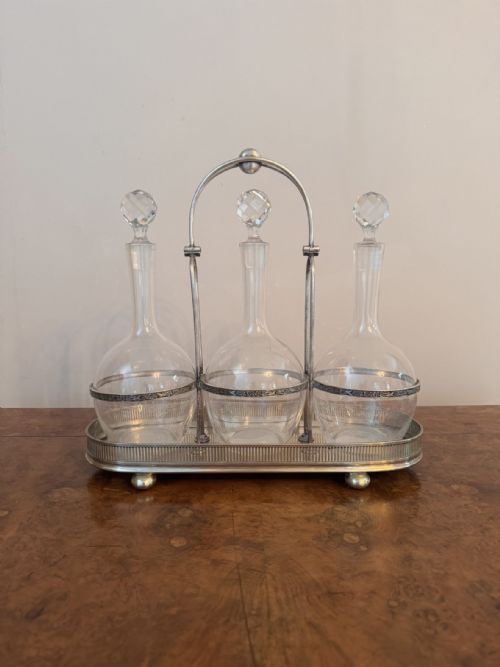
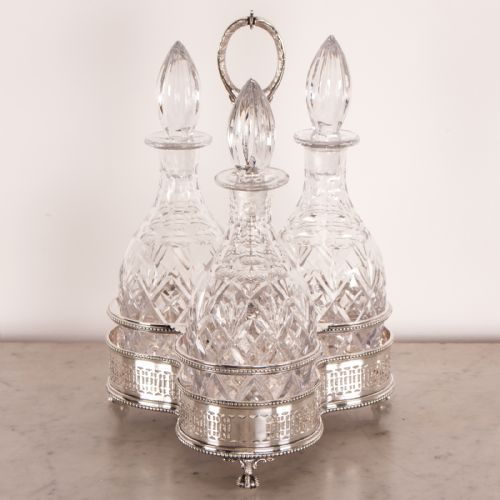
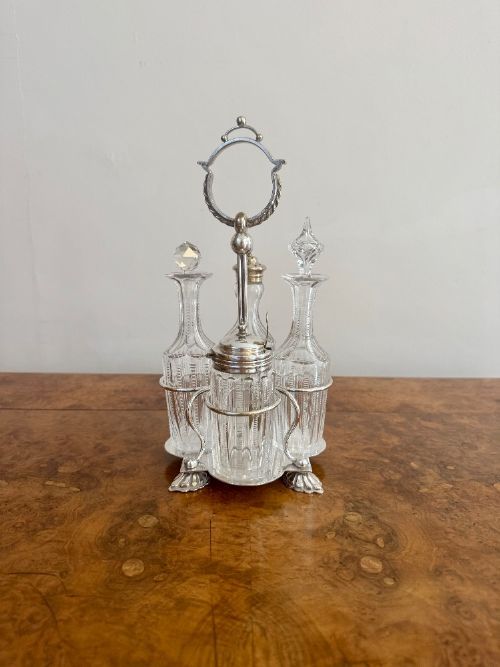
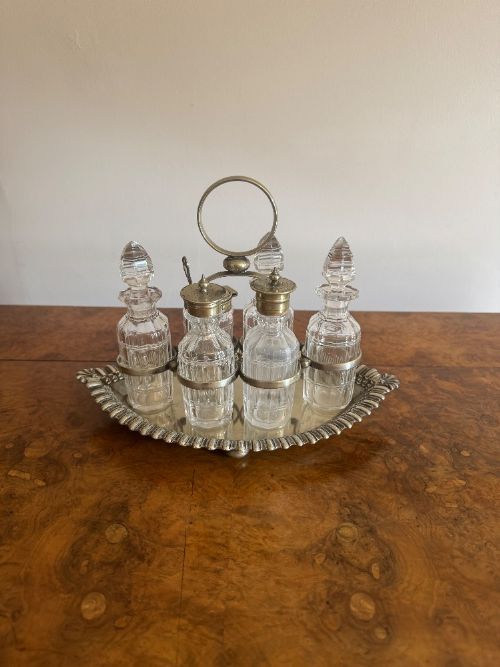
A silver plated glass bottle combines clear or coloured vessel work with metal mounts, spanning cruet sets, decanters, and travel inkwells.
Silver Plated Glass Bottle
When searching for a silver plated glass bottle, buyers encounter a variety of forms including cruet sets, decanters, tantalus frames, and inkwells. The majority of options on this page date from the Victorian and Edwardian periods, stretching back to Georgian times and through the nineteenth century.
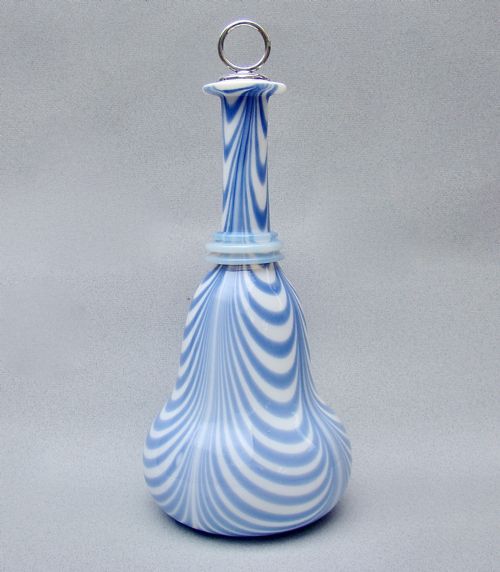
Vessels appear in diverse styles ranging from standard Victorian and Gothic to Edwardian, Art Deco, and Highland Revival. Materials stretch from basic glass to cut crystal, cranberry glass, nailsea glass, and amethyst glass, often housed in stands made of oak, hardwood, or coromandel.
How they were made
Makers combined glassblowing or cutting techniques with silver plate and old Sheffield plate mounts. Wooden elements such as oak, hardwood, and coromandel provided structural frames for multi-bottle cruet sets and locking tantalus mechanisms.
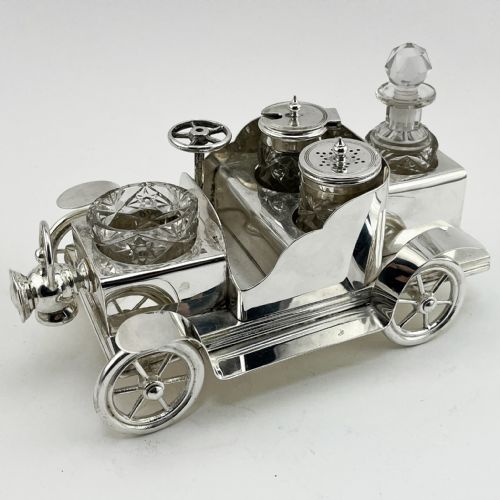
Decorative touches included marquetry inlay, etched designs, and novelty moulding shaped into items like Scottish thistles or vintage cars.
Listings feature items spanning the Georgian era, through Victorian and Edwardian periods, up to 1920.
What varies in quality
Quality rests in the crispness of the cut crystal or glass facets and the weight of the silver plate over its base metal. Maker attribution also alters standing, with firms like Walker & Hall and Elkington bringing distinct craftsmanship to mounts and frames.
Complexity of form divides standard bottles from multi-bottle cruet frames and locking tantalus units fitted with original stoppers and fitted wooden bases.
Walker And Hall·Elkington·Wade Wingfield Wilkins·The Goldsmith Co
The Silver Plated Glass Bottle Glossary
- Cruet set
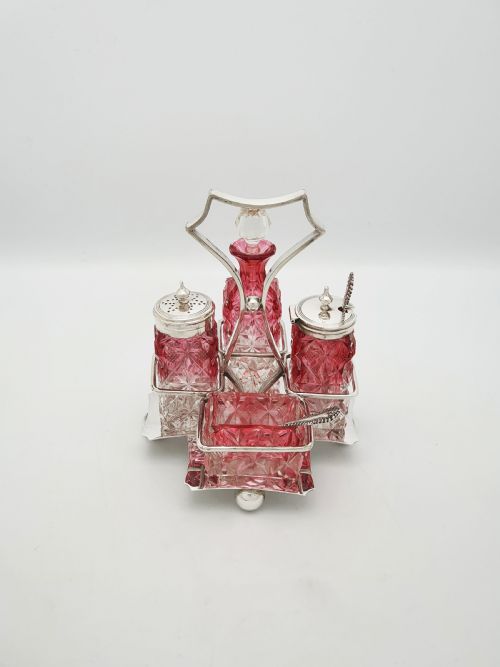
- A matched collection of glass bottles or cruets held in a silver plated frame for condiments or oils. These stands often feature handles and multiple compartments for daily dining use.
- Tantalus
- A locking wooden or metal frame securing decanters to prevent unauthorized drinking while displaying the glass bottles within. Edwardian and Victorian versions frequently utilise oak or coromandel.
- Old Sheffield plate
- An early form of silver plating produced by fusing a sheet of silver to a copper core before shaping. Items from this method show distinct warmth and edge wear.
- Nailsea glass
- Glassware characterised by looped or splashed coloured filaments within the clear body. This technique originated in nineteenth-century Somerset works.
- Cut crystal
- Glass featuring deeply ground geometric or floral facets that refract light through the vessel. The sharpness of the cutting defines the finish of the bottle.
Silver Plated Glass Bottle: Frequently Asked Questions
What is a silver plated glass bottle used for?
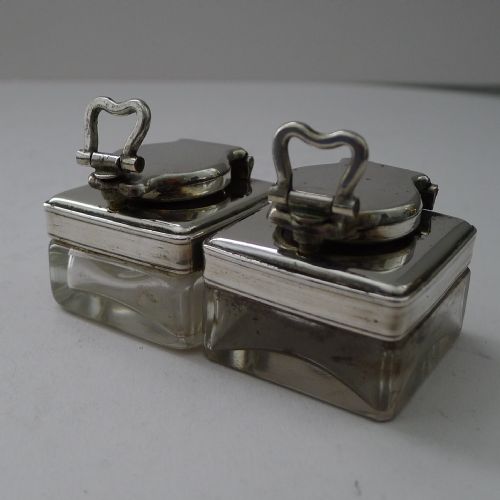
These pieces served practical dining and writing roles, holding spirits, condiments, or ink.
Cruet sets held vinegars and sauces at the table, while decanters stored wine and travel inkwells accompanied writers.
How do I date a silver plated glass bottle?
Dating relies on the style of the silver plate mounts, the cut of the glass, and the associated frame.
Victorian and Edwardian pieces often feature distinct floral engraving or heavy oak tantalus frames that mark their production era.
Are stoppers usually original?
Stoppers vary in originality across surviving antique decanters and bottles.
Matching the glass tint and wear pattern helps determine whether a stopper belongs to the original bottle.
What is a tantalus?
A tantalus is a locking frame that holds decanters securely visible yet inaccessible without a key.
Edwardian and Victorian versions typically combine silver plated metalwork with oak or coromandel wood bases.