





Silver Plated Dome
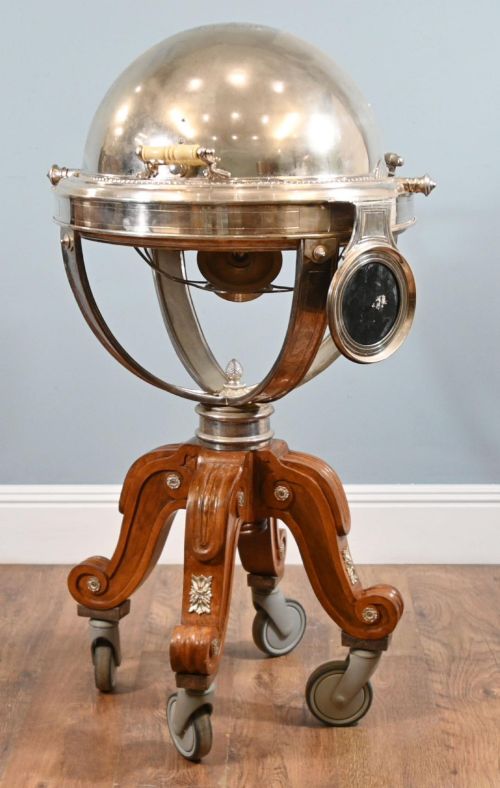
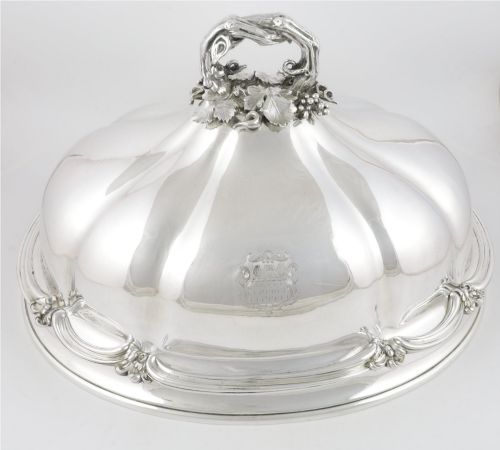
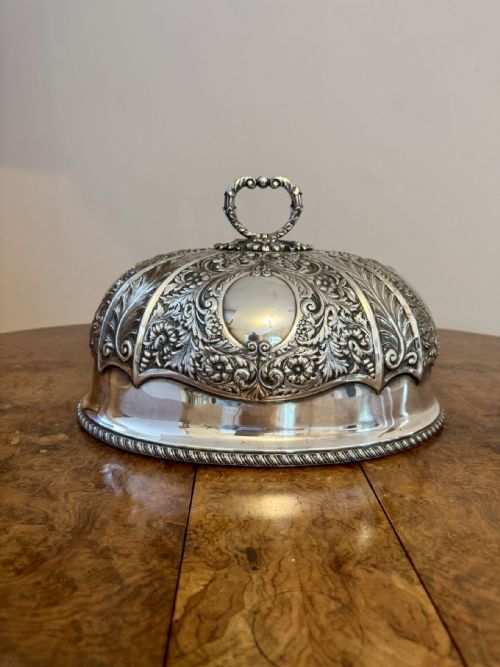
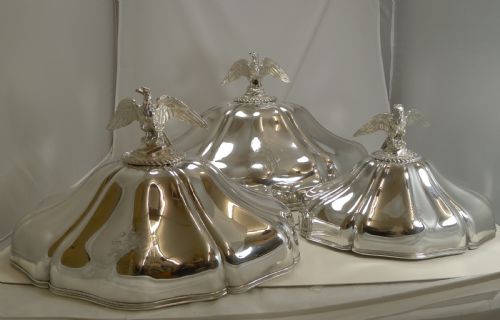
These silver plated dome pieces are grand dining table centrepieces and covers designed to keep roasts and dishes warm.
Silver Plated Dome
A silver plated dome search brings up substantial dining table accessories designed to cover large joints of meat, poultry or game. The most common forms on this page are meat domes, meat covers and cloches intended for formal table service.
The selection also includes revolving breakfast dishes, butter dishes and cheese covers featuring matching domed lids. Pieces span periods from the Georgian era through the Victorian and Edwardian periods up to the mid-twentieth century.
Makers utilised various base metals and plating techniques, resulting in robust serveware suited to both historical dining traditions and modern displays. The larger examples were built to accompany substantial platters and trays during feasts.
How they were made
Makers fashioned these pieces using copper, base metal, or electroplated nickel silver as a core, applying silver plate or utilising Old Sheffield Plate methods. Early examples often combined fused silver on copper plates.
Details such as handles, finials and borders were cast separately and soldered onto the main domed body. Glass inserts were occasionally utilised for interior dishes in items like butter and cheese covers.
Silver Plated Dome Retail Price Guide 2026
Typical asking prices for silver plated dome among the pieces listed under this phrase on Sellingantiques today, from the lower quarter to the upper quarter. They describe what is for sale here now, not the wider market.
Some domestic meat domes are large enough to comfortably house a very small, very confused terrier.
What varies in quality
The standard of a silver plated dome rests on the weight of the metal and the crispness of applied cast mounts, handles and crests. Thicker plating and substantial underlying copper or nickel silver bodies denote superior craftsmanship.
Proportion and balance dictate the aesthetic success of a piece, particularly in graduated sets or large meat covers. Engraved armorials, family crests or maker marks add significant interest to surviving examples.
Roberts Cadman·Henry Wilkinson·Mappin and Webb·Durand Paris
The Silver Plated Dome Glossary
- Old Sheffield Plate
- An early fusing technique where a thin sheet of silver was fused to a thicker copper ingot before being rolled into sheets. This method predates modern electroplating.
- EPNS
- Electroplated Nickel Silver, a process where a layer of silver is deposited onto a nickel silver base using an electrical current. It became widely utilised from the mid-nineteenth century onwards.
- Cloche
- A bell-shaped cover traditionally placed over individual plates or serving dishes to retain heat. The term derives from the French word for bell.
- Revolving Dish
- A serveware piece featuring a roll-top or revolving dome that retracts beneath the body when opened. These are frequently found in Victorian breakfast and butter dishes.
- Meat Dome
- A large, vaulted cover designed to fit over a meat platter on a dining table. They often feature an insulated or heavy construction to keep large joints warm.
Silver Plated Dome: Frequently Asked Questions
What is a silver plated dome used for?
These large covers were placed over roasted meats, poultry and game on dining tables to preserve heat and aromas before carving.
Smaller domed covers were utilised for breakfast dishes, cheese, and butter to keep food fresh and protected during extended dining.
How do I care for Old Sheffield Plate?
Old Sheffield Plate requires gentle cleaning with non-abrasive silver polishes to avoid wearing through the thin silver layer to the underlying copper.
Store pieces in dry conditions and avoid harsh chemical dips that can damage the historical surfaces and soldered joints.
How do I date a silver plated dome?
Dating relies on maker marks, style markers such as Victorian engraving or Regency proportions, and manufacturing techniques like Old Sheffield Plate versus EPNS.
Comparing the weight, handle design and construction methods helps place pieces within periods from the Georgian era to the early twentieth century.
What is the difference between Old Sheffield Plate and EPNS?
Old Sheffield Plate involves physically fusing silver to copper through heat and rolling, which often shows a subtle copper line at cut edges.
EPNS relies on electroplating silver onto a nickel silver alloy base, a technique introduced in the nineteenth century that produced a uniform silver coating.