



Silver Plated Dome Dish
A silver plated dome dish is a grand dining table cover that keeps joints of meat, poultry and warm courses hot until serving.
Silver Plated Dome Dish
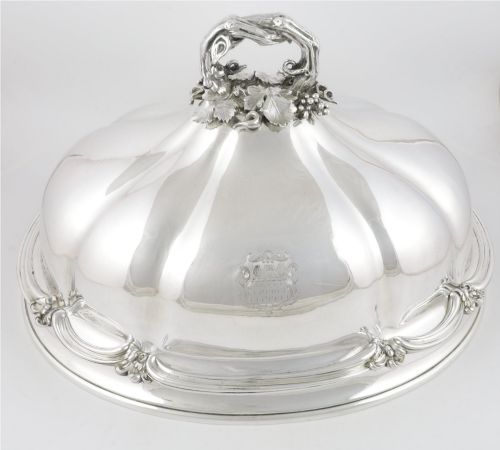
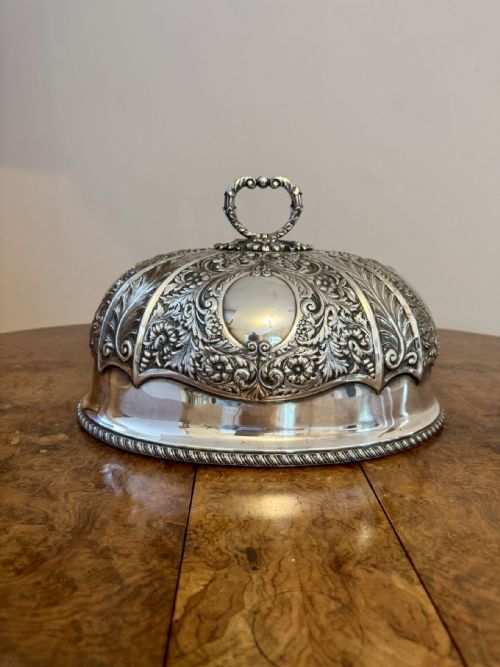
A silver plated dome dish encompasses heavy meat covers, game covers, and revolving breakfast dishes designed for formal dining tables across the nineteenth and early twentieth centuries. These pieces appear in various forms, from single expansive domes to complex double rollover and revolving mechanisms intended to keep food warm.
The versions most commonly met on this page span the Georgian, Victorian, and Edwardian eras, executed in Old Sheffield Plate or later electroplated nickel silver over base metal or copper. Makers also produced specialised cheese dishes featuring glass liners and matching covers suited to the sideboard.
Materials and construction
Earlier examples utilise Old Sheffield Plate, a process fusing a thin sheet of silver to a thick copper base, often visible at cut edges or wear points. Later pieces employ EPNS, standing for electroplated nickel silver, where a silver coating is deposited via electrical current onto a base metal foundation.
Makers shaped these metals into substantial hemispherical or oval covers, attaching cast handles, finials, and applied borders. Interior elements of specific serving pieces incorporate fitted glass dishes alongside the metal covers to hold food securely.
Silver Plated Dome Dish Retail Price Guide 2026
Typical asking prices for silver plated dome dish among the pieces listed under this phrase on Sellingantiques today, from the lower quarter to the upper quarter. They describe what is for sale here now, not the wider market.
Listings feature meat domes and serving dishes spanning from the Georgian period through the Edwardian era, utilising Old Sheffield Plate, EPNS, and glass.
Distinctions in craftsmanship
Quality rests in the weight of the metal, the crispness of applied cast borders, and the complexity of the engineering in revolving or rollover mechanisms. Superior pieces maintain thick silver layers over their copper or base metal substrates, resisting base metal bleed.
Design detail elevates certain objects, such as engraved armorials, makers' crests, or substantial cast handles formed as naturalistic branches or foliage. The integrity of mechanical hinges in breakfast dishes and the preservation of original glass liners further divide standard production from exceptional examples.
Roberts Cadman·Henry Wilkinson·Mappin and Webb·Boulton·WMF
The Silver Plated Dome Dish Glossary
- Old Sheffield Plate
- A fused composite material made by melting a sheet of silver onto a copper ingot before rolling them together into thin sheets.
- EPNS
- Electroplated nickel silver, a method of coating a base metal alloy of nickel, copper, and zinc with a thin layer of pure silver using electricity.
- Cloche
- A bell-shaped cover traditionally placed over plates or serving dishes to retain heat and aromas.
- Revolving Breakfast Dish
- A serving vessel featuring a roll-top lid that rotates backward on a pivot to reveal interior compartments for warm morning food.
Silver Plated Dome Dish: Frequently Asked Questions
How were these dishes used at the table?
These covers sat over large joints of meat, game, or entrees on the dining table or sideboard, lifted by servants just before carving or serving. They preserved heat and protected food until guests were ready to eat.
Revolving and double rollover versions allowed diners or hosts to access contents from the side without removing the heavy lid entirely.
What is Old Sheffield Plate?
Old Sheffield Plate is an early fusing technique where a sheet of silver is bonded to a thick copper core through heat and pressure, then rolled into workable sheets.
This method predates electroplating and often reveals a thin line of copper along exposed edges and high friction points.
How do I care for silver plated serveware?
Cleaning requires warm water, mild soap, and a soft cloth to avoid scratching the delicate silver surface. Specialised silver polishes should be used sparingly to prevent wearing through the plating.
Storage in dry environments prevents tarnish and protects the underlying copper or base metal from corrosion.
How can I tell a Victorian dome from a Georgian one?
Georgian and early nineteenth-century pieces typically employ Old Sheffield Plate construction with heavier copper content visible at seams. They often feature hand-beaten or fused elements with restrained, classical proportions.
Victorian and Edwardian items frequently utilise electroplated nickel silver and display heavier cast ornamentation, bolder borders, and mechanical innovations like revolving mechanisms.