


Silver Plated Crystal Decanter
A silver plated crystal decanter combines heavy glass vessels with polished metal mounts, offering both secure service and a striking display for wine and spirits.
Silver Plated Crystal Decanter
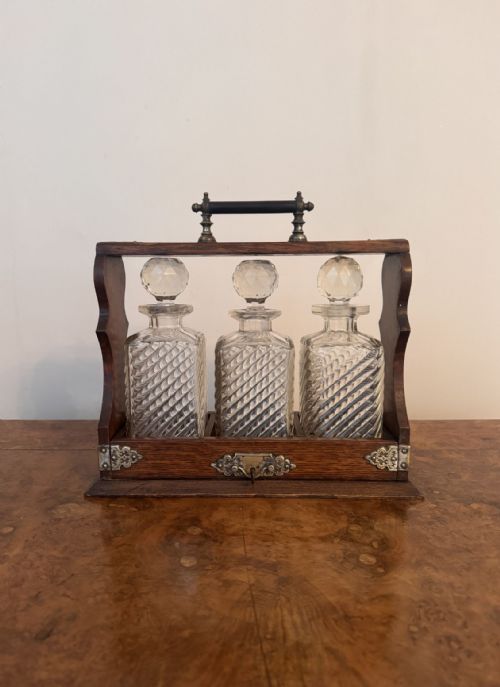
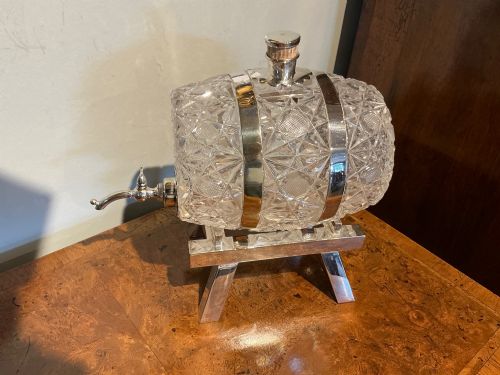
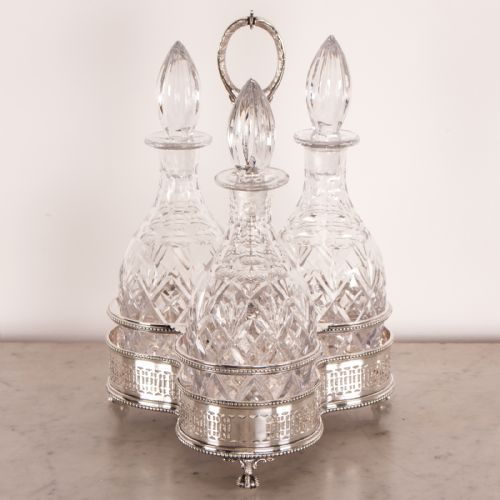
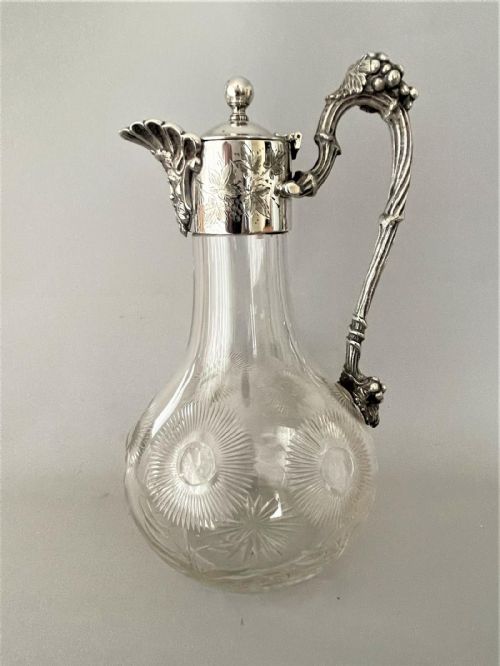
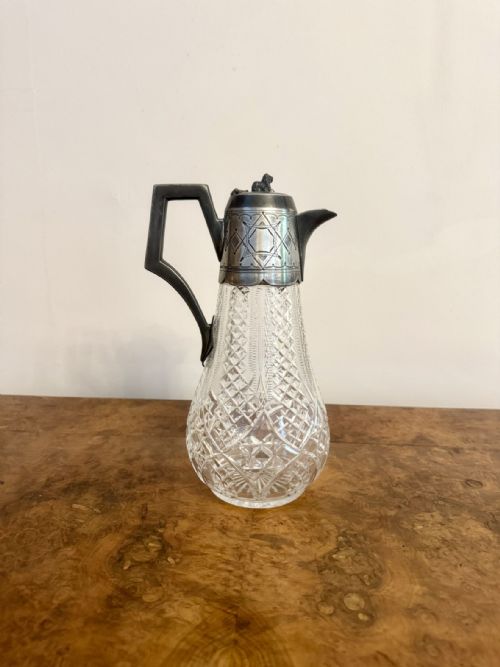
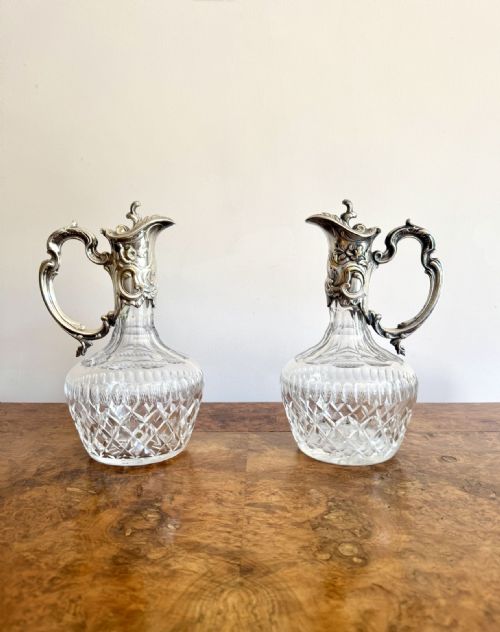
A silver plated crystal decanter search brings together claret jugs, tantaluses, spirit barrels, and cruet sets intended for dining and drawing room service. The pieces range from Victorian rococo revival claret jugs to Edwardian three-bottle tantaluses housed in oak or coromandel frames.
Most items on this page date from the nineteenth century into the Edwardian period, with notable examples spanning the 1860s to 1900. These vessels served wealthy households for port, claret, and spirits, often locking securely in wooden frames.
Buyers encounter everything from single cut glass ewers with hinged silver-plated covers to novelty designs shaped like Scottish thistles. Stands and trays complete many sets, keeping multiple decanters organised together.
Materials and Technique
Maker workshops combined heavy cut crystal or glass bodies with cast and chased silver plate mounts, securing the handles, collars, and hinged lids tightly to the necks. Hardwoods such as oak and coromandel provided the structural frames for tantalus sets and locking bottle carriers.
Glasscutting techniques produced deep geometric facets and flutes across the crystal bodies to catch the light, while metal mounts featured everything from restrained Victorian engraving to Arts and Crafts simplicity.
An unusually thirsty Victorian designer once shaped a silver-plated spirit container into a prickly Scottish thistle.
Craftsmanship and Proportion
The distinction between ordinary and exceptional pieces lies in the crispness of the glass cutting and the weight of the silver plate over the base metal. Heavier crystal bodies and substantial cast mounts indicate superior manufacture.
Makers known for exceptional metalwork, such as Walker & Hall, Elkington, or Hukin and Heath, integrated their silver-plated mounts seamlessly with the glass, whereas simpler utilitarian items display heavier, less refined plating and plainer glass.
Walker & Hall·Elkington·Mappin & Webb·Hukin and Heath
The Silver Plated Crystal Decanter Glossary
- Tantalus
- A locking beverage stand that holds decanters securely within a metal or wooden frame to prevent unauthorized access while displaying the contents. The locking mechanism typically engages with the stoppers to block removal.
- Claret Jug
- A specialised serving vessel designed specifically for red wine, featuring a pouring spout, a handle, and a hinged metal lid. These items often pair cut crystal bodies with elaborate silver-plated mounts.
- Cruet Set
- A multi-bottle frame or stand used to hold condiments, oils, or dessert wines together on the dining table. They frequently incorporate multiple cut glass bottles fitted with silver-plated collars.
- Spirit Barrel
- A horizontal cylindrical glass or crystal vessel mounted on a metal or wooden cradle for dispensing liquor. They often feature frosted glass body treatments and dedicated tap spigots.
- Silver Plate
- A manufacturing technique where a thin layer of silver is fused to a base metal, typically nickel silver or copper, to provide a polished exterior. This process allowed makers to achieve the appearance of solid silver at a lower cost.
Silver Plated Crystal Decanter: Frequently Asked Questions
How do you open a tantalus?
A tantalus utilises a locking mechanism, usually operated by a small key fitted into the top wooden or metal retaining bar. Turning the key releases the hinged or sliding bar, allowing the decanters to lift straight out of their fitted base.
Without the key, the locking arm prevents the stoppers from being removed and traps the bottles inside the frame. Many antique tantaluses survive with their original working locks and matching keys.
How do you clean antique crystal?
Antique crystal requires hand washing in lukewarm water with mild soap, avoiding harsh scrubbing brushes and sudden temperature changes that can crack old glass. Residue inside narrow necks is cleared using specialised cleaning beads and water.
Silver-plated mounts should be polished separately with a soft cloth and a gentle silver cleaner, taking care to keep abrasive chemicals away from the glass surface.
Are original stoppers important?
Original stoppers matching the cut of the crystal body significantly preserve the integrity and visual balance of the piece. Replacements often fit loosely or display mismatched cutting patterns under close inspection.
Collectors prioritize sets where every decanter retains its original matched stopper, as complete matched groups are scarcer.