


Silver Plated Cruet Frame
A silver plated cruet frame holds glass condiment bottles on the dining table, combining practical service with ornate Victorian or Edwardian design.

Silver Plated Cruet Frame
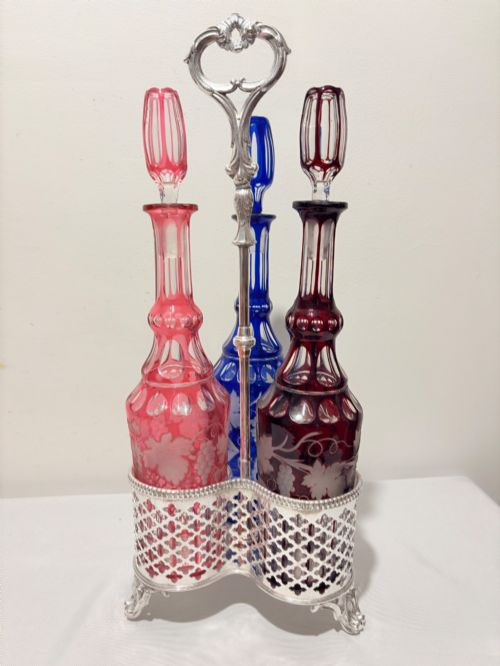
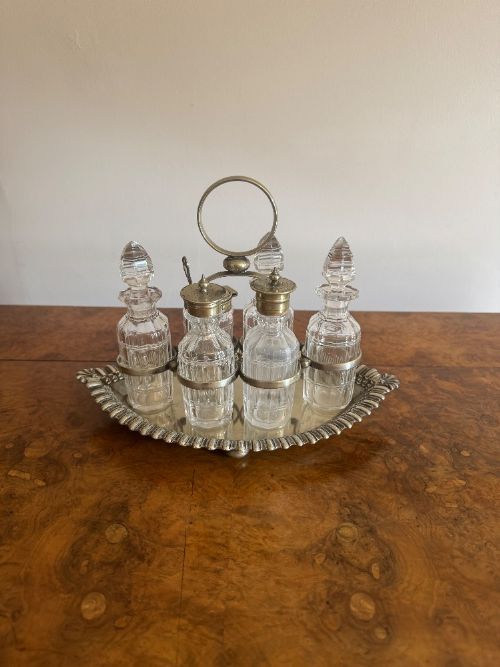
A silver plated cruet frame provides a structured metal stand to hold multiple condiment bottles or decanters together for table service. The forms range from simple bottle holders and condiment stands to large multijug cruet sets holding up to seven or eight glass pieces.
The examples available span from the Georgian period through the Victorian and Edwardian eras up to Art Deco, reflecting shifting dining fashions. Makers utilised silver plate, Old Sheffield plate, and nickel silver as base metals to create these functional table centrepieces.
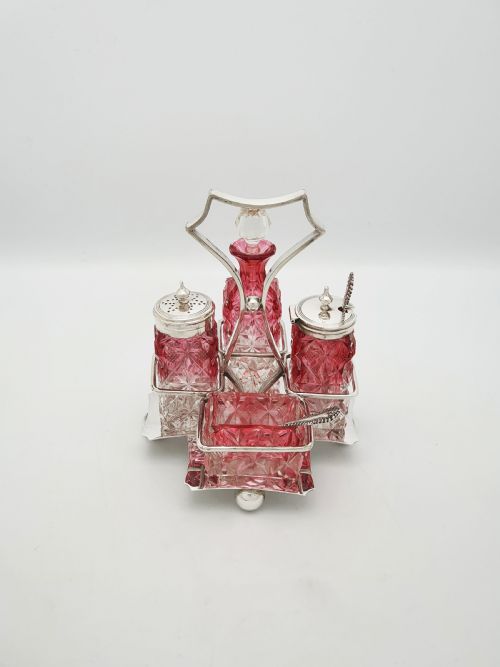
Buyers encounter various configurations including bachelor cruet sets, novelty figural designs, and decanter stands fitted with a central carrying handle. Cut glass, coloured glass, and cranberry flashed glass bottles are frequently integrated into the metal frameworks.
How they were made
Silversmiths constructed the frames using silver plate or Old Sheffield plate applied over base metals such as nickel silver, shaping the metal through casting, stamping, and soldering. Ornate frames often feature decorative pierced galleries, wirework, and cast handle elements.
The associated glassware was produced by blowing and subsequently cutting or flashing the glass to fit the specific apertures of each frame. Coloured glass varieties, including cranberry glass, required specific mineral additives during the glassmaking process before being shaped.
Some Victorian makers produced novelty figural frames that disguised condiment bottles inside whimsical animal or human shapes.
What varies in quality
Quality differences emerge in the weight of the metal frame and the crispness of any cast or pierced decoration. Heavier frames with substantial silver plating withstand decades of use better than thin platings that wear down to the base metal.
The presence of original, matching cut glass bottles significantly elevates a piece, particularly when the glass patterns complement the style of the frame. Intricate figural elements or ornate Victorian craftsmanship also distinguish finer examples from standard production pieces.
Mappin Brothers
The Silver Plated Cruet Frame Glossary
- Sheffield plate
- An early form of silver plating produced by fusing a sheet of silver to a copper ingot before rolling them together into sheets. This technique predates modern electroplating methods.
- Cranberry glass
- A rich red glass coloured by the addition of gold chloride to the molten batch. It is frequently seen flashed onto cut glass bottles within Edwardian sets.
- Bachelor cruet set
- A smaller scale condiment or cruet set designed for single-person dining or smaller tables. These compact sets typically hold fewer bottles than standard dining table versions.
- Cruet set
- A matched collection of small glass containers for condiments such as oil, vinegar, salt, and mustard, held within a dedicated frame. They form a traditional dining table accessory.
Silver Plated Cruet Frame: Frequently Asked Questions
How do I clean a silver plated cruet frame?
Use a soft cloth and a specialised silver polish designed for plated items to remove tarnish gently. Avoid harsh abrasive cleaners that can wear away the thin silver layer over the base metal.
Wash the glass bottles separately in warm soapy water and dry them thoroughly before placing them back into the cleaned metal frame.
Are original glass bottles important?
Original matching glass bottles add considerable authenticity and value to a cruet set. Because bottles were easily broken during daily use, many surviving frames contain later replacement glassware.
Check whether the glass pieces fit the frame's apertures precisely and share a matching cut pattern or colour tone.
How do I date a silver plated frame?
Examine the overall design style, such as the heavy ornamentation of Victorian pieces or the cleaner geometric lines of later Art Deco examples. Manufacturing marks, registration dates, and the type of metal plating also provide chronological clues.
Old Sheffield plate generally indicates an earlier Georgian or Regency origin, while standard electroplate becomes more common from the mid-nineteenth century onward.
Can I use these frames on the dining table today?
These pieces function well for serving oils, vinegars, and sauces during formal dinners or gatherings. The sturdy metal frames and glass inserts remain practical for modern table service.
Ensure the silver plate is clean and food-safe before filling the glass bottles with condiments for use.