




Silver Plated Corinthian Lamp
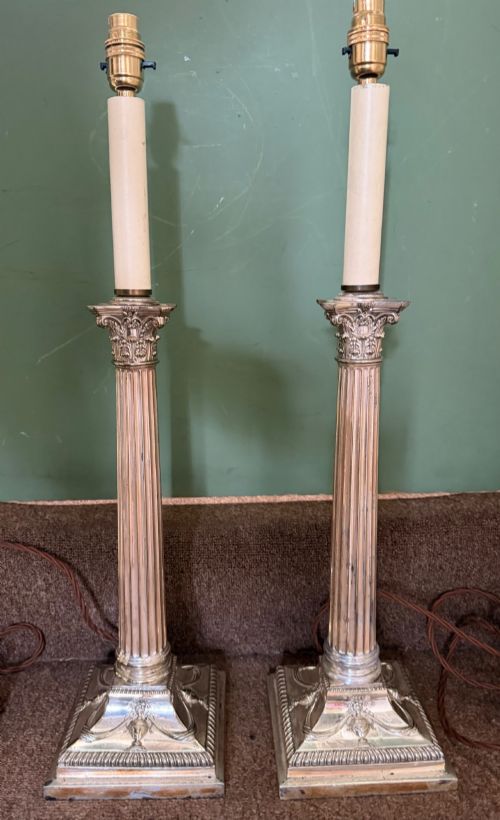
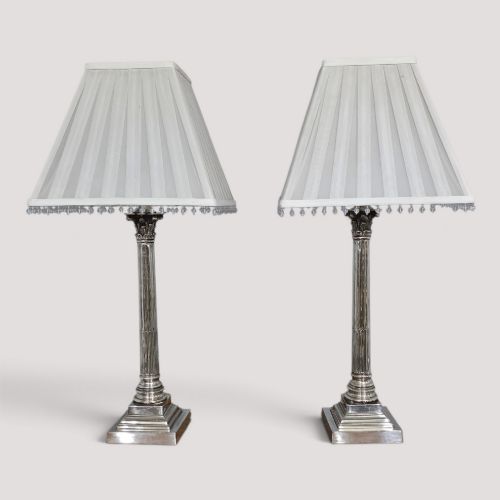
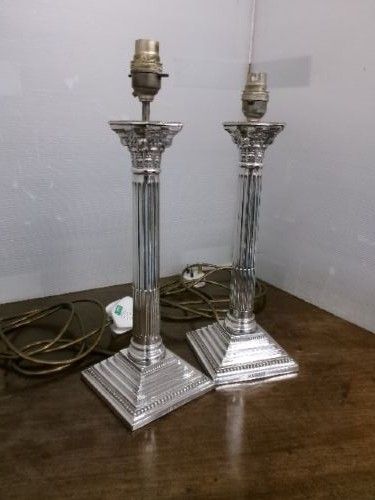
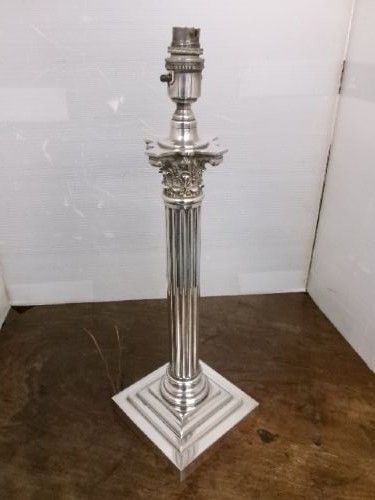
A silver plated corinthian lamp brings classical architecture into a room, offering the steady weight and fluted dignity of stone through the medium of metal.
Silver Plated Corinthian Lamp
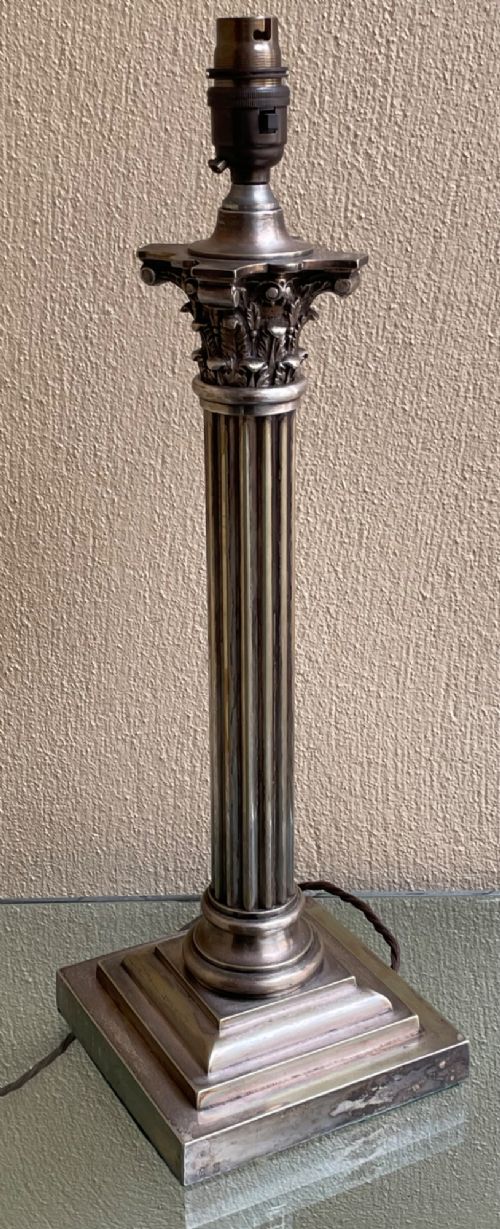
A silver plated corinthian lamp is fundamentally an exercise in neoclassical design, translating ancient Greek architectural orders into domestic lighting forms. The pieces available here draw heavily on Victorian, Edwardian, and early twentieth-century manufacturing periods, spanning the decades from eighteen-eighty to nineteen-twenty.
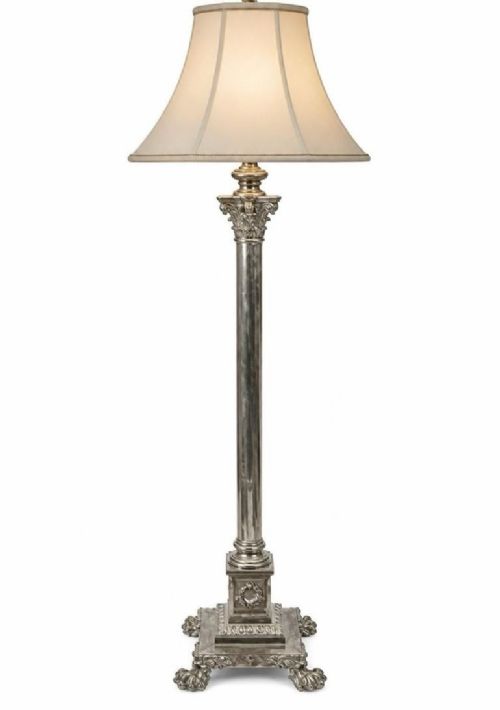
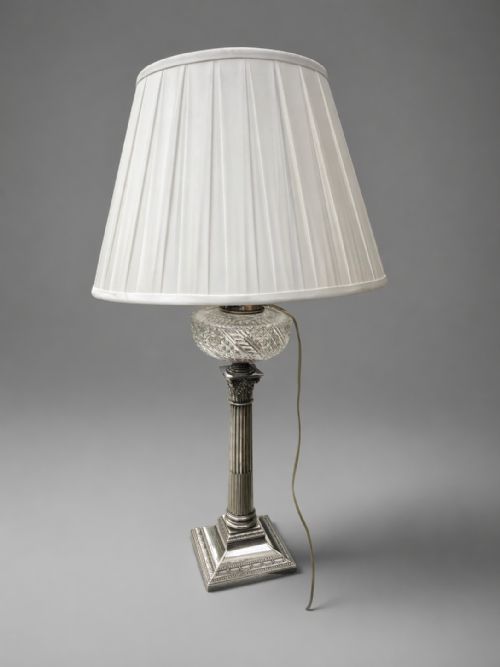
The dominant format is the column table lamp, though standard floor lamps and converted oil lamps also appear among the offerings. These pieces frequently incorporate distinct stylistic details such as lion's paw feet at the base and detailed acanthus leaf capitals at the summit.
Makers ranged from specialist retailers to notable silversmithing firms, producing variations in scale from modest desk heights to larger pairs suitable for sideboards. The primary styling sits firmly within neoclassical revival aesthetics, whether produced in the Victorian era or later in the Edwardian period.
Materials and construction
Construction relies upon a base metal core, typically brass, which receives a coating of silver plate through electroplating or older techniques. This combination provides the bright appearance of solid silver alongside the structural rigidity required for tall columns.
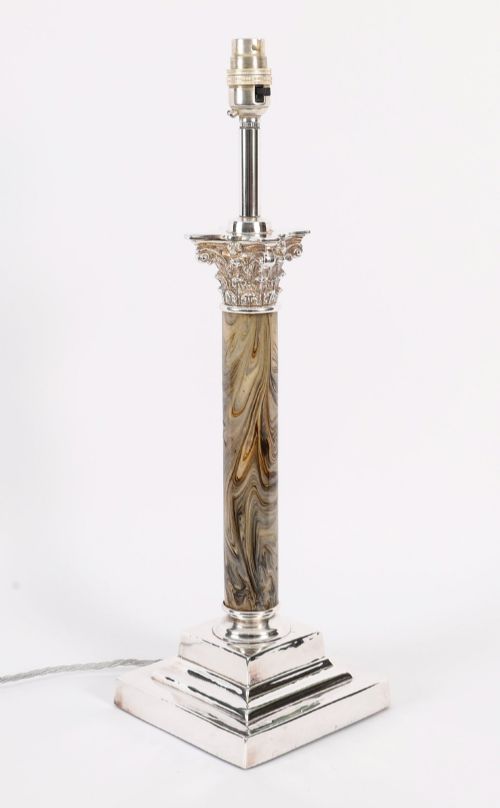
Secondary materials play a significant role in the overall construction, with cut glass reservoirs, onyx sections, and weighted metal bases appearing across the inventory. Fabric shades, often composed of silk, complete the fittings of these lamps.
Details such as the acanthus leaf capitals and stepped plinths require careful casting and chasing to achieve crisp architectural lines. The silver plating is then applied to unify the metallic surfaces.
Silver Plated Corinthian Lamp Retail Price Guide 2026
Typical asking prices for silver plated corinthian lamp among the pieces listed under this phrase on Sellingantiques today, from the lower quarter to the upper quarter. They describe what is for sale here now, not the wider market.
Listings feature items from the Victorian, Edwardian, and late nineteenth to early twentieth centuries, constructed from brass, silver plate, onyx, and cut glass.
Distinctions in quality
Quality in these lamps rests largely on the crispness of the casting in the capital and the weight of the metal used in the column shaft. Superior examples maintain sharp definition in the acanthus leaves and volutes rather than displaying softened or blurred contours from worn moulds.
The integrity of the silver plate over the underlying brass forms another clear divider, alongside the presence of maker stamps or hallmarks from established silversmiths. Scale and proportion also matter, with larger pairs and pieces featuring specific decorative elements like lion's paw feet demonstrating more ambitious original design.
Goldsmiths and Silversmiths Company·Palmer and Co
The Silver Plated Corinthian Lamp Glossary
- Corinthian capital
- The ornate top section of a column, decorated with carved acanthus leaves and scrolling volutes. This is the defining feature of the classical order seen on these lamps.
- Electroplate
- A method of applying a thin layer of silver to a base metal using an electrical current. This technique became widespread in the nineteenth century for producing silver-finished wares.
- Neoclassical revival
- An artistic movement drawing inspiration from the classical art and architecture of ancient Greece and Rome. This style dominates the design of column lamps from the Victorian and Edwardian periods.
- Column lamp
- A lighting fixture formed in the shape of an architectural pillar, comprising a base, a vertical shaft, and a capital. They were produced as table lamps and standard lamps.
- Acanthus
- A Mediterranean plant whose spiky leaves inspired the carved ornamentation on classical capitals. It appears frequently in the decorative motifs of these metal columns.
Silver Plated Corinthian Lamp: Frequently Asked Questions
How do I date a silver plated corinthian lamp?
Dating relies on examining the construction methods, the style of the base, and any visible maker stamps or registry marks. Victorian examples often feature heavier cast components, while Edwardian pieces may show finer cut glass elements.
Changes in electrical wiring and conversion from oil to electricity also offer clues, though many period lamps have been rewired multiple times over their lifespan.
Were these lamps originally for oil?
Many surviving examples began life as oil lamps before being converted to electricity during the twentieth century. The presence of a reservoir collar or burner mechanism often indicates this previous function.
Makers adapted the sturdy column form easily once domestic electricity became common, replacing the oil font with lamp holders while retaining the decorative metal base.
How do I care for silver plated metal?
Silver plate requires gentle cleaning with a soft cloth and a non-abrasive silver polish to remove tarnish without wearing away the thin metal coating. Avoiding harsh chemical cleaners preserves the underlying finish.
Regular dusting keeps the detailed crevices of the acanthus capitals clean and prevents the accumulation of grime in the cast recesses.
What interior settings suit these lamps?
The architectural dignity of a column lamp allows it to sit comfortably in traditional libraries, formal living rooms, or as a contrasting accent in modern spaces. Their vertical form makes them suitable for side tables, desks, or large sideboards.
Paired columns work well on matching consoles, providing balanced illumination and a formal neoclassical symmetry to a room.