

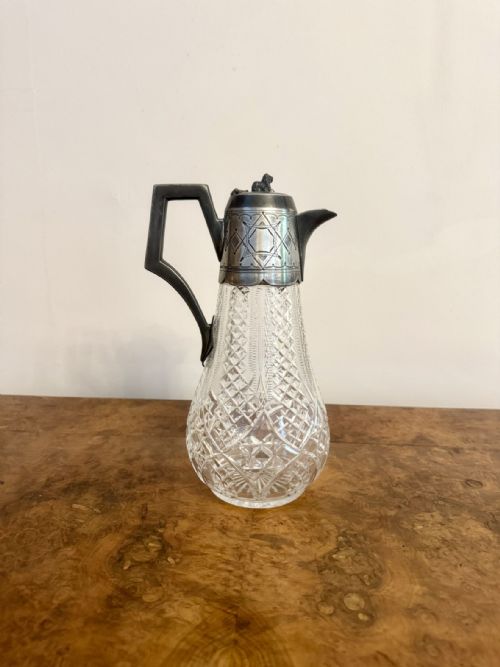
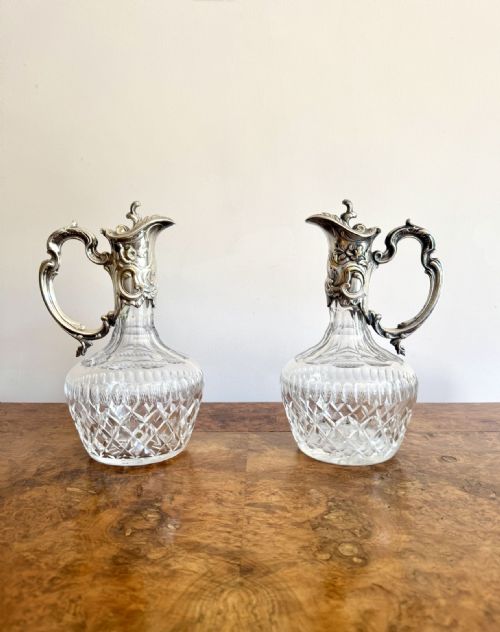


Silver Plate Glass Pitcher
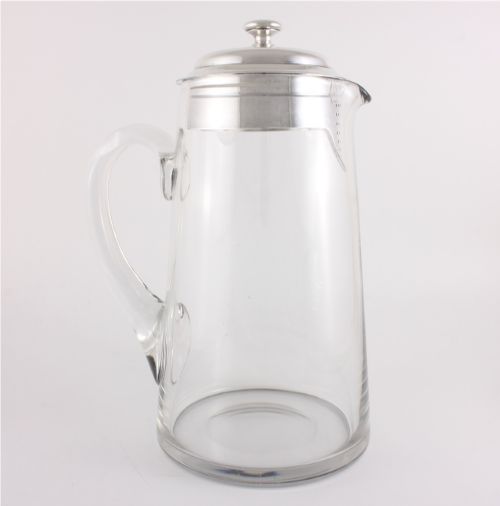
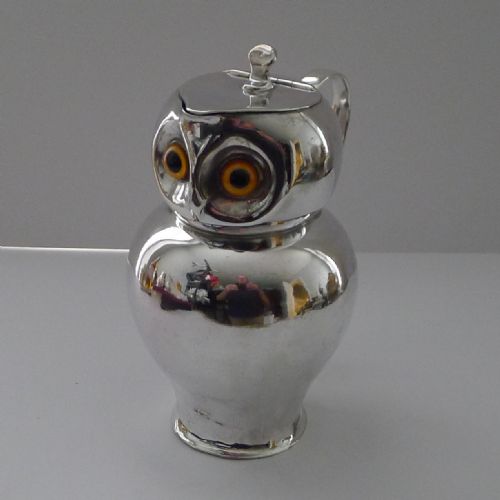
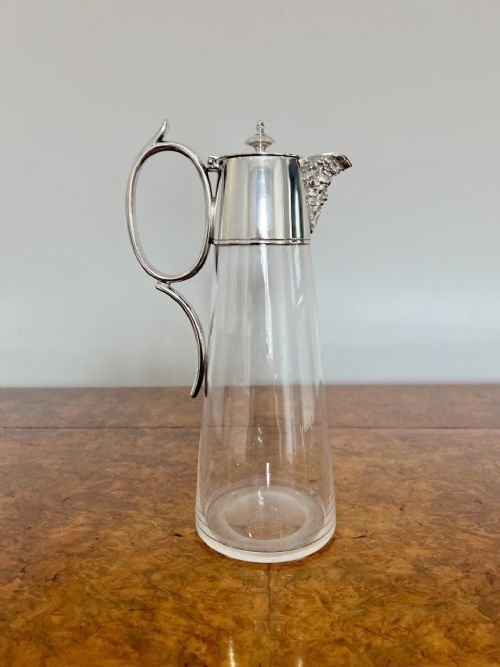
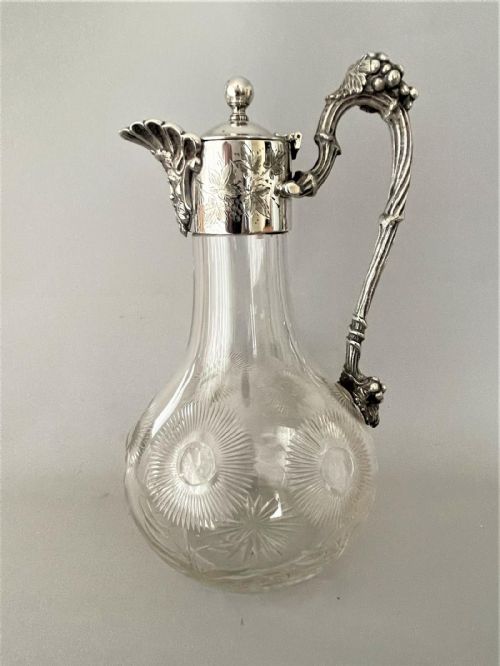
A silver plate glass pitcher combines heavy metal mounts with clear blown bodies, holding wine or water at the dining table.
Silver Plate Glass Pitcher
A silver plate glass pitcher is primarily found in Victorian and Edwardian forms designed for serving claret, lemonade, or water. Buyers encounter tall vessels featuring hinged metal lids, handles, and collars fitted tightly around blown or moulded vessels.
The dominant styles range from plain nineteenth-century shapes to ornate Art Nouveau and Arts & Crafts designs. Most examples serve as claret jugs, water jugs, or cocktail pitchers intended for formal hospitality.
How they were made
Maker's workshops combined silver plating techniques over base metals with blown glass bodies that were frequently cut, etched, or polished by hand. Coloured variants like cranberry glass required specific mineral additions during the glassblowing process.
Mounts were cast or stamped before being secured to the glass body via collars, often incorporating internal ice tubes or hinged spouts for functional pouring.
Materials recorded across the inventory include cranberry glass, crystal, etched glass, silver, and traditional silver plate.
What varies in quality
Quality rests in the crispness of the glass cutting, the weight and uniformity of the silver plate over the base metal, and the precision of the hinge mechanism on the lid. Maker attribution also elevates certain pieces above standard production wares.
Artistic execution in decorative handles, figural mounts, or etched patterns distinguishes finer workshop output from simpler domestic serving vessels.
Christofle·Mappin & Webb·Elkington & Co·Hukin & Heath·WMF·Karl Palda
The Silver Plate Glass Pitcher Glossary
- Claret Jug
- A specialised pouring vessel designed specifically for serving red wine at the table. These often feature elaborate silver plated mounts and cut glass bodies.
- Silver Plate
- A manufacturing process applying a thin layer of silver over a base metal such as copper, nickel brass, or Britannia metal. This provided the appearance of solid silver at a lower cost.
- Ice Tube
- A central metal cylinder attached to the lid that held ice to chill the contents without diluting the liquid. It is commonly found in lemonade and Pimm's jugs.
- Cranberry Glass
- A transparent red glass created by adding gold chloride to the molten batch. It appears frequently in Victorian and Edwardian drinkware.
- Cut Glass
- Glass decorated by holding it against a rotating abrasive wheel to carve geometric or floral patterns. Deeper cuts indicate higher craftsmanship.
Silver Plate Glass Pitcher: Frequently Asked Questions
What is a claret jug?
A claret jug is a specialised vessel designed to hold and pour red wine at the dining table. They typically combine a decorative glass body with a hinged metal lid and handle.
These pieces were central to formal dining rituals during the nineteenth and early twentieth centuries. Today they function as both decorative display items and usable serving vessels.
How do I clean silver plate?
Cleaning silver plate requires a gentle silver polish and a soft cloth to remove tarnish without wearing away the thin silver layer. Avoid abrasive pads or harsh chemical dips.
Take care to keep moisture away from any secured joints or glued collars where the glass meets the metal mount. Hand washing is essential to preserve the finish.
What are ice tubes used for?
Ice tubes are removable metal cylinders attached to the lid that descend into the pitcher. Filling them with ice chills the beverage without watering down the drink.
They appear most frequently in lemonade, water, and punch jugs from the Victorian and Edwardian eras. This practical addition kept drinks cool during long summer meals.
How do I date these pitchers?
Dating relies on stylistic clues, manufacturer marks stamped on the metal mounts, and the specific cutting techniques used on the glass. Victorian pieces often feature heavy floral etching or deep geometric cuts.
Edwardian and Art Nouveau examples introduce flowing organic lines or simpler geometric forms. Maker marks can pinpoint exact production decades when checked against historical records.