

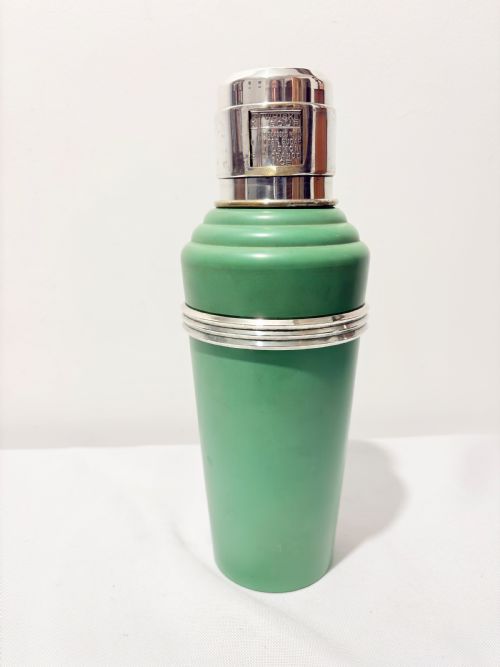


Silver Plate Drink Shaker
A silver plate drink shaker brings twentieth-century cocktail culture to the home bar through striking geometric forms and functional engineering.
Silver Plate Drink Shaker
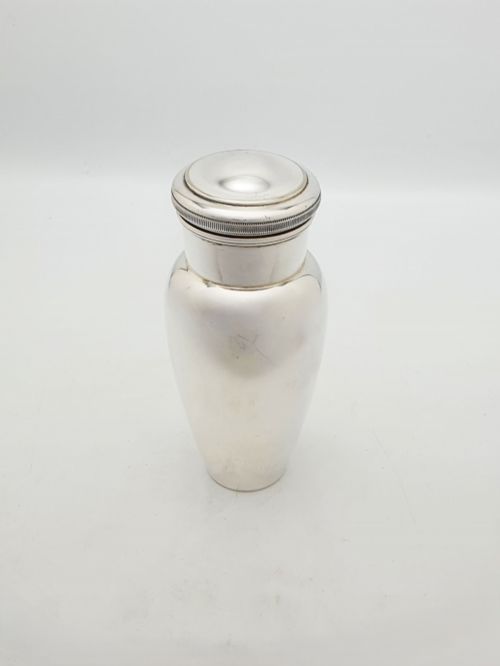
A silver plate drink shaker is a barware vessel designed for mixing cocktails, most frequently encountered in Art Deco and Mid-Century Modern styles. These vessels date primarily from the 1920s to the 1960s, spanning English, French, Italian, and German manufacture.
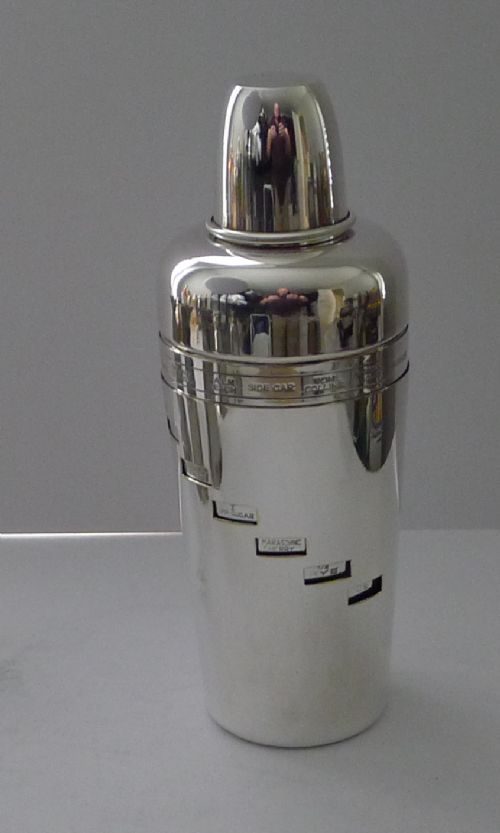
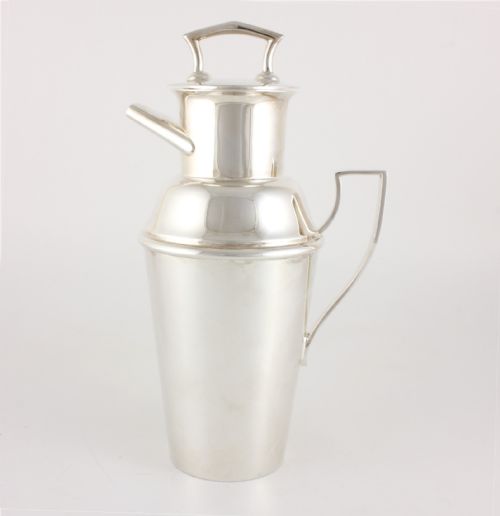
The selection here encompasses standard cylindrical barware alongside more complex mechanical forms. Buyers find pieces incorporating rotating recipe dials, integral lemon squeezers, and novelty shapes such as milk churns.
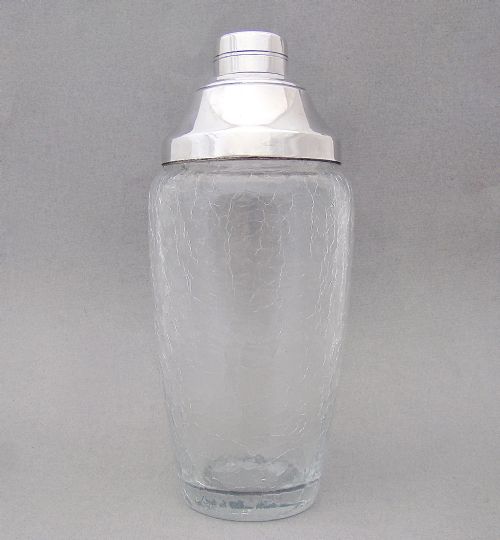
Constructed predominantly from silver plate or electroplated nickel silver, many examples combine metal with glass, crackle glass, brass, or bakelite components. These materials reflect the industrial design priorities of the interwar and post-war periods.
Assessing quality in vintage barware
Quality rests upon the integrity of the silver plating and the precision of any mechanical elements. Shakers with complex mechanisms, such as dial-a-drink recipes or built-in lemon squeezers, depend on smooth operation and clear engraving.
The weight of the metal and the thickness of the plating dictate durability through decades of use. Maker attribution to notable silversmiths or design houses adds considerable distinction to an individual piece.
Some models feature built-in lemon squeezers hidden beneath the top cap, ensuring citrus juice drops straight into the mixing chamber.
Asprey & Co·James Dixon & Sons·William Suckling·Hukin & Heath·Adie Brothers·Carl Deffner·Napier Company·Christofle
The Silver Plate Drink Shaker Glossary
- EPNS
- Electroplated Nickel Silver. This designates a base metal alloy of copper, nickel, and zinc coated with a layer of silver.
- Engine turned
- A decorative technique involving precise geometric patterns cut mechanically into the metal surface. It creates a textured, light-reflecting finish found on many interwar pieces.
- Crackle glass
- Glass blown and rapidly cooled to produce an internal network of fine fractures while retaining a smooth exterior. It frequently houses the metal casing of mid-century cocktail vessels.
- Bakelite
- An early synthetic thermosetting plastic. It provides durable, heat-resistant handles and knobs on cocktail implements from the 1930s onwards.
Silver Plate Drink Shaker: Frequently Asked Questions
How do I clean a vintage silver plate drink shaker?
Wash the interior by hand with warm soapy water and avoid soaking pieces that contain cork components or mechanical parts. Polish the exterior gently with a specialised silver cloth to preserve the plating.
Harsh chemical dips strip the finish and damage older surfaces. Store the vessel dry with the lid slightly ajar to maintain internal freshness.
Are these cocktail shakers still functional for mixing drinks?
Most surviving examples remain fully capable of mixing beverages if the internal seals and corks are intact. Metal-on-metal fits can loosen over time, so testing with cold water first is advisable.
Mechanical models with rotating dials require careful handling during use and washing to protect the internal linkages.
How can I identify an Art Deco design?
Art Deco barware relies on clean geometric lines, symmetrical motifs, and streamlined industrial forms. Engine-turned patterns and contrasting materials like bakelite are common hallmarks of this era.
These pieces emphasise functional elegance, reflecting the design trends of the 1920s and 1930s.