


Silver Plate Dining Accessories
Silver plate dining accessories bring practical refinement to the table through nineteenth and twentieth century serveware, knife rests, and cruet sets.
Silver Plate Dining Accessories
Silver plate dining accessories comprise the functional vessels and small implements used for serving food and drink at formal tables. When searching for silver plate dining accessories, buyers encounter a diverse range of forms spanning the nineteenth and twentieth centuries.
Makers and manufacturers ranging from larger firms to specialist silversmiths produced these items to elevate everyday dining. The variety extends from simple toast racks to elaborate asparagus serving sets complete with matching dishes.
How they were made
Makers produced these pieces using a base metal substrate, such as copper, nickel silver, or standard white metal, which received a bonded coating of pure silver. Electroplated nickel silver became the dominant technique during the Victorian period, allowing manufacturers to deposit an even layer of silver onto shaped metal bodies.
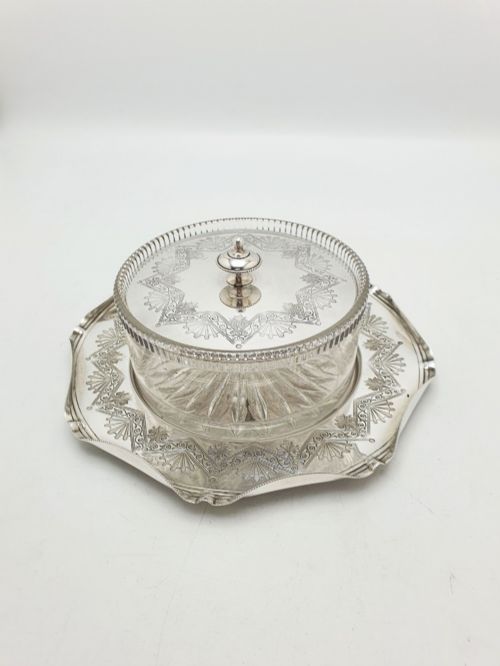
Craftsmen combined silver plate with organic and inorganic materials including cut glass liners, wood, mother of pearl, leatherette, and velvet. Spoon warmers and cruet sets frequently incorporated ceramics or glass components secured within decorative plated metal frames.
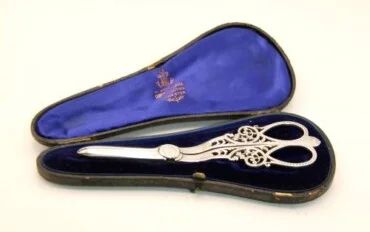
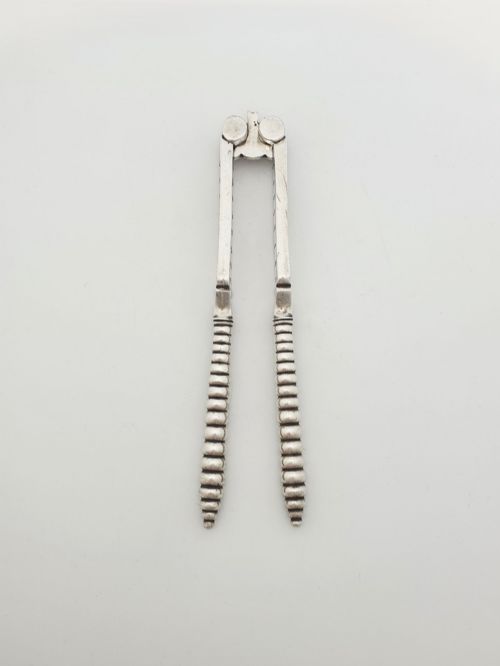
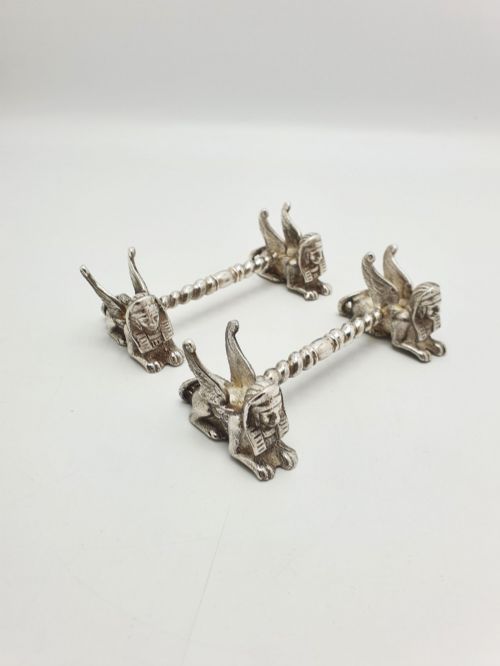
Decorative techniques involved casting, chasing, and engraving to produce distinct styles like Egyptian Revival and equestrian novelties. Specialised implements often required hinged joints, fitted boxes, or combined materials like steel blades paired with plated handles.
Listings feature silver plate dining accessories from the nineteenth century through the 1930s, incorporating materials such as cut glass, mother of pearl, and velvet.
What varies in quality
Quality rests primarily in the thickness of the original silver deposition and the durability of the underlying metal substrate. Heavier gauge pieces retain their structural integrity better over time, resisting dents and bending during everyday use.
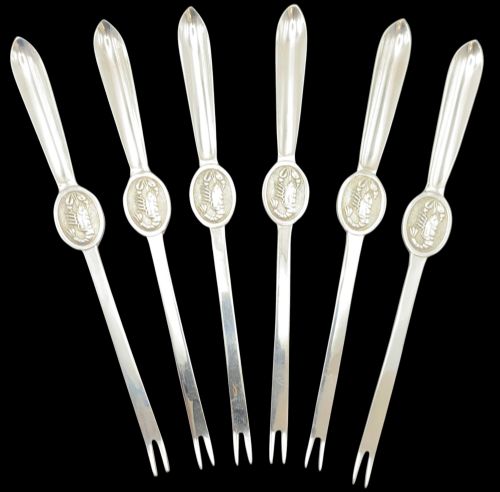
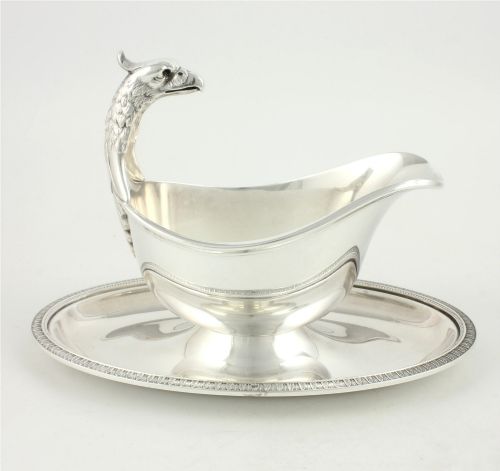
The refinement of the casting and chasing work separates standard production items from superior examples, particularly in novelty pieces shaped as animals or objects. Crisp detailing on motifs like lions, sphinxes, or stirrups indicates skilled craftsmanship.
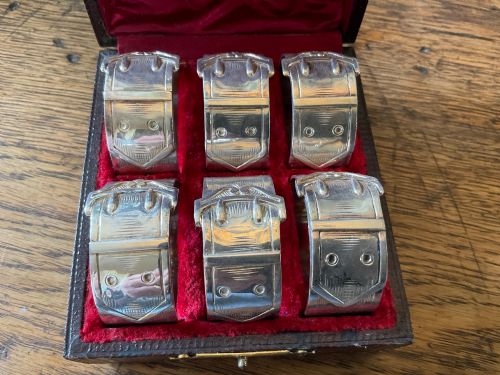
The survival of original fitted presentation boxes, glass liners, and matched sets influences desirability. Items retaining their inner glass components or complete sets of six or eight pieces demonstrate higher original status.
Christofle Gallia·Wade Wingfield Wilkins·Walker and Hall
The Silver Plate Dining Accessories Glossary
- Electroplated Nickel Silver
- A copper, nickel, and zinc alloy base coated with a layer of pure silver through an electrolytic process. This method became widespread during the nineteenth century for producing durable tableware.
- Cruet Set
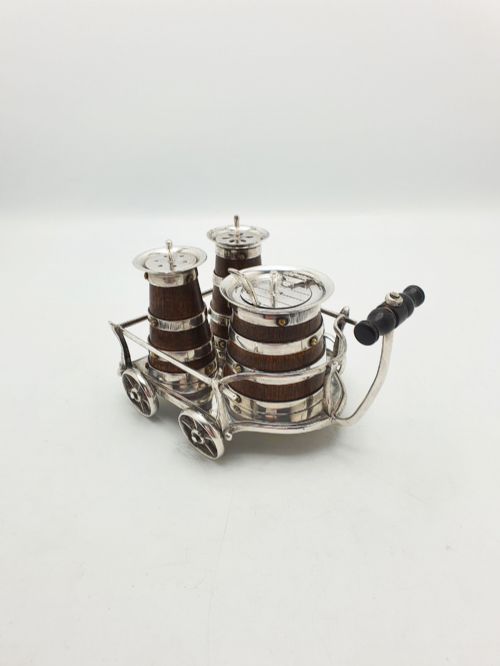
- A matched collection of bottles, jars, or castors designed to hold condiments like oil, vinegar, salt, and pepper. These sets usually sit within a dedicated metal frame or stand.
- Spoon Warmer
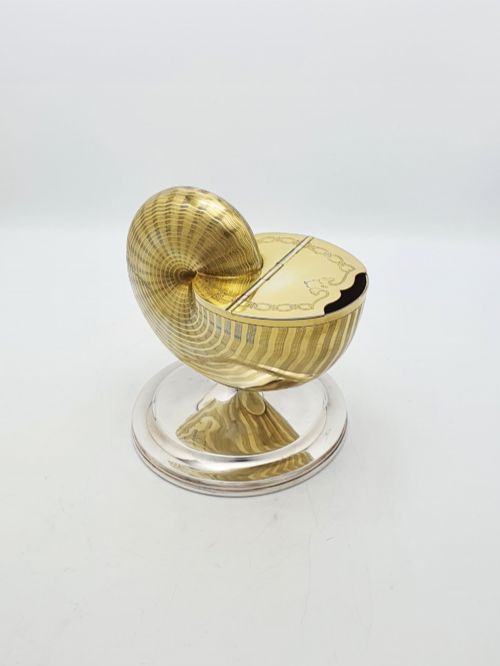
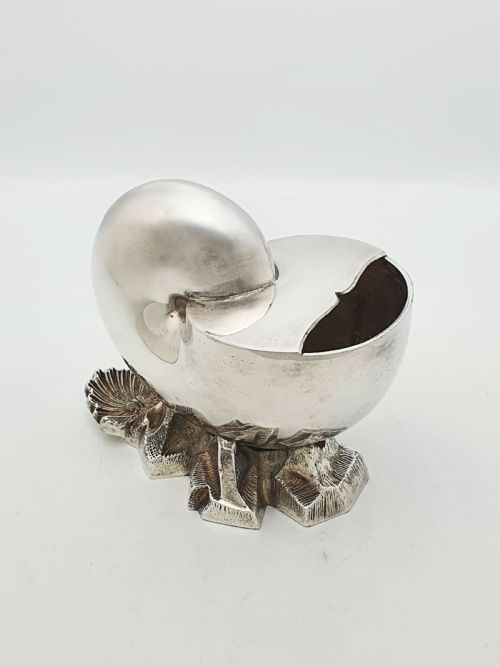
- A specialised Victorian vessel designed to hold hot water for warming silver spoons prior to serving soup or dessert. They frequently took whimsical shapes such as shells, boots, or barrels.
- Knife Rest
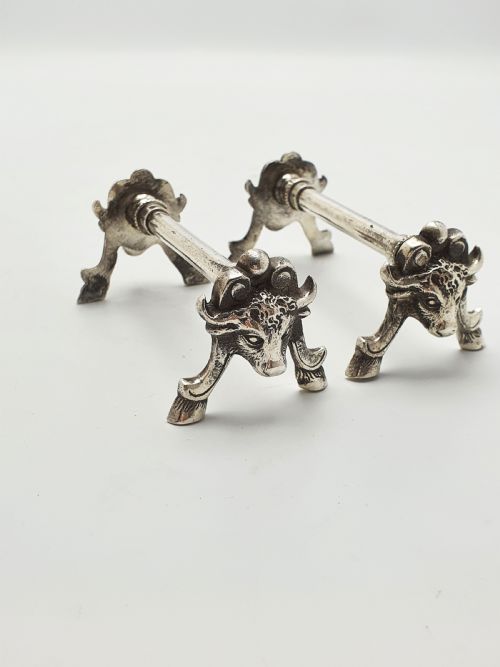
- A small horizontal support designed to keep carving or dining knives elevated above the tablecloth between courses. They often featured decorative ends shaped as animals, sphinxes, or geometric bars.
- Old Sheffield Plate
- An early method of fusing a thin sheet of silver onto a thicker copper ingot before rolling them into sheets. This technique predates modern electroplating.
Silver Plate Dining Accessories: Frequently Asked Questions
What is a spoon warmer used for?
Victorian households utilised spoon warmers to heat table spoons before serving hot courses like soup. Guests or servants placed the spoons into the vessel filled with hot water.
These items often took imaginative forms such as nautilus shells, shoes, or oak barrels, serving as decorative table centrepieces when not in active use.
How do I clean silver plate?
Cleaning silver plate requires gentle care using specialised silver polishes and soft cloths to avoid wearing through the thin silver layer. Harsh abrasives can strip the plating entirely from the base metal.
Store pieces in dry environments away from direct sunlight and rubber materials, which can accelerate tarnishing on exposed copper or nickel substrates.
What are knife rests for?
Knife rests keep carving knives and dining cutlery elevated above the tablecloth between courses. This prevents sauces and food residue from soiling the linen.
Victorian dining etiquette valued these small accessories, which frequently featured decorative designs such as rampant lions, sphinxes, or animal heads.
How do cruet sets work?
Cruet sets hold various table condiments including vinegar, oil, mustard, salt, and pepper within specialised glass bottles or castors. A metal frame or stand unifies the collection for easy transport around the dining table.
Larger Victorian sets often incorporated up to eight distinct glass containers alongside fitted spoons and stoppers.