

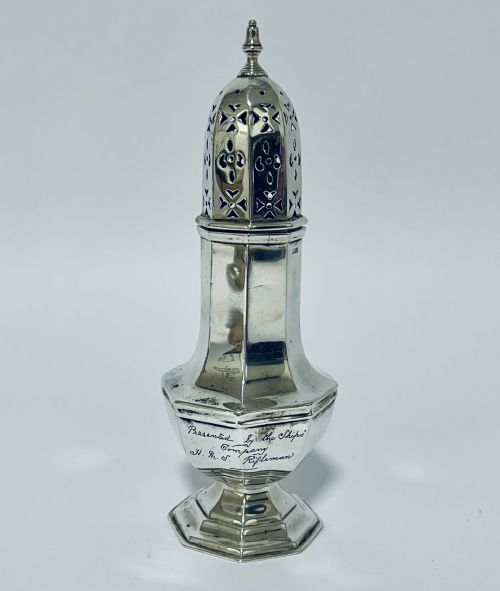


Silver Pierced Pepper Shaker
A silver pierced pepper shaker brings functional Georgian, Victorian, and Edwardian elegance to the dining table.
Silver Pierced Pepper Shaker
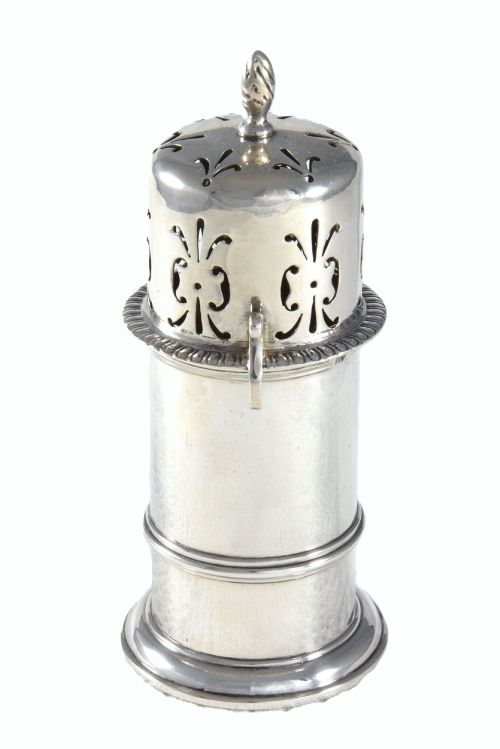
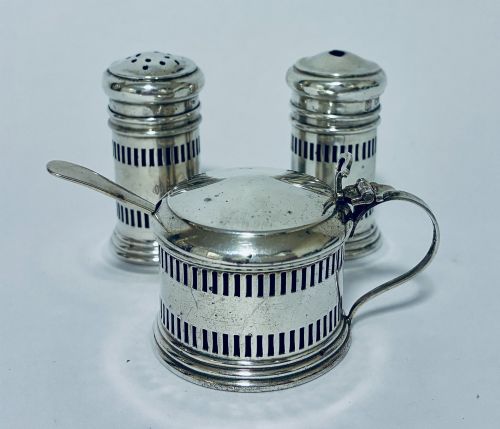
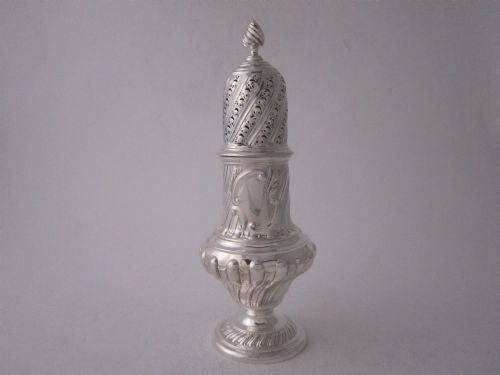
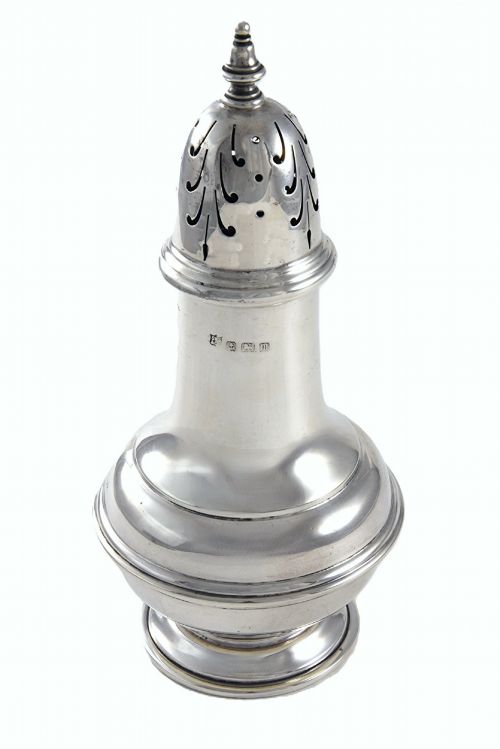
A silver pierced pepper shaker sits among dining and desk accessories that include sugar casters, pounce pots, cruet sets, and table salts. These pieces span from the eighteenth century through the Georgian, Victorian, and Edwardian eras up to the nineteen-thirties.
The form is most commonly encountered as a single shaker or caster, though pairs and part cruet sets appear alongside monumental individual casters. They serve to dispense seasoning or powder across surfaces.
Makers working within these periods shaped silver into pierced vessels, often fitted with cobalt glass liners where the body required protection or visual contrast.
How they were made
Silversmiths constructed these vessels primarily from sterling silver, employing techniques of piercing, casting, and turning to shape the metal bodies and removable lids. The metalwork relies on precise hand-piercing to create the decorative patterns through which the contents are shaken.
Where the design incorporates glass, blue cobalt glass liners provide a contrasting inner vessel that is held securely within the openwork silver frame. Early examples demonstrate skilled hand-tooling on both the main body and the fitted top.
Silver Pierced Pepper Shaker Retail Price Guide 2026
Typical asking prices for silver pierced pepper shaker among the pieces listed under this phrase on Sellingantiques today, from the lower quarter to the upper quarter. They describe what is for sale here now, not the wider market.
Some tiny Victorian shakers were built so small they could barely season a boiled egg without a refill.
What varies in quality
The distinction between standard examples and exceptional pieces rests upon the crispness of the hand-pierced work and the weight of the sterling silver used in the construction. Heavier bodies and deeply defined piercing reflect superior manufacturing standards.
Provenance and maker attribution elevate certain items, particularly eighteenth-century works bearing clear hallmarks and maker marks from established workshops. The integrity of the original pierced lid and any associated glass liners contributes to the overall cohesion of the piece.
James Goodwin·Thomas Ross·Charles Alchorne
The Silver Pierced Pepper Shaker Glossary
- Caster
- A cylindrical or pyriform container with a pierced domed lid used for sprinkling sugar, pepper, or other powders. These vessels range from domestic table sizes to monumental display pieces.
- Pounce Pot
- A small container with a perforated top used to sprinkle sand or gum sandarac over freshly written ink to speed drying. They share a very similar form to early pepper shakers.
- Cruet Set
- A matched collection of bottles or shakers for holding condiments such as oil, vinegar, salt, and pepper, often housed in a silver frame. These sets organise table seasoning into a single unit.
- Cobalt Glass
- A deep blue glass frequently used for liners inside pierced silver vessels so the dark colour shows through the openwork design. This material provides a striking visual contrast to polished sterling silver.
Silver Pierced Pepper Shaker: Frequently Asked Questions
How do I use a silver pepper shaker safely?
Fill the shaker through the base or by removing the pierced top, ensuring the interior remains dry before adding seasoning. Use a soft cloth for routine cleaning to protect the polished exterior and any delicate piercing.
Avoid abrasive cleaners that can scratch the sterling silver surface or damage the fine details of the pierced design. If the piece includes a glass liner, remove it carefully for washing separately.
How do I tell an 18th century shaker apart from a later one?
Eighteenth-century examples often display heavier hand-formed construction and distinct maker marks alongside assay office stamps characteristic of the Georgian period. Their proportions tend to be more monumental, reflecting the dining customs of the time.
Later Victorian and Edwardian pieces frequently show machine assistance in their piercing and lighter overall silver weights. Hallmarks provide the most reliable guide for dating the piece accurately.
What is the difference between a sugar caster and a pepper shaker?
Sugar casters are generally larger vessels designed to distribute granulated or powdered sugar over desserts and baked goods. Pepper shakers are smaller in scale and intended for table seasoning during meals.
Both items feature pierced lids, but their capacity and proportions reflect their distinct culinary uses.
Can I display these pieces on an open dining table?
These silver vessels suit regular table use or cabinet display, bringing historical craftsmanship into a modern dining setting. Their reflective surfaces catch ambient light, adding a focal point to the room.
Routine handling helps maintain the natural lustre of the silver through gentle polishing from use.