

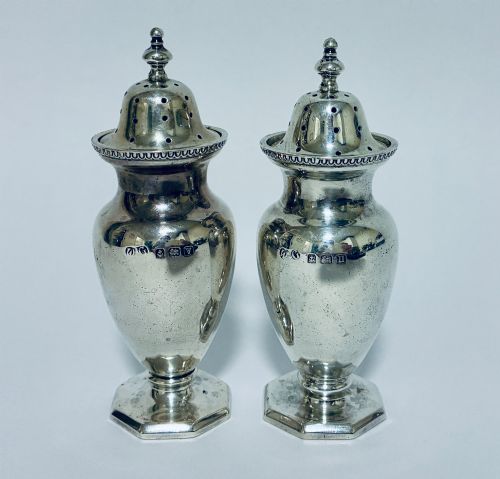
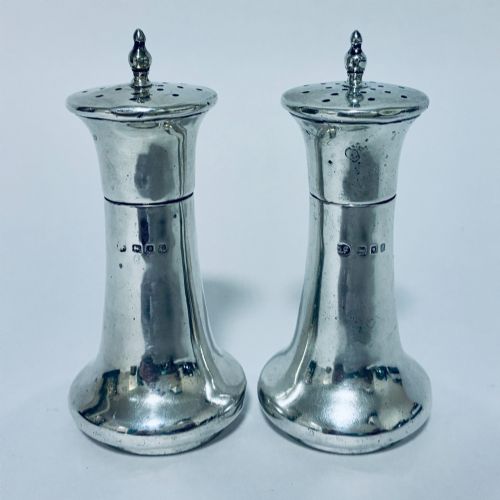
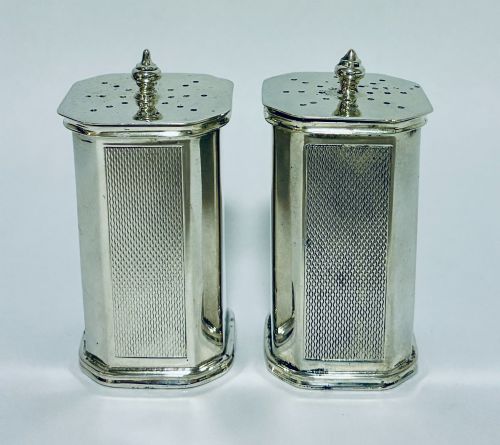


Silver Pepper Casters Pair
These silver pepper casters pair sets bring genuine period character to the table, offering both practical dining utility and traditional craftsmanship.
Silver Pepper Casters Pair
A silver pepper casters pair brings traditional dining table coordination into the room, originating from various eras including Victorian, Edwardian, and the eighteenth century. These matched sets take forms such as pepper pots, pepperettes, novelty figures, and larger salt and pepper shakers.
The pieces visible on this page most commonly date from the Victorian and Edwardian periods, alongside early twentieth-century examples and George II designs. Buyers frequently encounter standard cylindrical pots alongside novelty animal shapes like pheasants or Mr Punch's dog Toby.
Tableware offerings extend beyond simple shakers to include cruet sets and table salts, often paired together in matched configurations. Each set reflects the dining habits and silversmithing standards of its specific period of origin.
Materials and construction
Makers utilised sterling silver and solid silver as the primary metals for these items, shaping them through traditional silversmithing techniques. Many examples incorporate cobalt glass liners to protect the silver from the corrosive nature of the condiments.
Novelty and figural pieces demand skilled casting methods to achieve detailed animal and character forms, such as the pheasant and Toby designs. Boxed sets frequently pair the silver components with fitted interiors lined in velvet.
Silver Pepper Casters Pair Retail Price Guide 2026
Typical asking prices for silver pepper casters pair among the pieces listed under this phrase on Sellingantiques today, from the lower quarter to the upper quarter. They describe what is for sale here now, not the wider market.
Some Victorian diners relied on Mr Punch's dog Toby to season their meals.
Distinctions in quality
The distinction between standard domestic tableware and top-tier pieces rests largely on the complexity of the design and the skill of the maker. Finely cast novelty figures and fully hallmarked matching sets represent a higher level of silversmithing than basic utilitarian pots.
The presence of original fitted boxes and matching components elevates a set, as does the crispness of chased or cast details on figural pieces. Maker marks from established silversmiths further distinguish exceptional examples from anonymous workshop production.
Thomas Johnson·Charles Alchorne
The Silver Pepper Casters Pair Glossary
- Caster
- A small perforated vessel used for sprinkling sugar or dry spices such as pepper over food. These containers typically feature a pierced removable lid.
- Pepperette
- A small nineteenth-century term for a pepper pot or shaker used individually or as part of a condiment set. They are often smaller than earlier domestic casters.
- Cruet set
- A collection of small bottles or pots for holding condiments like vinegar, oil, mustard, salt, and pepper, usually housed in a shared frame.
- Hallmark
- An official stamp applied to precious metals indicating the standard of purity, the assay office, and the year of manufacture. These marks provide definitive historical dating.
- Cobalt glass
- A deep blue glass used to line open salt cellars and condiment holders to prevent chemical reactions between the metal and the contents.
Silver Pepper Casters Pair: Frequently Asked Questions
How do I date a silver pepper caster pair?
Dating relies primarily on the stamped hallmarks found on the silver components, which indicate the assay office and specific year of manufacture.
Stylistic elements and period characteristics, such as Edwardian proportions or Victorian casting styles, also help establish when the pieces were made.
What is the difference between a pepper pot and a caster?
Traditional casters generally feature a larger, more structural silhouette designed for kitchen or formal dining room service.
Pepper pots and shaker variants developed later for individual place settings tend to be smaller and lighter in construction.
Are novelty pepper shakers period items?
Many figural and novelty pepper shakers date from the Victorian and Edwardian eras, when whimsical dining accessories gained popularity.
These pieces depict animals, human figures, and characters from literature while maintaining a functional purpose.
How should I clean antique silver pepper pots?
Maintenance requires gentle cleaning with a soft cloth and specialised silver polish to preserve the original hallmarks and surface detail.
Harsh abrasive cleaners and chemical dips should be avoided, particularly on pieces with cobalt glass liners or delicate velvet-lined boxes.