


Silver Pebble Jewellery
Silver pebble jewellery brings together cut hardstones and silver mounts in nineteenth-century designs.
Silver Pebble Jewellery
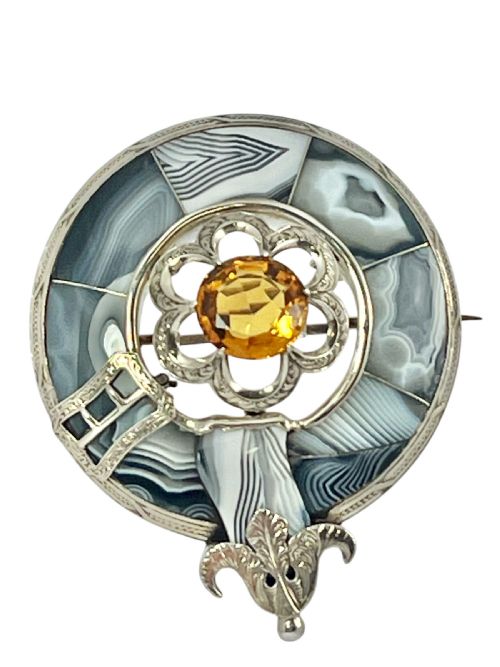
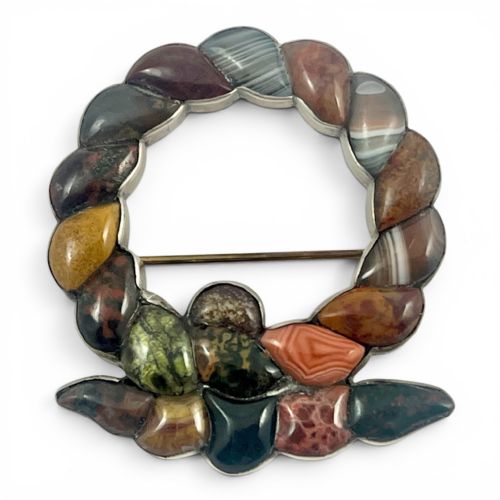
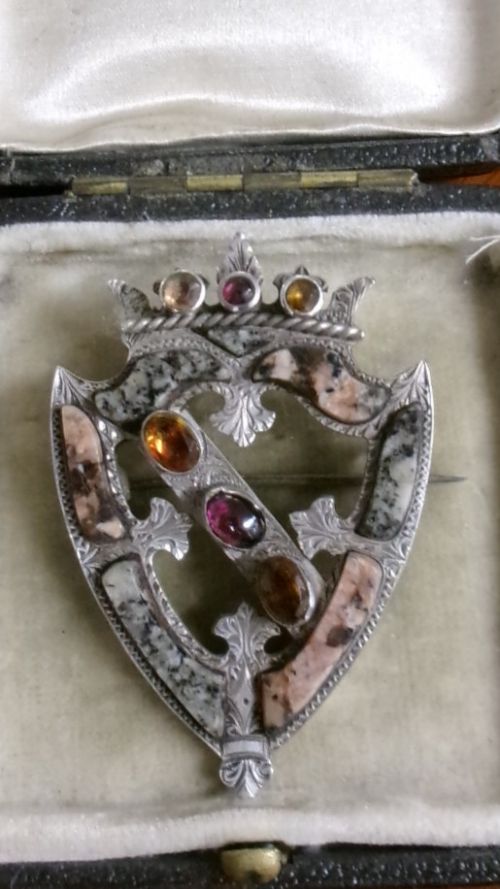
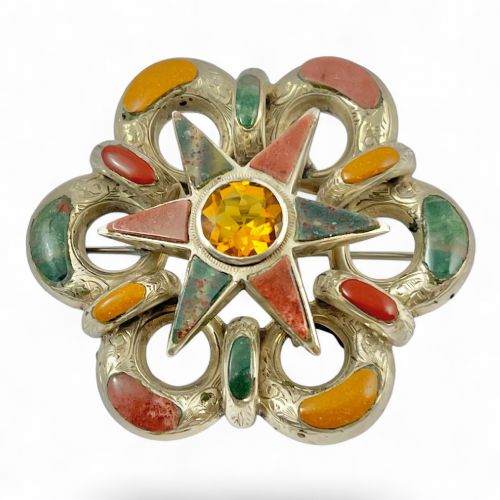
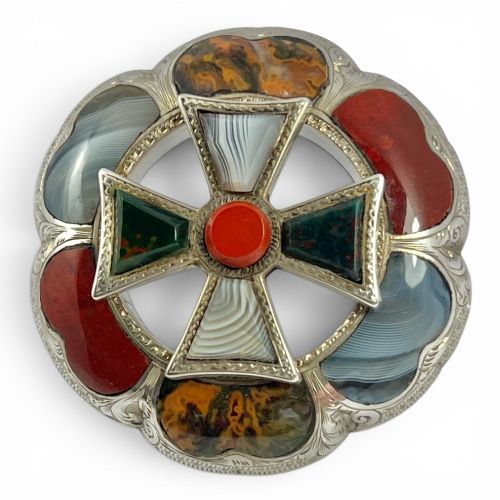
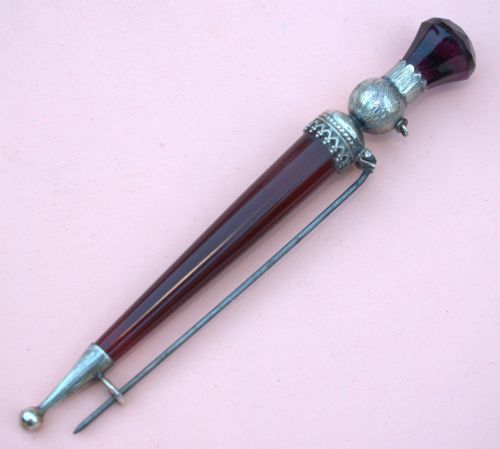
When you examine silver pebble jewellery, you are looking at nineteenth-century pieces set with hardstones like agate, jasper, bloodstone, and citrine. The most common version met on this page is the Victorian Scottish revival brooch, often shaped as a shield, dirk, sword, or bow.
Makers of these pieces drew heavily on regional forms, incorporating motifs such as broadswords and kilt pins into sterling silver settings. Alongside brooches, the selection includes padlock locket pendants, plaid brooches, and matched jewellery suites comprising earrings.
Originating largely during the Victorian era, these items reflect a deep nineteenth-century fascination with native stones and heritage craft. The stones themselves, gathered from Scottish locations including Montrose, display natural banding and varied colouration.
How they were made
The construction relies on solid silver mounts shaped to hold tightly fitted, polished hardstones. Lapidaries cut and polished agates, jaspers, and citrines to expose their natural geological patterns before securing them into metal bezels.
Craftspeople utilised traditional silversmithing techniques to form intricate regional motifs, including braided plaid brooches and basket-hilted broadswords. The integration of contrasting materials like bloodstone and granite required precise setting by hand.
Victorian Scots were so fond of highland weaponry they turned entire broadswords and dirks into miniature silver dress pins.
What varies in quality
The distinction between average and exceptional pieces rests upon the lapidary work and the variety of the stones selected. Finer examples display meticulously cut Montrose agates and bright citrines with strong, natural contrasts, fitted flush within substantial silver mounts.
Execution of the metalwork also divides the range, with superior items showing crisp chasing on broadsword hilts and shield frames rather than cast blanks. The complexity of the design, such as braided plaid work or multi-stone suites, elevates the standard of the piece.
The Silver Pebble Jewellery Glossary
- Montrose agate
- A variety of banded chalcedony sourced near Montrose in Scotland, prized for its distinct natural striping. These stones form the visual centrepiece of many Victorian brooches.
- Jasper
- An opaque, fine-grained variety of quartz used alongside agate in nineteenth-century pebble work. It offers earthy reds, greens, and browns that contrast with bright silver.
- Dirk brooch
- A fastening pin shaped in the form of a traditional Scottish dagger. These pieces often feature cairngorms or citrines mounted in the hilt.
- Bloodstone
- A dark green jasper flecked with red spots of iron oxide, utilised in Scottish revival pieces. It provides a striking, sombre tone against polished silver settings.
- Padlock locket
- A hollow pendant charm shaped like a traditional padlock, frequently hinged and decorated with hardstones. They were popular keepsakes during the Victorian period.
Silver Pebble Jewellery: Frequently Asked Questions
How do I wear a antique brooch?
These pieces function well secured to heavy woollen garments, heavy scarves, or structured lapels. Their substantial weight suits fabrics that can support the metal mount without sagging.
For daily wear, pin the brooch firmly through multiple threads to distribute the weight evenly across the cloth.
What stones are used in these items?
The mounts incorporate various hardstones native to Scotland, predominantly agates, jaspers, and bloodstones. Citrines and cairngorms also appear frequently as central yellow or smoky quartz focal points.
Each stone is polished to reveal natural mineral banding rather than dyed or artificially treated.
Are these pieces strictly Victorian?
The overwhelming majority date from the nineteenth century, specifically the Victorian period between 1840 and 1900. Scottish revival designs flourished during Queen Victoria's reign due to her affinity for Balmoral.
Stylistic cues and hallmarking help narrow down the production decade within this Victorian window.
How should I clean silver settings?
Polishing cloth usage on the silver should avoid direct contact with the softer hardstones like agate and jasper. Gentle wiping maintains the metal brightness without abrading the bezels.
Harsh chemical dips must be avoided entirely, as they damage the polished stone surfaces and weaken historical solder joints.