

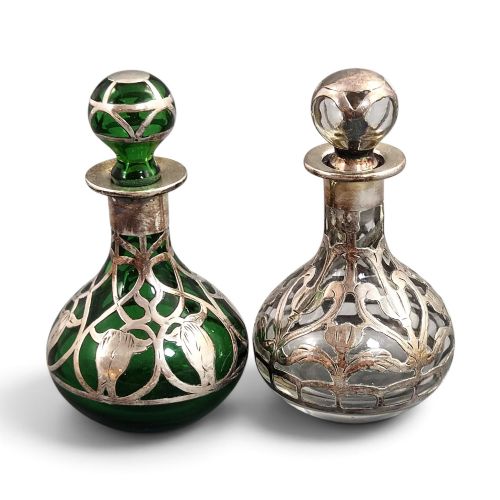
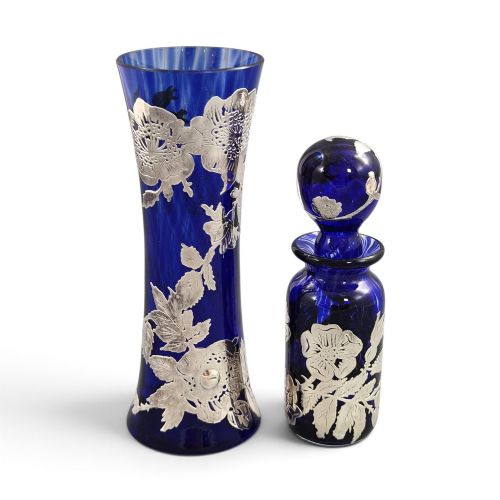


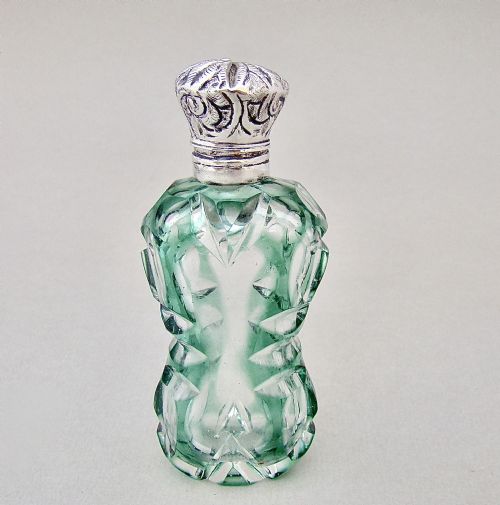
Silver Overlay Glass Bottle
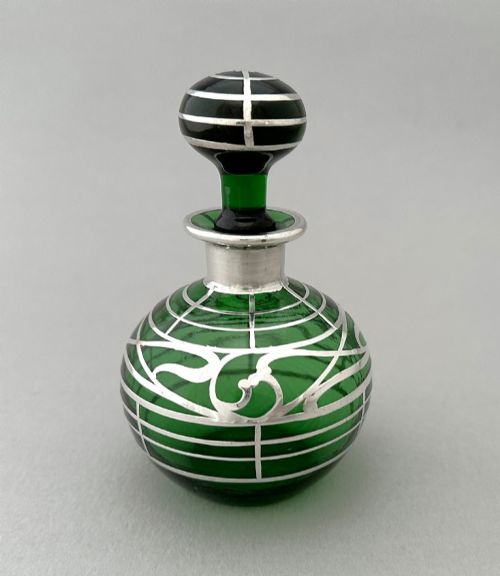
A silver overlay glass bottle brings together tactile moulded metal and colourful glass, capturing the ornate vanity designs of the Victorian and Edwardian eras.
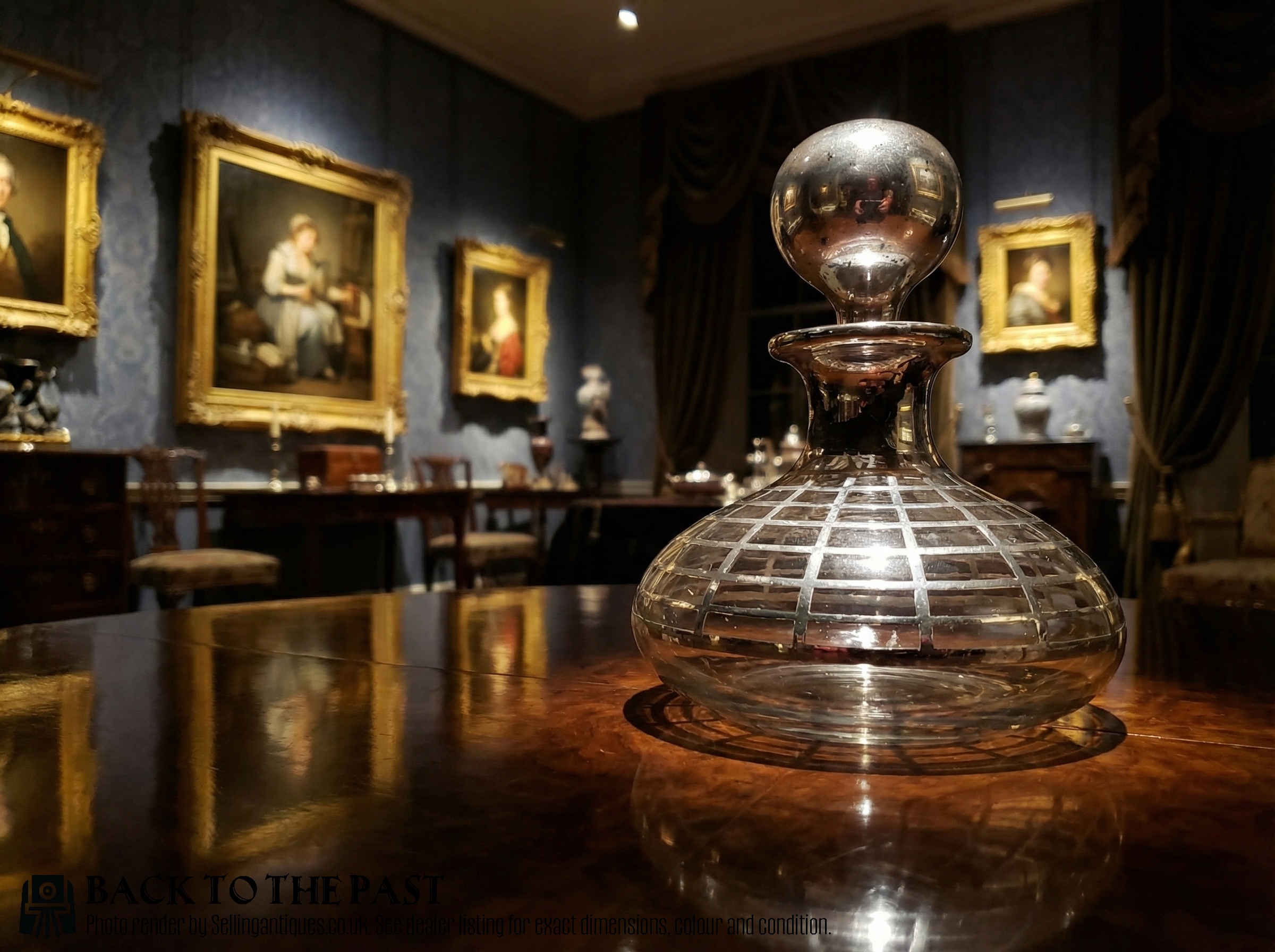
Silver Overlay Glass Bottle
A silver overlay glass bottle is primarily a scent or perfume container, alongside occasional decanters, vanity glassware, and small vases. These objects span periods from the mid-nineteenth century through the Edwardian years and into late twentieth-century studio glass.
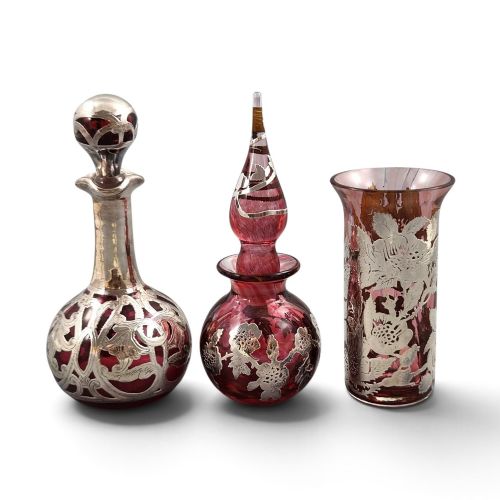
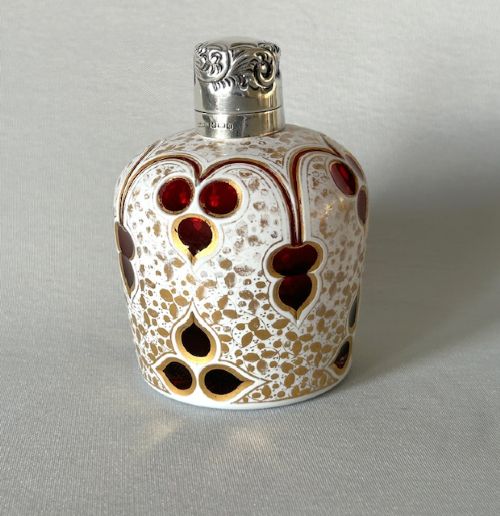
The most common examples on this page are Victorian and Edwardian scent bottles, often featuring coloured glass such as cobalt, green, cranberry, or amethyst beneath intricate silver work. French nineteenth-century and Bohemian pieces also frequently appear among the selections.
Buyers encounter smaller chatelaine bottles alongside larger vanity ensemble pieces and spirit decanters. The core of the selection relies on nineteenth-century craftsmanship adapted for personal grooming and domestic display.
How They Were Made
The creation of these pieces involved applying sterling silver or silver plate directly onto glass bodies, sometimes utilising cut glass or cased glass techniques. Molten glass or finished glass vessels were combined with silver mounts and bonded metal patterns.
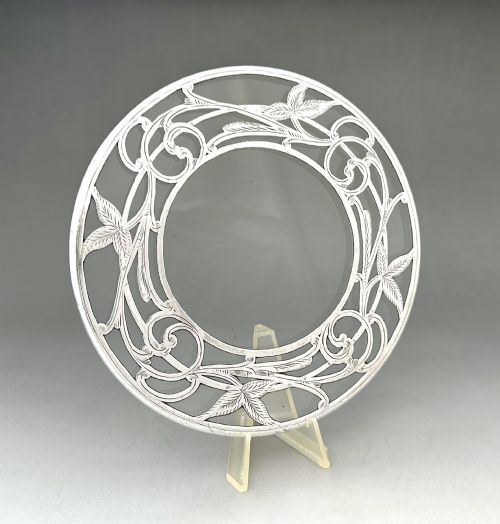
Makers utilised techniques ranging from traditional glass cutting to mercury glass production and studio glass forming. The silver components were often punched, pierced, or cast in floral and Art Nouveau motifs before being secured to the glass surface.
Silver Overlay Glass Bottle Retail Price Guide 2026
Typical asking prices for silver overlay glass bottle among the pieces listed under this phrase on Sellingantiques today, from the lower quarter to the upper quarter. They describe what is for sale here now, not the wider market.
Victorian ladies carried tiny scented bottles on their belts because city air demanded immediate chemical assistance.
What Varies in Quality
Quality rests upon the crispness of the silver work and the depth of the underlying glass colour. Finely pierced Art Nouveau plant motifs and heavy gauge sterling silver represent the upper end of production compared to simpler plated mounts.
The integration between the metal sheath and the glass body indicates higher manufacturing standards. Pieces that show meticulous hand-chasing on the silver and unblemished cased or cut glass demonstrate superior workshop origin.
Gorham·Laugharne Glass·The Boots Company·Charles May·Alvin·The Mousley Brothers·Abrahams And Co
The Silver Overlay Glass Bottle Glossary
- Silver overlay
- Metal decoration bonded directly to the exterior of a glass vessel. This technique allowed silversmiths to wrap glass perfume bottles and decanters in intricate floral or geometric patterns.
- Cased glass
- A method where a layer of coloured glass is fused over a clear or contrasting glass base. It created the rich hues seen in Victorian Bohemian scent bottles.
- Chatelaine
- A decorative belt hook worn with suspended utility items. Small perfume bottles often featured loops to hang from these waist ornaments.
- Mercury glass
- A double-walled blown glass object silvered on the interior. This created a reflective, mirror-like finish beneath clear outer walls.
- Sterling silver
- An alloy consisting of ninety-two point five percent silver by mass. British and American makers stamped their mounts with hallmarks to confirm this standard.
Silver Overlay Glass Bottle: Frequently Asked Questions
What are silver overlay glass bottles?
These items are nineteenth and early twentieth-century containers designed for perfume, smelling salts, or spirits. Silversmiths decorated glass vessels by applying cutout metal sheaths directly to the exterior.
Most examples combine sterling silver with coloured glass such as cranberry, cobalt, or green. They served as personal grooming accessories or dressing table display pieces.
How were these bottles used?
Victorian and Edwardian owners filled them with concentrated scents, colognes, or reviving salts for daily personal use. Smaller versions hung from chatelaine clips on belts, while larger vessels stayed on vanity tables.
Decanters and spirit bottles performed a similar decorative and functional role in the dining room or parlour. Their tight stoppers kept volatile perfumes from evaporating.
How do I care for silver overlay?
Clean the silver elements gently with a soft cloth to avoid catching the edges of the metal on the glass. Keep polishes away from the margins where metal meets glass to prevent residue buildup.
Hand wash the glass interior with warm water without submerging antique cork or metal collars for prolonged periods. Gentle maintenance preserves the contrast between the dark patina and the bright metal.
How can I tell the period?
Examine the stylistic motifs and any hallmarks stamped into the silver mounts. Art Nouveau plant tendrils typically point toward nineteen hundred, while crisp geometric cutting suggests earlier Victorian work.
Maker marks and date letters on the silver collar provide precise manufacturing years for British pieces. Bohemian and French imports often rely on glass colour and mounting style for dating.