




Silver on Porcelain
Silver on porcelain brings together ceramic bodies and precious metal mounts, uniting domestic utility with decorative refinement.
Silver on Porcelain
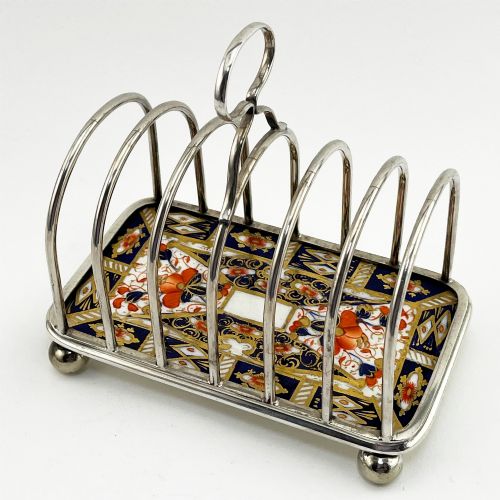
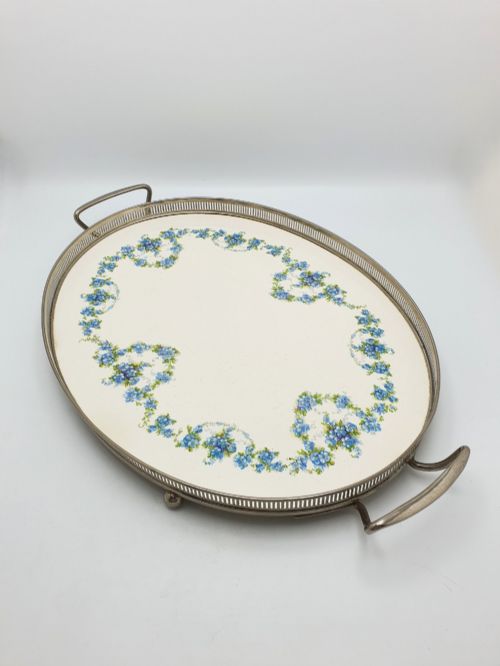
When you search for silver on porcelain, you encounter items where ceramic vessels, plates or jars receive metal mounts, rims or openwork frames. These objects serve functions ranging from serving food to holding vanity items on dressing tables.
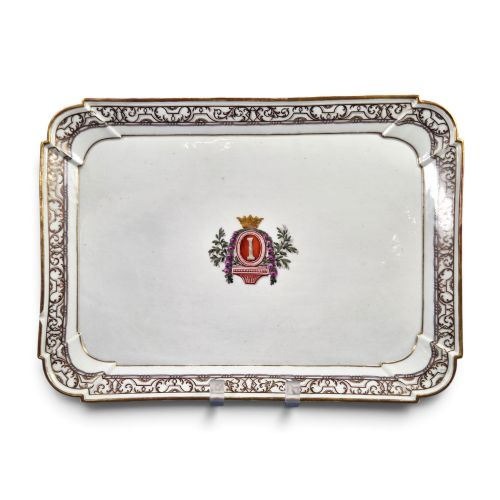
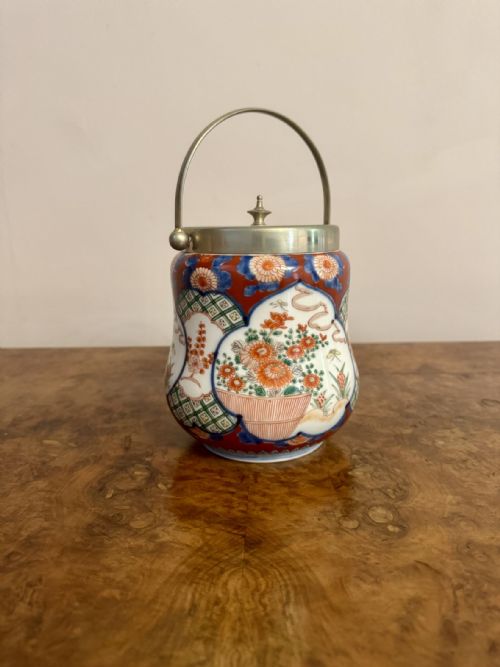
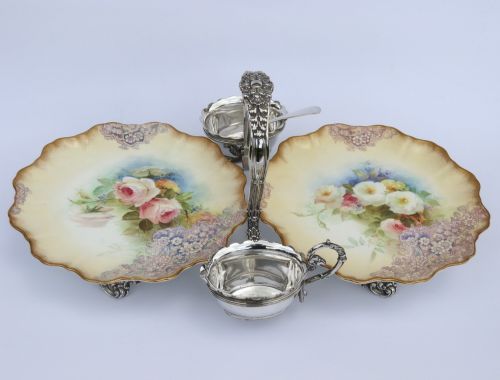
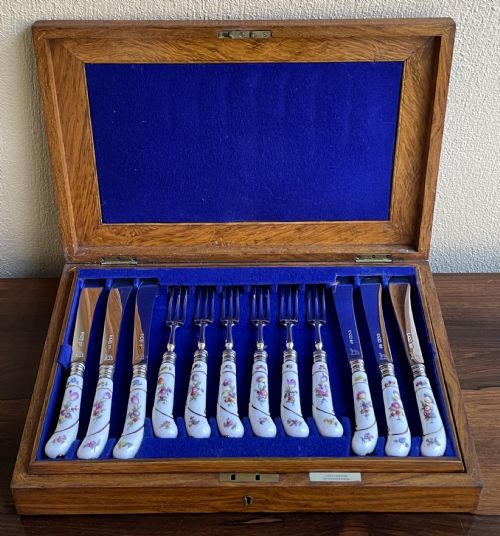
The pieces listed on this page span the Victorian and Edwardian eras, alongside pieces from the eighteenth century. You find biscuit barrels, serving trays and dessert sets combining ceramic bodies with silver plate or sterling silver.
Origin points vary widely, covering English potteries like Doulton Burslem and Crown Devon, continental European makers, and Japanese Imari wares. Each combination integrates ceramic manufacture with metalworking traditions of the period.
Materials and techniques
Makers combine porcelain or earthenware bodies with silver plate or sterling silver mounts, often securing the metal components directly to the ceramic rim or base. Some examples incorporate enamel, gold leaf or hand-painted floral decoration beneath the glaze.
Metal mounts are cast, pierced or electroplated onto the ceramic form, creating a secure protective edge or decorative framework. Potters shape the underlying ceramic through throwing or moulding before applying transfers, hand-painted motifs or glaze finishes.
Silver on Porcelain Retail Price Guide 2026
Typical asking prices for silver on porcelain among the pieces listed under this phrase on Sellingantiques today, from the lower quarter to the upper quarter. They describe what is for sale here now, not the wider market.
Listings feature porcelain and earthenware bodies paired with sterling silver and silver plate, spanning the eighteenth to twentieth centuries.
What distinguishes quality
The standard of a piece rests upon the crispness of the ceramic moulding and the precision of the metal mount fitting the body. Superior examples feature hand-painted details and well-balanced proportions between the ceramic vessel and its silver elements.
Weight and finishing in the metalwork distinguish finer output, where hinges, handles and rims operate smoothly and align securely with the ceramic shape. The integration of the two distinct materials determines the overall success of the piece.
Walker and Hall·Doulton Burslem·Carrington·Crown Devon·Elkington·Jean Gille
The Silver on Porcelain Glossary
- Biscuit barrel
- A ceramic container with a lid and often a swing handle, designed for storing dry biscuits at the dining table. These vessels frequently feature silver-plated rims and covers.
- Silver plate
- A layer of silver fused to a base metal such as copper or nickel, providing the appearance of solid silver. This technique became widespread for domestic wares during the nineteenth century.
- Imari
- A style of Japanese export porcelain decorated in underglaze blue and iron red with gold additions. These vibrant patterns heavily influenced European ceramic design.
- Flow blue
- A ceramic transfer-printing technique where the cobalt blue pigment bleeds slightly into the white glaze during firing. This creates a soft, hazy appearance on Victorian tableware.
Silver on Porcelain: Frequently Asked Questions
How are silver on porcelain items cleaned?
Clean the ceramic body gently with warm soapy water using a soft cloth, avoiding harsh abrasives that might damage the glaze.
Polish the silver mounts separately with a dedicated silver cloth, taking care not to let polish residue gather in the ceramic crevices or painted details.
What periods do these pieces date from?
The selection spans from eighteenth-century continental pieces up through Victorian and Edwardian examples into the early twentieth century.
Each period brings distinct stylistic traits, ranging from ornate rococo serving trays to practical Edwardian biscuit barrels.
Can these items be used daily?
Many items like serving trays and toast racks were built for regular dining table service and remain structurally robust for similar tasks today.
Delicate vanity jars and scent bottles require more careful handling due to their decorative nature and smaller applied silver elements.
How do I identify the maker?
Look underneath the ceramic base for factory backstamps, impressed marks or painted signatures identifying the pottery.
Check the silver mounts for hallmarks or maker stamps that indicate the silversmith or plating company responsible for the metalwork.