


Silver Mounted Glass Flagon
A silver mounted glass flagon combines clear or coloured vessel work with metal collars, hinges, and lids for serving wine.
Silver Mounted Glass Flagon
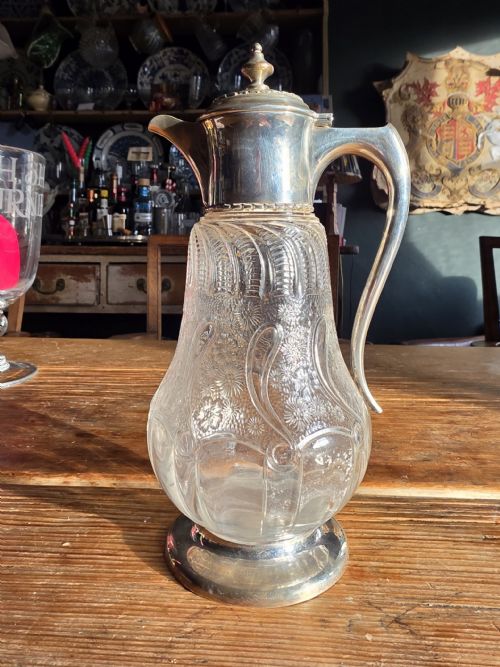
A silver mounted glass flagon is a serving vessel designed for wine, claret, or whisky at the dining table. These pieces bridge the work of the glassblower and the silversmith, combining functional vessels with decorative metal collars, handles, and hinged lids. When you search for a silver mounted glass flagon, you are looking at items that served a practical purpose during formal meals and gatherings.
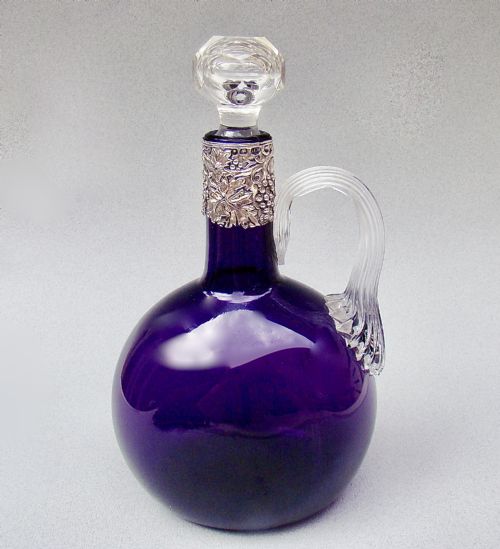
The versions you are most likely to meet on this page date predominantly from the Victorian and Edwardian periods. They appear in various forms, including claret jugs, wine decanters, carafes, and ewers. Many examples feature clear cut glass, while others showcase coloured glass such as cranberry, amethyst, green, or blue hues.
Makers and manufacturers during these eras produced both sterlingsilver-mounted pieces and silver-plated examples. The metal mounts often display hallmarks that indicate the assay office, maker, and year of production. Alongside traditional forms, you will encounter novelty shapes like champagne bottles and tankards.
What varies in quality
The weight and depth of the glass cutting determine much of the visual impact. Heavy, clear crystal with crisp, deep-wheel engraving represents the finer end of production compared to lighter, moulded glass bodies. The clarity of coloured glass vessels also dictates their standing, with rich, even tones outperforming cloudy or unevenly tinted material.
The execution of the silver mounts separates standard commercial work from superior pieces. Thicker gauge sterling silver, intricately chased or cast details on the handle and finial, and tightly engineered hinged lids show superior craftsmanship. Well-balanced proportions between the glass body and the metal hardware define the more successful designs.
Listings feature items spanning the Victorian and Edwardian periods, utilising clear cut glass, cranberry glass, and sterling silver.
William Comyns·Henry Matthews·William Davenport
The Silver Mounted Glass Flagon Glossary
- Claret jug
- A specific pouring vessel designed for red wine, usually featuring a handle and a hinged silver lid. These jugs became central to Victorian dining rituals.
- Sterling silver
- An alloy consisting of ninety-two point five percent silver and seven point five percent other metals, typically copper. British pieces carry hallmark stamps to verify this standard.
- Old Sheffield plate
- A composite material made by fusing a thin sheet of silver to a thicker copper base before rolling. This technique preceded modern electroplating.
- Nailsea glass
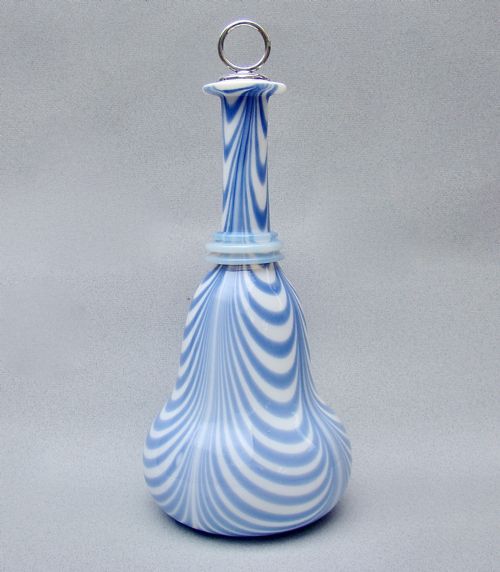
- Glassware associated with the Nailsea glassworks in Somerset, known for its distinctive looped or patterned coloured glass threads. Pieces often display organic, spontaneous decoration.
- Ewer
- A large jug with a wide spout and a curved handle, used historically for pouring water or wine. In later periods, the form was adopted for decorative serving vessels.
Silver Mounted Glass Flagon: Frequently Asked Questions
What is a silver mounted glass flagon?
A silver mounted glass flagon is a serving vessel that combines a glass body with silver or silver-plated collars, handles, and hinged lids. These items were primarily used for serving wine or claret during formal nineteenth and early twentieth-century dining.
They bring together the distinct crafts of glassblowing and silversmithing. The metal mounts reinforced the neck of the vessel and provided a secure mechanism for pouring.
How do I date a silver mounted glass flagon?
You can date many pieces by reading the hallmarks stamped into the silver mounts, which indicate the assay office and the year of manufacture. Stylistic clues in the glass-cutting patterns and the shape of the handle also point to specific decades.
Victorian pieces often feature heavy ornamentation and deep cutting, whereas Edwardian examples sometimes display lighter, more restrained silver work. Unmarked silver plate requires you to rely entirely on the style of the glass and the form of the vessel.
Were these flagons used for water or wine?
While some larger ewers served water at the table, the majority of these pieces were intended for wine, specifically claret and dessert wines. The inclusion of hinged lids helped to keep the contents fresh and protected the wine during long meals.
Specific forms like the claret jug were tailored directly to the rituals of nineteenth-century dining. Their presence on the table indicated a certain level of hospitality and refinement.
Why do some flagons feature coloured glass?
Coloured glass gained popularity during the Victorian period for decorative effect and to showcase advanced glass-making techniques. Cranberry, green, blue, and amethyst glass added visual contrast against the polished silver mounts.
These coloured vessels were often produced using mineral additives in the molten glass. They allowed hosts to coordinate their servingware with specific table settings or the type of wine being served.