


Silver Mirrored Table Stand
These silver mirrored table stands catch the light and lift a room, offering the reflective surface and decorative metalwork that collectors prize.
Silver Mirrored Table Stand
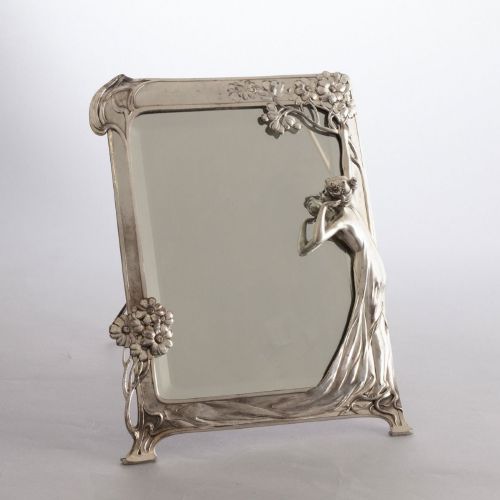
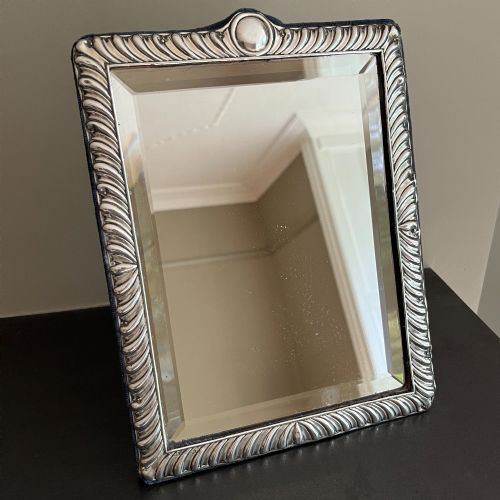
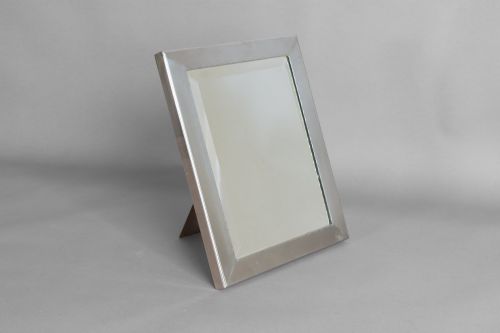
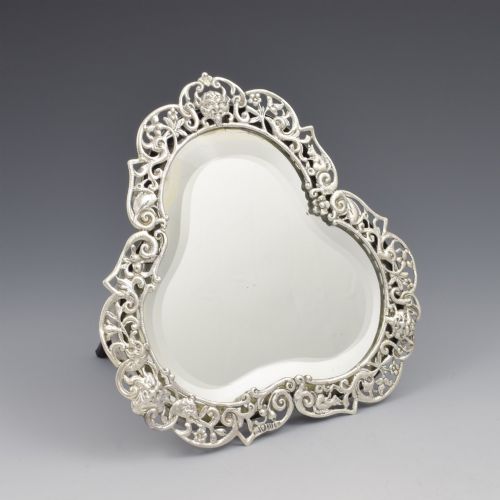
A silver mirrored table stand provides a reflective surface held within a decorative metal framework, designed to sit upon furniture and display objects or serve as a vanity mirror. The pieces available span from the nineteenth century into the twentieth century, taking forms such as table plateaux, dressing table mirrors, and vanity mirrors.
The selection includes Victorian examples alongside Edwardian and Art Deco pieces, with origins ranging from British makers to continental workshops. Forms vary from small easel mirrors to large table plateaux intended to hold centrepieces.
Materials and construction
Makers utilised sterling silver and silver plate alongside pewter, chrome, and glass to build these stands. Metal frames were cast, pierced, or stamped to create detailed borders, whilst velvet often backed the easel supports.
Mirror glass forms the central reflective plate, frequently paired with etched decoration on the glass surface. Metal components display hallmarks or makers' stamps denoting their composition and origin.
The selection includes pieces spanning the nineteenth and twentieth centuries, featuring sterling silver, silver plate, pewter, and chrome.
Assessing quality
Quality rests upon the crispness of the metalwork, whether cast, pierced, or stamped, and the preservation of the original silver plating or sterling surface. Pieces with deep relief work and intact glass plateaus stand apart from simpler iterations.
The integrity of the structural elements, such as working easel struts and original velvet backings, distinguishes finer examples. Maker attribution also plays a role in establishing the standing of an individual piece.
WMF·Henry Matthews·Elkington·Mirror Brot
The Silver Mirrored Table Stand Glossary
- Table plateau
- A mirrored stand placed on a dining table to hold centrepieces or decorative items. These protect the table surface and multiply the visual impact of displayed objects.
- Strut mirror
- A freestanding mirror supported by a hinged prop at the back. This form allows the angle of the glass to be adjusted on a dressing table.
- Sterling silver
- An alloy containing a high proportion of pure silver combined with other metals for durability. British pieces often feature hallmarks indicating the assay office and date.
- Silver plate
- A layer of silver fused to a base metal such as copper or nickel brass. This technique offered a bright finish at a lower cost than solid silver.
- Art Deco
- A design style dominant in the interwar years characterised by geometric shapes and streamlined forms. Pieces from this era favour functional elegance over ornate flourish.
Silver Mirrored Table Stand: Frequently Asked Questions
What is a silver mirrored table stand used for?
These pieces served multiple purposes in period homes, functioning as dressing table mirrors for personal grooming or as table plateaux to elevate centrepieces during dining. Their reflective glass amplified candlelight and natural illumination in the room.
Collectors today utilise them on sideboards and tables to display decorative objects or perfume bottles, continuing their traditional role in interior decoration.
How do I date a silver mirrored table stand?
Dating relies on examining the style of the metalwork, the construction of the easel or frame, and any visible hallmarks or registration numbers. Victorian and Edwardian pieces often display floral motifs and cast silver mounts.
Later items from the nineteen-twenties and nineteen-thirties adopt geometric Art Deco lines, chrome plating, or simpler frames that reflect changing aesthetic preferences.
What materials are used in these stands?
The frames are constructed from sterling silver, silver plate, pewter, or chrome, housing a flat or bevelled mirror glass panel. Some examples incorporate wooden or velvet-covered backs to support the structure.
German and British workshops employed these varied metals across different decades, shifting from ornate cast pewter and silver to industrial chrome.
How do I care for antique silver and mirror glass?
Care requires gentle cleaning of the metal surfaces using appropriate non-abrasive polishes, taking care to avoid contact with the mirror glass or velvet backing. Silver plate and sterling silver both benefit from regular, careful maintenance to preserve the finish.
Mirror glass should be wiped with a soft, dry cloth to prevent moisture from seeping behind the silvered backing along the edges.