
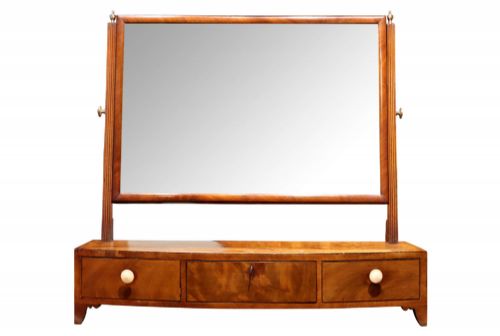


Mirrored Table Plateau
A mirrored table plateau brings reflective brilliance to dining tables and sideboards, anchoring centrepieces and displaying glassware.
Mirrored Table Plateau
A mirrored table plateau serves as a reflective surface designed to sit upon a dining table or sideboard, historically used to elevate centrepieces, lamps, or dessert stands while protecting the surface below. Buyers seeking a mirrored table plateau encounter forms ranging from Victorian silver plated stands and Edwardian Jeweller’s plateau mirrors to French Art Deco sideboard trays.
The pieces on this page span the nineteenth and twentieth centuries, including Victorian, Edwardian, and Art Deco examples alongside Georgian and Regency interpretations. Materials stretch from silver plate and mirrored glass to mahogany, brass, oak, pewter, and cranberry glass, reflecting diverse domestic interiors from grand dining rooms to boudoirs.
How they were made
Makers constructed these pieces using heavy plate glass or mirrored glass set within supportive frames of silver plate, brass, pewter, or timber such as mahogany and oak. Frames were cast, soldered, or joined to secure the fragile glass surface safely within a sturdy outer border.
Detailing often involved silver plating over a base metal, alongside etching upon the glass or incorporating ornamental galleries and feet. Some examples paired mirrored glass with exotic woods or coloured glass elements like cranberry glass to heighten the visual impact.
Sorcerer-type plateau mirrors bring a touch of optical magic to the sideboard, distorting reflections with theatrical charm.
What varies in quality
Quality reveals itself in the weight and substance of the metal mounts, the clarity and depth of the glass silvering, and the crispness of any engraved or etched decoration. Finer examples display heavier silver plating, substantial timber frames, and robust construction that supports heavy table ornaments without bowing.
The distinction between standard domestic wares and superior items lies in the refinement of the gallery work, the integration of decorative feet, and the precision with which the mirrored plate fits its frame. Age-appropriate patination on the silver plate or timber enhances the character of well-made specimens.
The Mirrored Table Plateau Glossary
- Silver Plate
- A thin layer of silver fused to a base metal such as copper, brass, or nickel silver. It provided the opulent appearance of solid silver at a lower cost.
- Gallery
- A decorative pierced or pierced-work rail surrounding the edge of a tray, plateau, or stand. It prevented items from sliding off the reflective surface.
- Epergne
- A central table ornament featuring multiple branching dishes or holders, frequently paired with mirrored plateaux. They displayed fruit, sweets, or flowers.
- Surtout de Table
- A large ornamental plateau or set of trays placed down the centre of a dining table. They often incorporated mirrored glass and elaborate metalwork.
Mirrored Table Plateau: Frequently Asked Questions
What is a mirrored table plateau used for?
A mirrored table plateau acts as a decorative base placed on dining tables or sideboards to elevate and reflect centrepieces, silver bowls, or glassware. The reflective surface multiplies candlelight and enhances the visual presence of objects displayed upon it.
Historically, these stands also protected highly polished wooden tabletops from heat, moisture, or drips descending from candlesticks and floral arrangements.
How do I date a silver plated plateau?
Dating a silver plated plateau involves examining the style of the mounts, the construction of the underside, and any maker marks or registration numbers stamped into the metal. Victorian and Edwardian pieces often exhibit distinct aesthetic movements through their floral chasing or geometric galleries.
Materials and framing techniques also assist in narrowing the decade of production, comparing the piece against known manufacturing standards from periods such as the nineteenth century or the Art Deco era.
Can I use an antique plateau on my dining table?
Antique plateaux function well in modern interiors as table centrepieces, drinks trays on sideboards, or display bases for decorative objects. Their reflective surfaces remain practical for holding bottles, glassware, or seasonal arrangements.
Care should be taken to protect the original mirror silvering and delicate metal frames from excessive moisture or heavy impacts during daily use.
What is a Jeweller’s plateau mirror?
A Jeweller’s plateau mirror is a specialised display stand originally utilised by merchants and jewellers to showcase small luxury goods, pocket watches, or silverware. The reflective glass and elevated frame enhanced the sparkle and detail of merchandise presented to prospective buyers.
In domestic settings, these sturdy, smaller mirrors served as elegant table trays or vanity accessories.
What materials are found in these plateaux?
These plateaux incorporate a variety of materials depending on their period and origin, combining mirrored glass with silver plate, brass, pewter, mahogany, or oak. Some specialised examples also feature coloured glass elements like cranberry glass or ornate ormolu mounts.
The combination of a sturdy structural frame with a reflective glass centre defined the standard construction across different manufacturing centres.