



Silver Meat Dish Covers
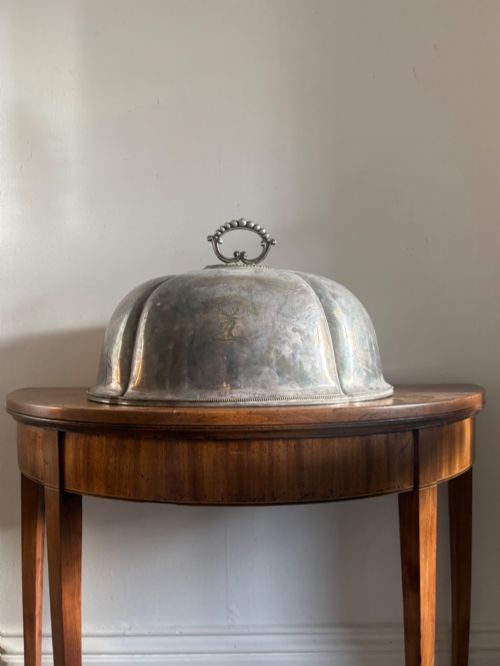
Silver meat dish covers are substantial dining table serveware designed to keep joints warm, bringing proper nineteenth-century heft to the table.
Silver Meat Dish Covers
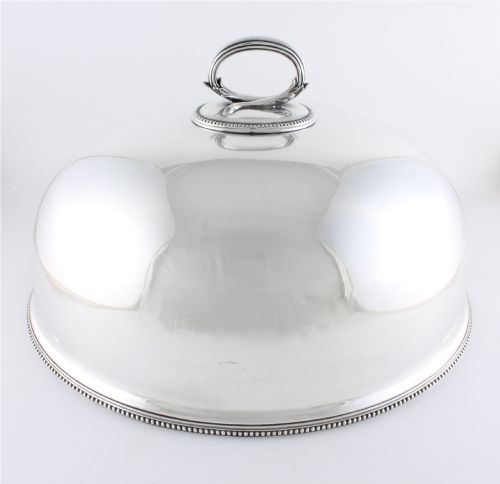
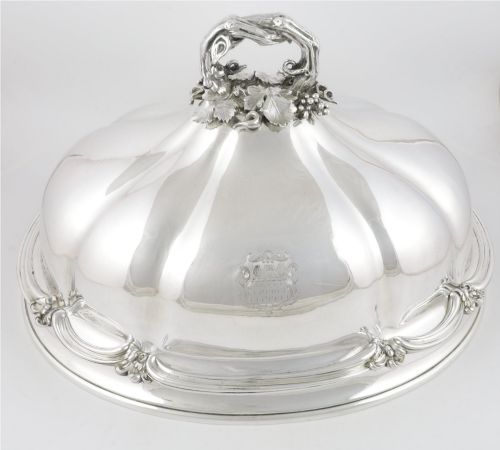
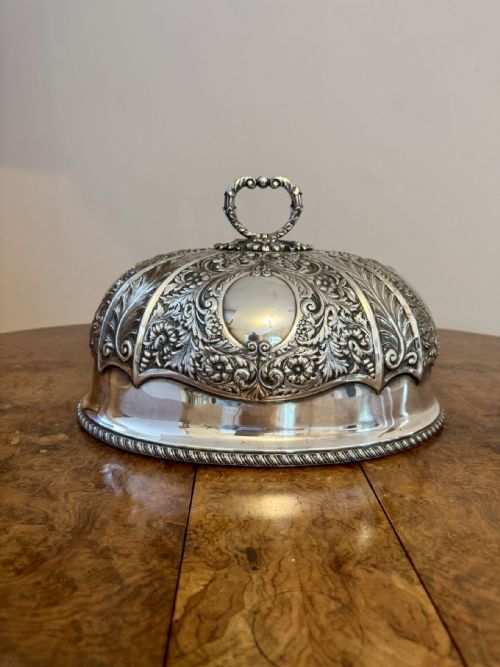
You are most likely to meet silver plate, old Sheffield plate, and EPNS examples across nineteenth-century styles including Regency, William IV, and Edwardian periods. They appear as standalone domes, warming dishes, and lidded serving tureens.
The forms span simple plain domes to pieces bearing maker marks from established workshops. Their primary function was practical, yet they served as grand centrepieces of formal nineteenth-century dining.
Materials and construction
Makers utilised silver plate, Old Sheffield plate, copper, and base metal to form these substantial covers. Old Sheffield plate involved fusing a thin layer of silver to a copper core, a method that produced distinct edge characteristics.
Later pieces relied on electroplating, known as EPNS, depositing silver onto base metal substrates. Metalworkers shaped these sheets into deep domes and fitted them with cast handles or finials.
Silver Meat Dish Covers Retail Price Guide 2026
Typical asking prices for silver meat dish covers among the pieces listed under this phrase on Sellingantiques today, from the lower quarter to the upper quarter. They describe what is for sale here now, not the wider market.
Periods represented include Georgian, Regency, William IV, Victorian, and Edwardian.
Judging quality in domestic serveware
Quality rests upon the weight of the metal and the integrity of the plating. Heavier gauge copper or base metal prevents denting and distortion over decades of use.
The definition in cast handles and applied borders distinguishes standard production from finer workshop output. Maker attribution, such as work by Roberts Cadman or Henry Wilkinson, indicates higher manufacturing standards.
Roberts Cadman·Henry Wilkinson·Boulton·Dan Holy
The Silver Meat Dish Covers Glossary
- Old Sheffield plate
- A material made by fusing silver to a copper base before rolling into sheets. This technique predates modern electroplating and leaves subtle copper seams visible at edges.
- EPNS
- Electroplated nickel silver. A common nineteenth-century plating method that replaced older fusion techniques.
- Cloche
- A bell-shaped cover used for food service. The term is often used interchangeably with meat dome.
- Warming dish
- A specialised vessel designed to hold hot water beneath a food cover. It kept meat warm during long nineteenth-century meals.
Silver Meat Dish Covers: Frequently Asked Questions
What are silver meat dish covers used for?
These covers sat over large joints of meat or poultry on the dining table. They trapped heat and kept food warm while moving from the kitchen.
In grand nineteenth-century houses, they added ceremony to the dining room and protected meals from drafts.
How do I identify Old Sheffield plate?
Old Sheffield plate shows a thin layer of silver fused over a copper core. Look closely at edges and seams where the underlying copper often peeks through as a rosy line.
This fusion technique was largely superseded by electroplating during the nineteenth century.
What is the difference between a cloche and a meat dome?
A cloche is simply a bell-shaped cover for food, while a meat dome specifically refers to large covers built for roasts. Both terms describe serveware intended to keep food warm.
On this page, you will find both forms used across the Victorian and Georgian periods.
How do I clean antique silver plate?
Use a gentle silver polish and a soft cloth to avoid wearing through thin plating. Old Sheffield plate requires particular care to protect the exposed copper edges.
Regular, light cleaning preserves the finish better than aggressive scrubbing.