

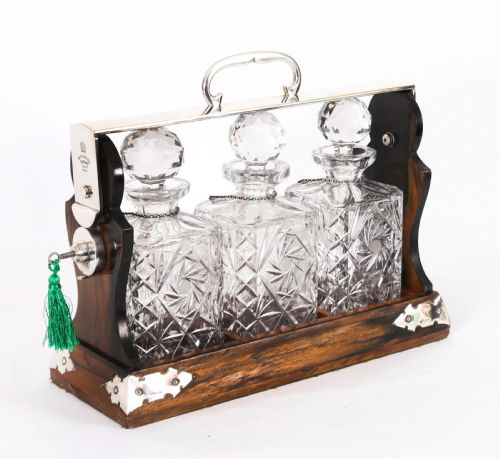


Silver Liquor Frame
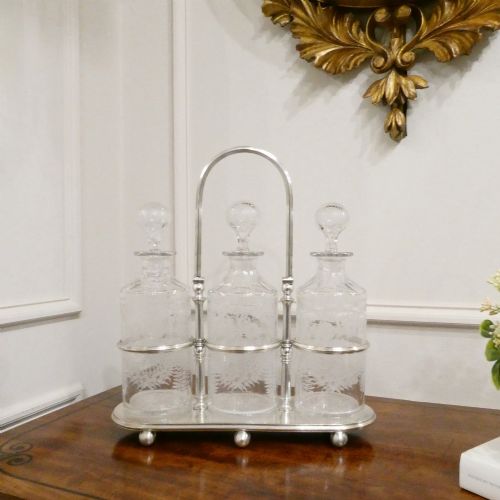
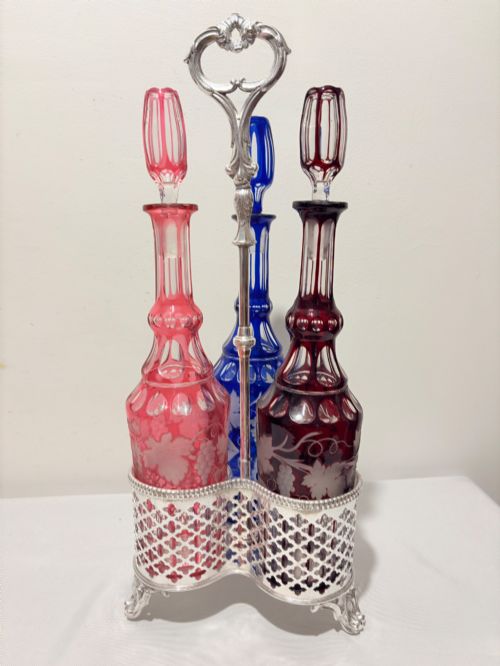
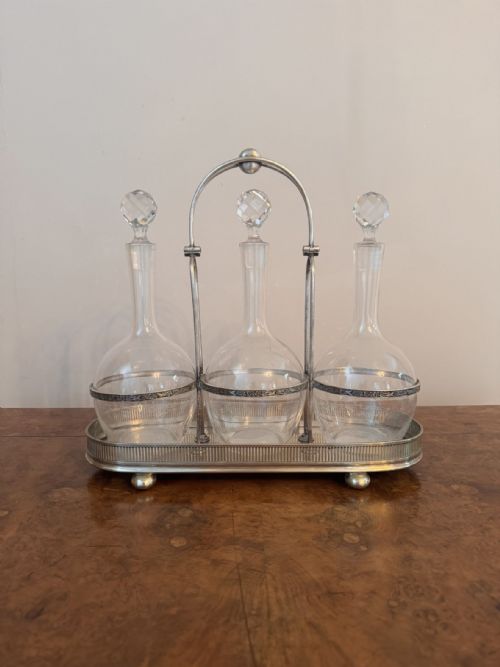
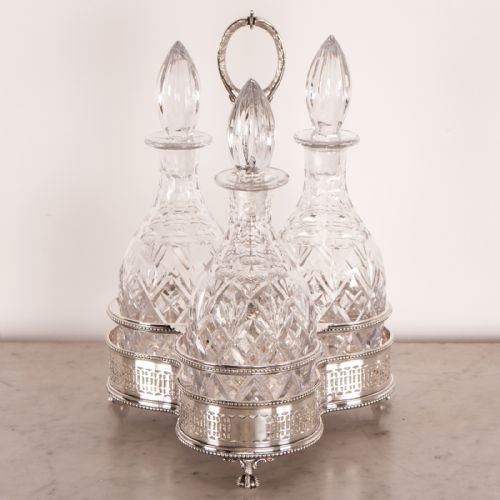
A silver liquor frame organises spirits with elegance, holding glass decanters securely in a metal stand for display and serving.
Silver Liquor Frame
A silver liquor frame, often called a tantalus or decanter stand, is a sophisticated container designed to house and display several glass bottles. These pieces span the Victorian and Edwardian eras, reflecting the period's taste for structured hospitality.
The objects seen here appear predominantly as multi-bottle frames and tantalus sets. They combine secure metal frameworks with cut glass or crystal decanters.
Originating largely from the nineteenth and early twentieth centuries, these stands range from open frames to locking tantalus boxes. They serve as functional barware that showcases craftsmanship alongside entertaining accessories.
Materials and construction
Makers utilised silver plating, Old Sheffield Plate, and solid silver to construct the structural frames and handles. Wood varieties such as oak and coromandel wood form the robust bases and locking enclosures of several pieces.
The accompanying vessels consist of cut glass and cut crystal, sometimes featuring coloured glass. These materials are shaped into decanters designed to fit snugly within the metallic and wooden frames.
Silver Liquor Frame Retail Price Guide 2026
Typical asking prices for silver liquor frame among the pieces listed under this phrase on Sellingantiques today, from the lower quarter to the upper quarter. They describe what is for sale here now, not the wider market.
Victorian hosts used locking tantalus frames to safely restrict the household staff's access to the brandy.
What separates the finest pieces
Quality rests in the weight and thickness of the metal plating and the precision of the wooden joinery. Finer frames exhibit crisp casting, ornate detailing, and robust locking mechanisms that operate smoothly.
The standard of the glass vessels dictates overall value. Matched sets of heavy cut crystal decanters with original stoppers elevate a piece far above those with replacement bottles.
Walker and Hall·Elkington·Hukin and Heath·Philip Ashberry
The Silver Liquor Frame Glossary
- Tantalus
- A locking drink stand that holds decanters securely by their necks, preventing unauthorized pouring while displaying the contents. The mechanism typically requires a key to release the top bar.
- Silver Plate
- A base metal coated with a thin layer of pure silver through electrochemical or mechanical processes. This technique allowed manufacturers to produce ornate items at a lower cost than solid silver.
- Old Sheffield Plate
- An early method of fusing a thin sheet of silver to a thicker copper core by heat and pressure. This technique predates modern electroplating and leaves a distinctive edge where the copper shows.
- Coromandel Wood
- A dense, heavily figured exotic timber from Asia used for luxury Victorian boxes and stands. Its dark brown grain with contrasting streaks made it a favourite for high-end tantalus frames.
- Cut Crystal
- Glass containing lead oxide, which increases brilliance and weight, decorated by cutting facets with a wheel. This material catches the light and forms the sparkling decanters housed within the frames.
Silver Liquor Frame: Frequently Asked Questions
How do I unlock a tantalus?
Most locking tantalus frames require a matching key inserted into the lock at the side or top of the wooden base. Turning the key releases the locking bar, allowing the handle to tilt or lift so the decanters can be removed.
If the mechanism lacks a key, a locksmith can sometimes impression a replacement, but forcing the metal or wood damages the antique integrity of the frame.
Are the decanters original?
Original decanters fit the specific contours of the frame snugly and match the period style of the metalwork. Look for consistent wear patterns on the base of the bottles and the interior of the stand.
Many pieces encountered today have replacement decanters due to breakage over the decades. Checking the cut pattern and glass tint helps confirm if the set is cohesive.
How should I clean silver plate?
Clean silver-plated frames gently using a specialised silver cloth or mild, non-abrasive liquid polish. Avoid harsh scrubbing that can wear through the thin silver layer down to the base metal.
Wooden bases require a simple wipe with a dry or slightly damp cloth, followed by a quality furniture wax to protect the grain of oak or coromandel wood.