


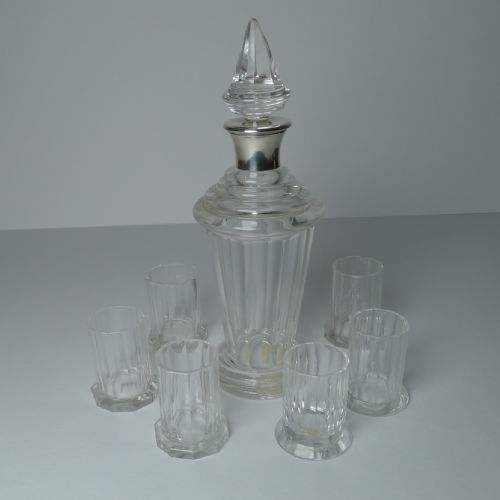

Silver Liqueur Glasses
Silver liqueur glasses combine small glass vessels with precious metal mounts or casings, offering a refined way to serve after-dinner spirits.
Silver Liqueur Glasses
Silver liqueur glasses encompass small drinking vessels paired with metal mounts, often found alongside decanters, caddies, and complete drinks services on this page. These pieces serve small measures of spirits after a meal, designed to sit comfortably in the hand during conversation.
The versions most commonly met here include boxed sets from the Edwardian period and matching ensembles from the Art Deco era. Many feature glass liners held within silver or silver plated holders, combining fragile transparency with sturdy metal framing.
Originating across various decades from the late Victorian period into the 1930s, these objects reflect changing social rituals around entertaining at home. The physical forms range from simple shot glasses with silver rims to elaborate Russian vodka cups and miniature bottles.
Materials and construction
Makers combined blown or cut glass with solid silver and silver plate to create these drinking vessels. The glass components provide the drinking bowl, while the metal forms bases, handles, or intricate pierced holders that wrap securely around the fragile material.
Selected pieces incorporate decorative elements such as enamel and porcelain alongside silk and velvet linings within fitted presentation boxes. Metal components often display hallmarks indicating the year of assay and the workshop responsible for the silver mount.
Silver Liqueur Glasses Retail Price Guide 2026
Typical asking prices for silver liqueur glasses among the pieces listed under this phrase on Sellingantiques today, from the lower quarter to the upper quarter. They describe what is for sale here now, not the wider market.
Barware forms on this page include decanters, ewers, caddies, and matching shot glasses designed for post-dinner entertaining.
Judging the range
The distinction between standard production items and finer examples rests on the crispness of the metalwork and the clarity of the glass. Superior pieces display precisely fitted silver mounts that secure the glass without wobble or excess adhesive.
Completeness alters the character of a set, particularly when all matching glasses remain inside their original fitted box or caddy. The presence of clear hallmarks and distinct maker marks elevates an ordinary set into a notable example of period craftsmanship.
William Comyns·Aleksandr Timofeyevich Shevyakov·Elkington
The Silver Liqueur Glasses Glossary
- Silver Plate
- A base metal coated with a thin layer of pure silver using electroplating or older techniques. This method allowed makers to produce elaborate vessels at a lower cost than solid silver.
- Cut Glass
- Glassware decorated by grinding patterns into the surface using rotating wheels. The cuts catch the light and add texture to the grip of a small drinking vessel.
- Decanter Caddy
- A specialised frame or stand designed to hold a decanter and its accompanying glasses together. These carriers often feature a handle for passing the drinks service around a table.
- Hallmark
- A series of stamped symbols on precious metal indicating the standard of purity, the assay office, and the year of production. These marks help historians date the silver mounts accurately.
- Demitasse
- A small cup used for serving strong black coffee, frequently paired with liqueur services from the early twentieth century. These small vessels match the scale of miniature spirit glasses.
Silver Liqueur Glasses: Frequently Asked Questions
What are silver liqueur glasses?
Silver liqueur glasses are small drinking vessels encased in or mounted with silver or silver plate. They are designed for serving small portions of strong spirits after dinner.
The metal mounts often provide a sturdy base or decorative handle for delicate glass bowls. Many survive today in matched sets within fitted presentation boxes.
How do I date silver mounts?
Dating relies heavily on the hallmarks stamped directly into the silver components of the glassware. These marks indicate the assay office and the specific year the metal was tested.
Stylistic cues such as geometric Art Deco lines or elaborate Victorian ornamentation also help place an object in its correct decade.
How should I store boxed sets?
Boxed sets benefit from being kept away from direct sunlight and excessive humidity to protect the internal silk and velvet linings. The fitted compartments keep the individual glasses stable and prevent them from rubbing together.
Handling the glass and silver gently helps preserve the delicate mounts over time.