


Silver Lid Scent Bottle
A silver lid scent bottle brings pocket-sized luxury to a dressing table, combining functional glass or ceramic reservoirs with precious metal mounts.
Silver Lid Scent Bottle
A silver lid scent bottle combines a glass, porcelain, or ceramic body with a hinged or screw-on metal top, designed to carry perfume or cologne. These portable receptacles appear across Georgian, Victorian, and Edwardian periods, stretching into the early twentieth century.
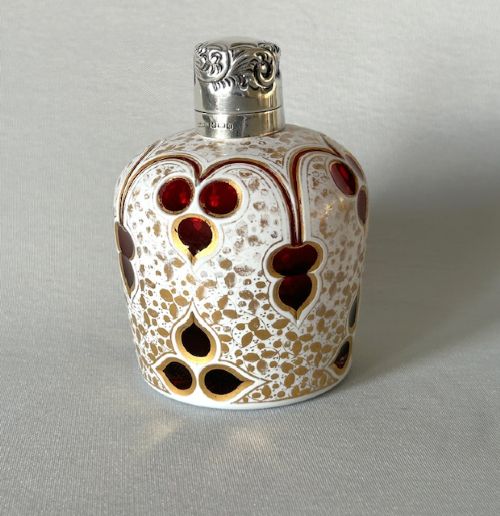
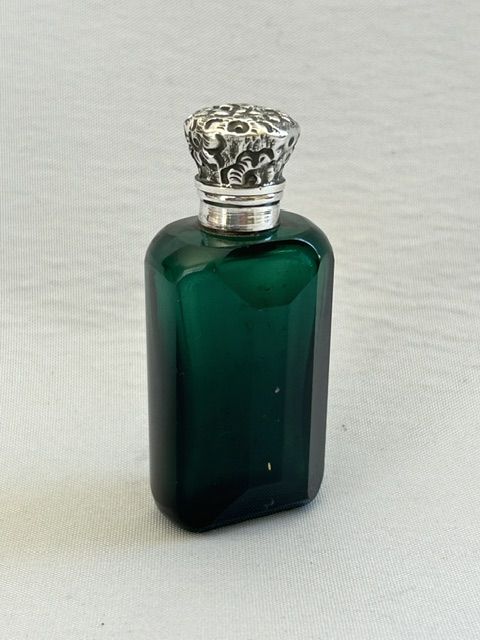
The body of the vessel frequently utilises cut glass, coloured Bristol glass in blue or green, or painted porcelain depicting scenes. Collectors frequently encounter globular, bullet-shaped, and double-ended forms alongside fitted vanity jars.
Makers housed these pieces in dressing table sets or fashioned them for pocket use, incorporating inner glass stoppers to prevent leakage. The metallic elements carry hallmarks indicating the assay office, standard of silver, and year of manufacture.
Materials and construction
Silversmiths formed the lids and collars from solid sterling silver, sometimes adding gold leaf accents or panels of tortoiseshell and enamel. These metal components were hand-hammered, cast, or engraved with floral motifs before receiving assay office stamps.
Glassmakers produced transparent cut glass or coloured vessels using mould-blowing and wheel-cutting techniques to achieve faceted surfaces that caught the light. Porcelain bodies received hand-painted ceramic decoration depicting figures or landscapes prior to glazing and firing.
Listings demonstrate a strong preference for cut glass and Bristol green glass bodies paired with Edwardian and Victorian sterling silver mounts.
Evaluating craftsmanship
Quality rests in the weight and thickness of the glass body, the precision of the wheel-cut facets, and the snug fit of the silver lid against its inner collar. Superior examples feature crisp hallmarks, undamaged enamel work, and intact inner stoppers.
Makers distinguished high-end commissions through detailed repoussé decoration on the silver mount, specialised glass colours like amethyst or Bristol green, and complete matching sets with fitted leather cases.
Charles May·J Grinsell and Sons·William Hutton and Sons·Mappin and Webb·A W Pennington·Sampson Mordan·Taylor Tunnicliffe Co·Asprey
The Silver Lid Scent Bottle Glossary
- Sterling silver
- A silver alloy containing 92.5 percent pure silver and 7.5 percent other metals, usually copper, ensuring durability for functional lids.
- Double-ended
- A cylindrical or flat form possessing a lid at each extremity, permitting the storage of two distinct liquids or salts within a single vessel.
- Bristol glass
- Coloured glass produced in the Bristol region during the eighteenth and nineteenth centuries, famously appearing in deep blue and green hues.
- Tortoiseshell
- The mottled brown keratin shell of certain turtle species, utilised as an inset decorative panel on silver-lidded toilet bottles.
- Hallmark
- A series of official marks stamped onto precious metal items to guarantee the purity of the silver, the maker, and the year of assay.
Silver Lid Scent Bottle: Frequently Asked Questions
How do I date a silver lidded scent bottle?
Dating relies heavily on the assay office hallmarks stamped directly onto the silver lid or collar. These tiny symbols reveal the exact year of manufacture, the city of testing, and the maker's mark.
Stylistic indicators provide secondary clues, as faceted cut glass and specific enamel colours point toward distinct periods like the Victorian or Edwardian eras.
Are inner glass stoppers important?
Inner glass stoppers are vital components that sat beneath the outer silver lid to prevent volatile perfumes from evaporating or leaking into handbags.
Many surviving antique specimens lack these fragile internal stoppers, which impacts completeness but remains a common feature of age and use.
How should I clean antique silver mounts?
Cleaning silver mounts requires a soft microfiber cloth and gentle silver polish applied sparingly to avoid staining adjacent glass, enamel, or tortoiseshell.
Harsh chemical dips must be avoided entirely because they strip the natural aged patina and can damage delicate organic inlays or glass cements.