




Silver Jewellery Container
A silver jewellery container safeguards small treasures on a dressing table, bringing polished metal and craftsmanship to daily routines.
Silver Jewellery Container
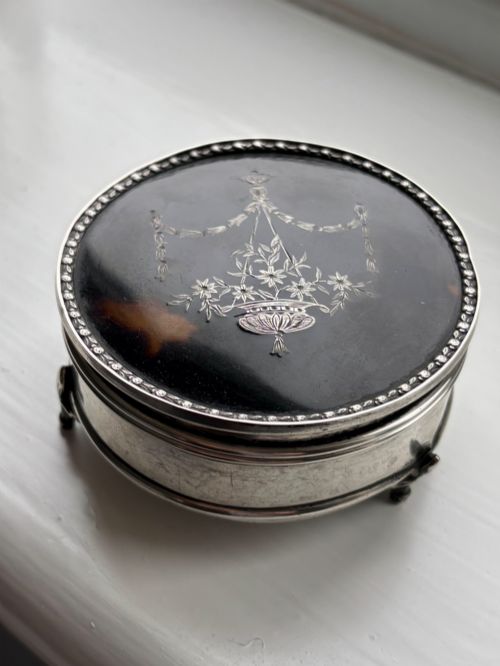
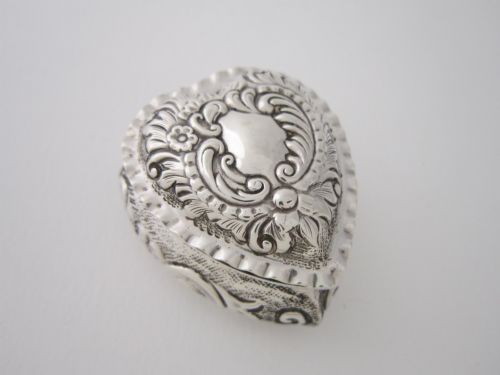
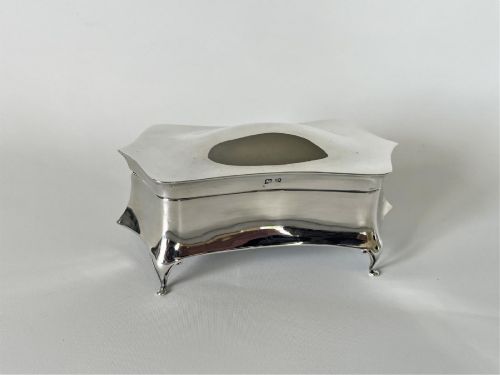
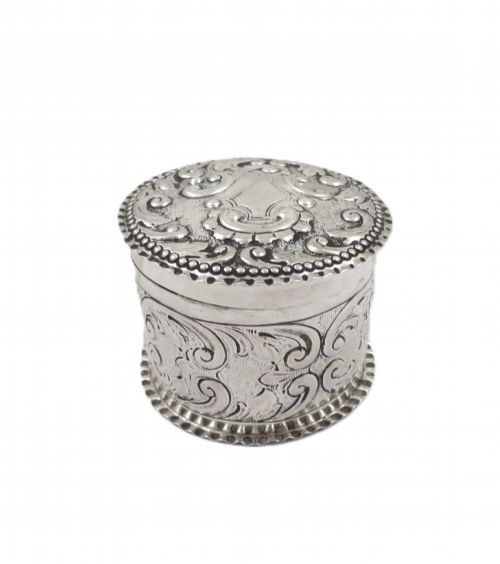
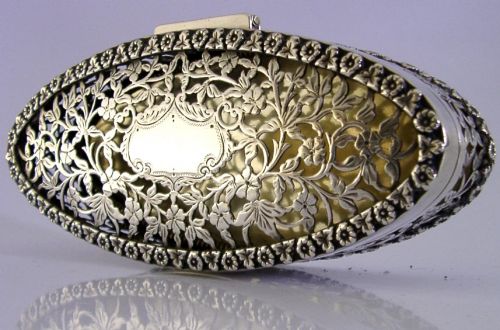
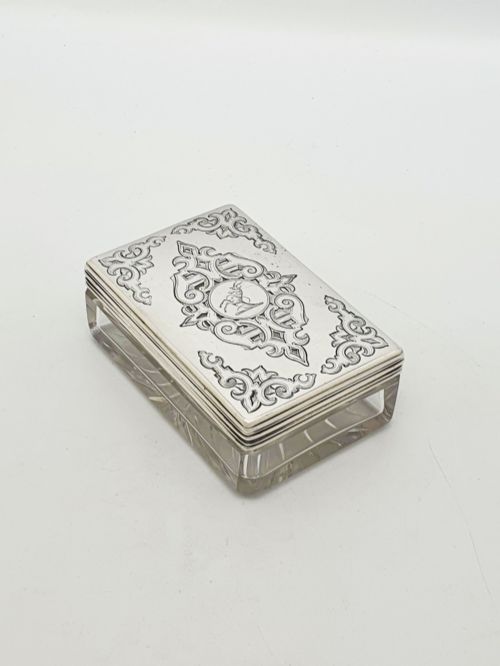
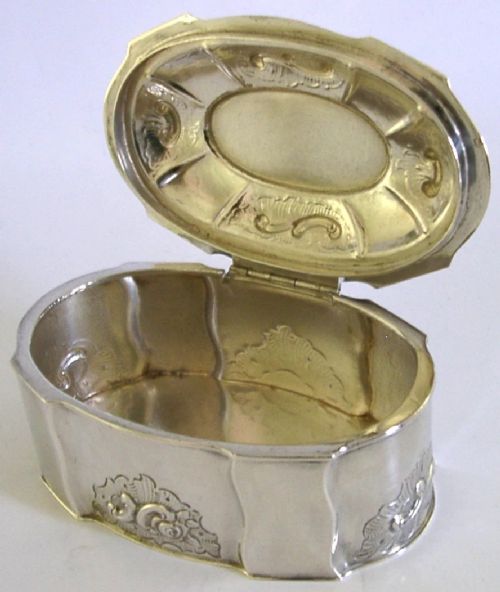
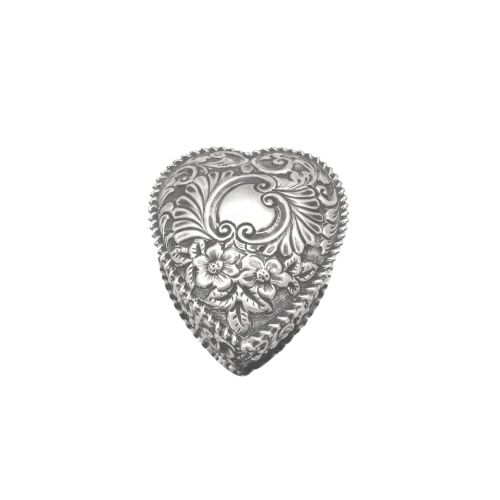
The most common formats met on this page include heart-shaped boxes, oval trinket boxes and rectangular dressing table vessels. Pieces take various physical forms, from pierced sterling silver containers and cut glass jars to handled caskets and lidded vanity pots.
Materials and Techniques
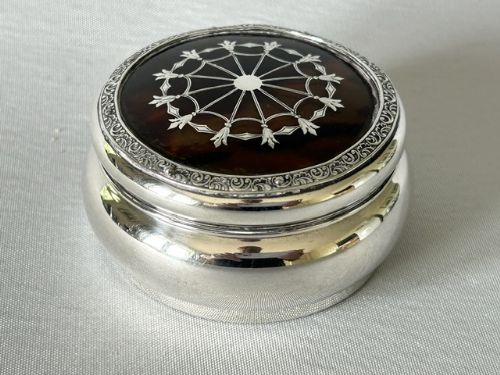
Silversmiths utilised solid sterling silver, silver plate and silver gilt, often combining the metal with organic materials such as tortoiseshell, faux tortoiseshell and ebonised wood. Cut glass and crystal form the heavy bodies of dressing table boxes, topped with fitted silver lids.
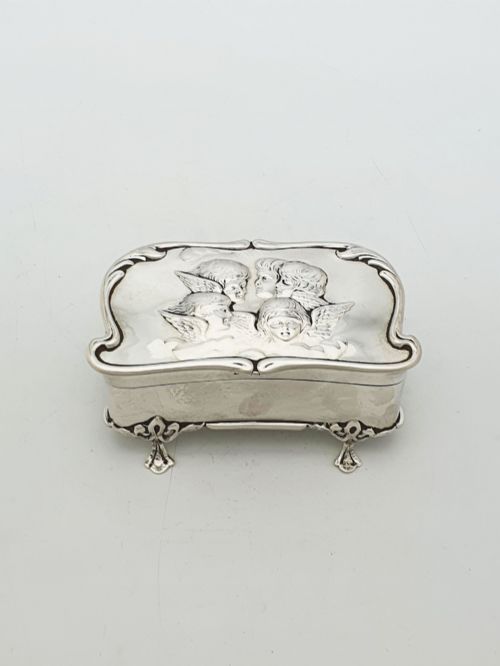
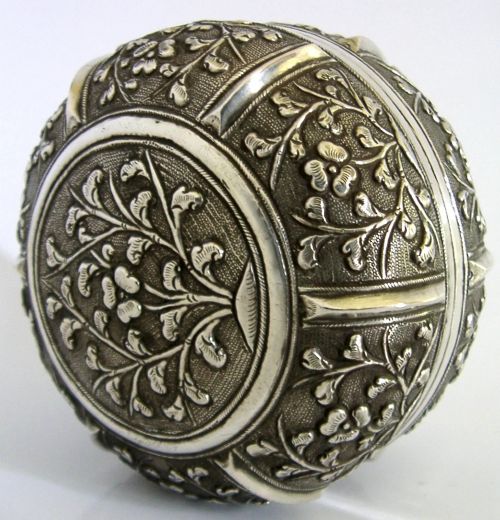
Makers employed hand-hammered texturing, repoussé relief work with cherub motifs, and intricate pique inlay on tortoiseshell surfaces. Piercing techniques created delicate openwork metal lattices, while internal gilt washes added a contrasting golden interior gleam to silver boxes.
Materials represented across the inventory include sterling silver, silver plate, cut glass, tortoiseshell, faux tortoiseshell, citrine and ebonised wood.
Distinctions in Execution
Quality rests in the weight of the metal, the crispness of repoussé relief details, and the precision of the hinge and lid alignment. Substantial gauge silver and heavy cut crystal bodies indicate superior production compared to lighter plated alternatives.
Refined craftsmanship appears in specialist collaborations, hand-hammered Arts & Crafts surfaces, and complex material combinations like pique work on tortoiseshell. The integration of fitted velvet linings, gilt interiors and clear hallmarks contributes to a higher standard of manufacture.
Ollivant & Botsford·Asprey & Co.·Sigvard Bernadotte·Georg Jensen·Nathan & Hayes·Henry Williamson Ltd
The Silver Jewellery Container Glossary
- Sterling silver
- A standard alloy consisting of ninety-two point five percent silver by mass, with the remainder usually copper. This alloy provides the durable foundation for most British trinket boxes.
- Repoussé
- A metalworking technique where the artisan hammers the metal from the reverse side to form a raised design in relief on the front. It frequently depicts cherubs or floral motifs on Victorian boxes.
- Pique work
- The process of embedding tiny gold or silver pins into tortoiseshell to create delicate decorative patterns. This intricate method appears on high-end Edwardian dressing table boxes.
- Gilt interior
- A thin layer of gold applied to the inside of a silver box to prevent tarnishing from cosmetics or contents. It provides a warm contrast when the lid is lifted.
- Hallmark
- An official stamp applied by an assay office indicating the purity of the metal, the maker and the year of manufacture. British pieces often bear distinct town marks and date letters.
Silver Jewellery Container: Frequently Asked Questions
What is a silver jewellery container used for?
These vessels serve to store rings, brooches, pins and small keepsakes on dressing tables and desks.
Historically, they protected fragile personal ornaments from dust and damage while keeping everyday accessories close at hand.
How do I date a silver jewellery box?
Dating relies primarily on the official hallmarks stamped into the metal, which indicate the specific assay office and year letter.
Stylistic indicators, such as Arts & Crafts hand-hammering or Victorian heart shapes, also help narrow down the period of manufacture.
How should I clean antique silver boxes?
Gentle dusting with a soft, dry microfiber cloth is generally sufficient to maintain the surface shine of antique silver.
Harsh chemical dips should be avoided, particularly on pieces featuring delicate tortoiseshell, glass bodies, or internal gilt finishes.