
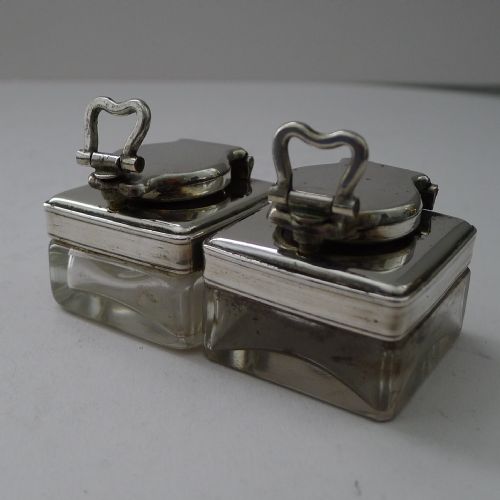
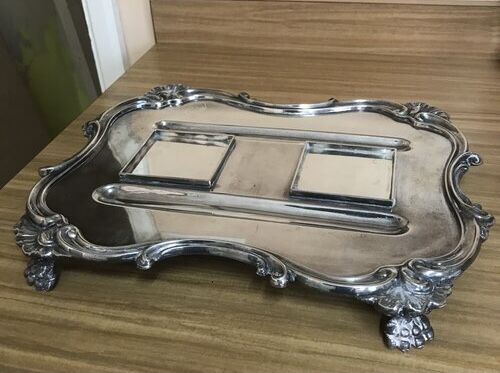


Silver Inkstand Accessory
A silver inkstand accessory brings order to the writing desk through fitted vessels, cut glass reservoirs and silver mounts.
Silver Inkstand Accessory
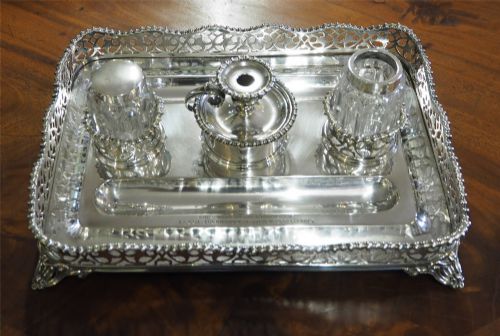
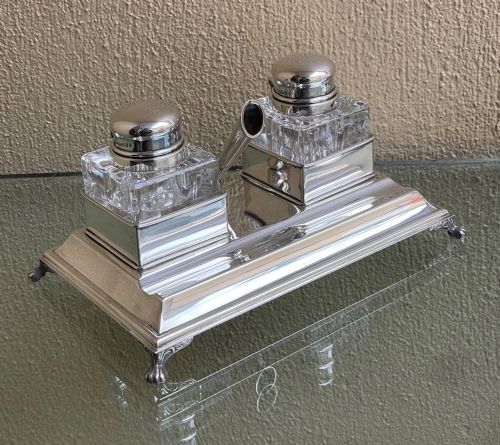
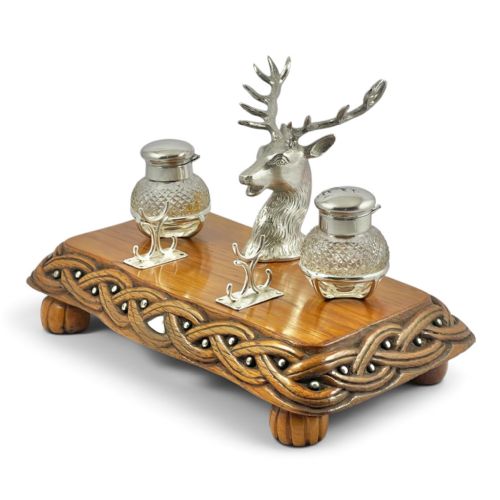
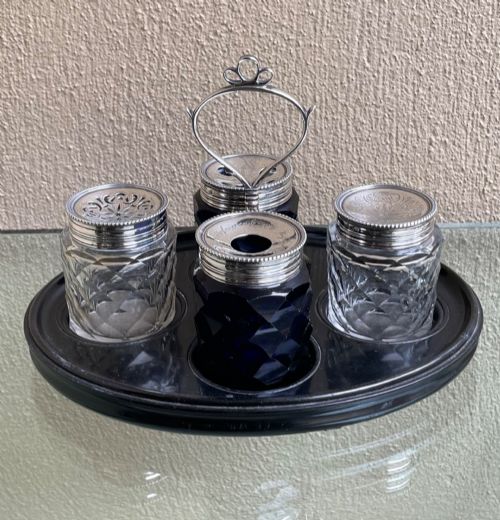
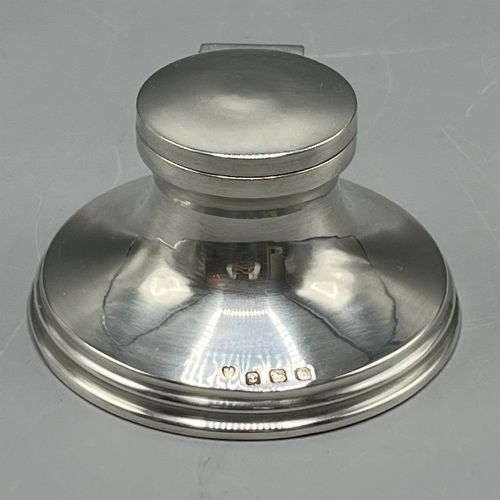
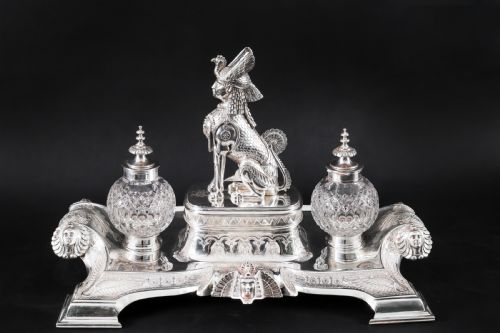
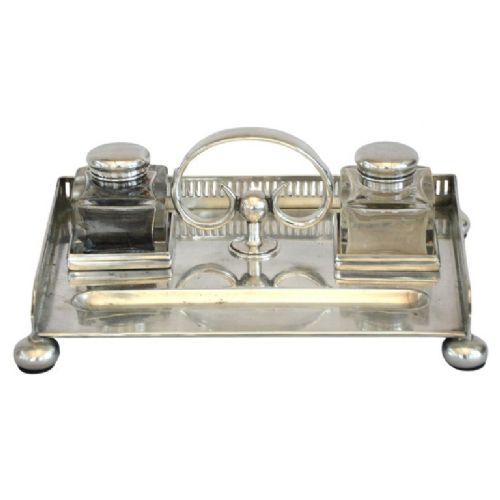
A silver inkstand accessory unites small desk implements like inkwells, pounce pots and pen trays into a single coordinated desk set. Pieces on this page span the Georgian, Victorian, Edwardian and Art Deco periods, ranging from portable travel pieces to heavy library stands.
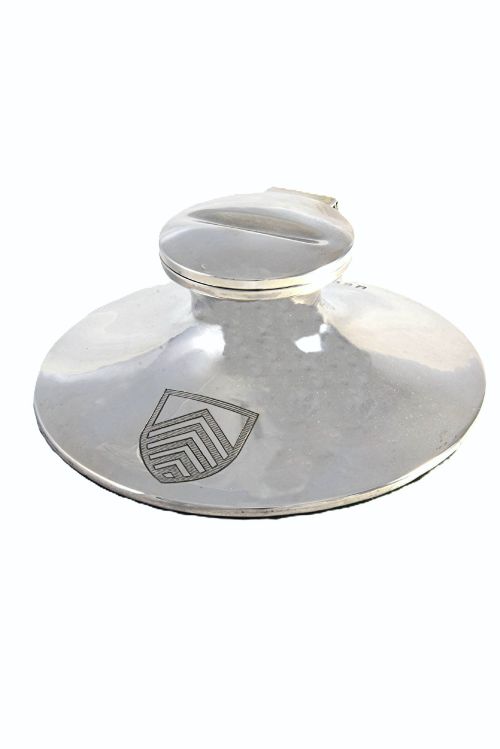
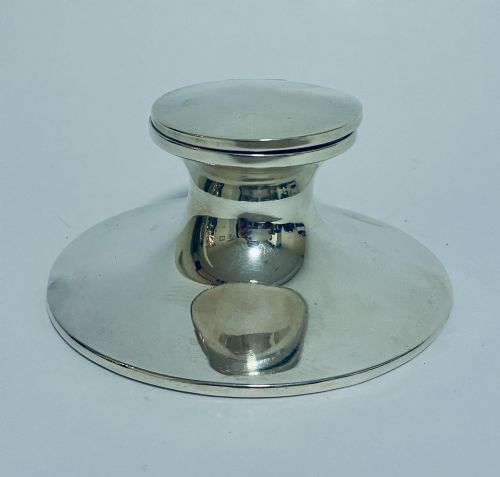
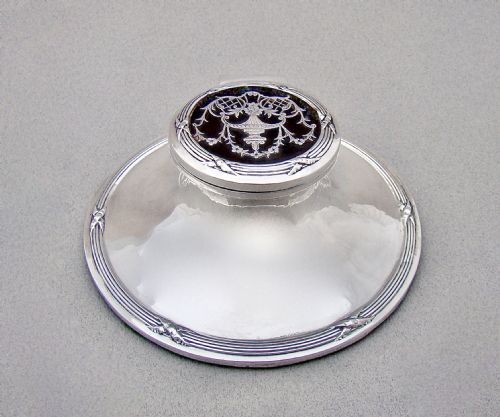
Capstan inkwells and larger multi-bottle desk stands dominate the selection, often incorporating materials such as oak, horn, onyx and cut glass alongside sterling silver or silver plate. The origins stretch from English workshops to Scottish regional centres.
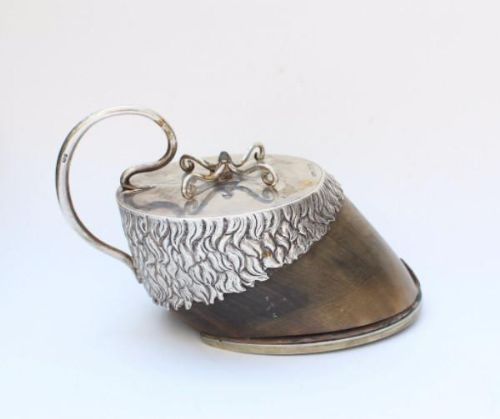
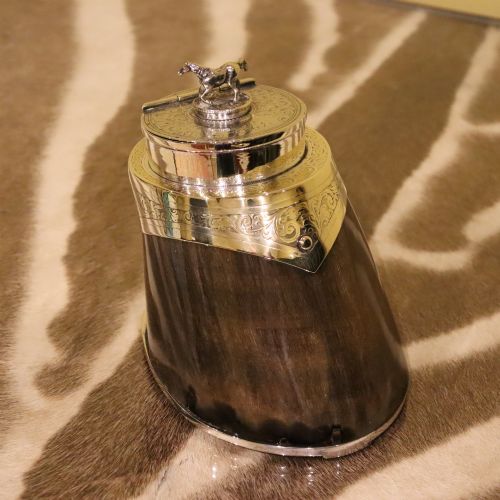
Desk tidies and novelty pieces, including bells and horse hoof mounts, represent the more idiosyncratic side of these writing accessories. Buyers encounter everything from simple travel inkwells to elaborate silver gilt stands.
Materials and Techniques
Silversmiths formed these accessories using sterling silver or silver plate over copper, often combining metal mounts with heavy cut glass or crystal ink bottles. Cabinetmakers provided wooden bases in oak, coromandel, ebony and satinwood.
More unusual examples integrate organic materials like tortoise, horn and horse hoof, secured with silver hinges, rims and collars. Enamel work, such as guilloché medallions, occasionally decorates the metal surfaces.
Casting, chasing and engraving defined the decorative metalwork, while glass reservoirs were typically heavy-moulded or cut to withstand daily ink use.
Assessing Quality
Quality rests on the weight of the metal, the crispness of the chasing and the integration of diverse materials like lapis lazuli or tortoiseshell. Maker marks from established silversmiths elevate a piece above standard commercial production.
The survival of original fitted glass inserts and matching components determines the integrity of a desk set. Heavier gauge silver and substantial wooden or stone bases signal superior manufacture.
Elkington·Henry Matthews·Wilkinson And Co·Walker And Hall·Harrods·Tiffany And Co·Robert Garrard·Marson And Jones·Rupert Favell·Robert Hennell
The Silver Inkstand Accessory Glossary
- Capstan inkwell
- A desk inkwell shaped like a ship's capstan, widening from the top to a broad circular base. This design prevents the inkpot from tipping over easily.
- Pounce pot
- A small shaker container used to sprinkle sand or powdered resin over freshly written ink to speed up drying. It predates blotting paper.
- Standish
- An alternative term for a desk stand or inkstand that holds inkwells, pen trays and accessory pots. It usually takes the form of a portable tray with feet.
- Guilloché
- A decorative technique where a precise, intricate pattern is mechanically engraved into a metal surface. It is frequently seen beneath a translucent layer of enamel.
- Sheffield plate
- An early form of composite metal made by fusing a thin sheet of silver to a thicker copper base. It was largely superseded by electroplating in the nineteenth century.
Silver Inkstand Accessory: Frequently Asked Questions
What is a silver inkstand accessory?
A silver inkstand accessory is a desk item designed for writing tasks, encompassing everything from single capstan inkwells to multi-piece desk sets with pen rests.
These pieces organise writing implements on a desktop and usually combine metalwork with glass, wood or stone elements.
How were desk inkstands used historically?
Desk stands held liquid ink in glass reservoirs alongside sand pots for drying ink and compartments for pens and wafers.
They sat upon library desks and writing tables in homes and offices for daily correspondence before the invention of the fountain pen.
How do I care for silver and glass desk pieces?
Clean sterling silver components gently with a specialised cloth to preserve hallmarks and chased details without abrasive polishing.
Glass inserts lift out for washing in warm soapy water, ensuring no moisture lingers near vulnerable wooden or organic bases.
How can I tell Victorian pieces from Edwardian ones?
Victorian desk accessories often display heavier, more elaborate ornamentation such as Egyptian Revival motifs or deep floral chasing.
Edwardian and later pieces frequently lean towards cleaner lines, simpler capstan shapes and the integration of tortoiseshell or guilloché enamel.