

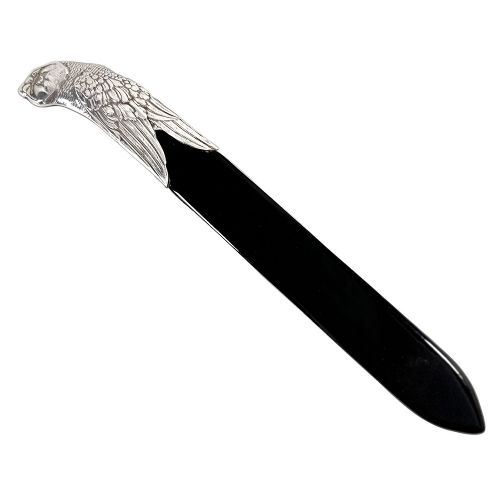


Silver Handled Letter Knife
These silver handled letter knife examples bring tactile desk craft to correspondence, prized for opening envelopes with old-fashioned elegance.
Silver Handled Letter Knife
A silver handled letter knife is a functional desk accessory designed for slicing open paper mail cleanly and efficiently. Collectors encounter various forms here, ranging from compact desk knives to longer page turners used for uncut book pages.
The selection spans multiple eras, including Georgian, Victorian, and later twentieth-century periods such as the 1920s and 1930s. Pieces appear in traditional styles like Art Deco, Dutch silver, and English country designs.
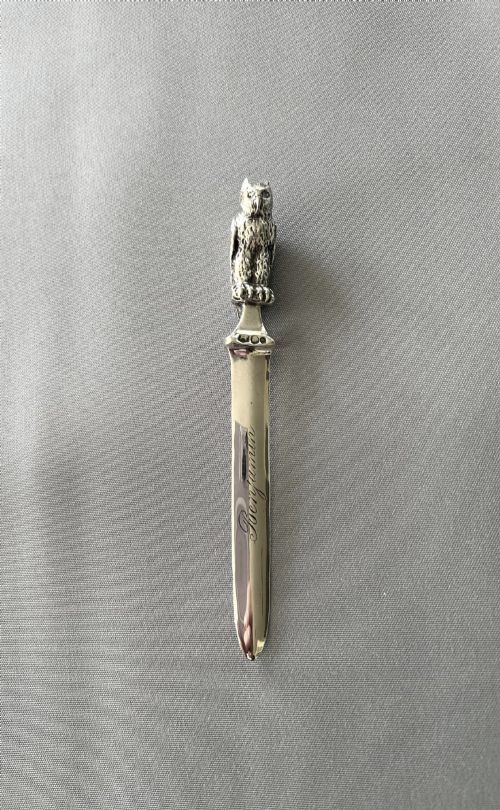
Origins include named London makers alongside provincial English workshops and continental European silversmiths. Everyday variations incorporate novelty figural handles shaped as ducks, owls, and pheasants.
How they were made
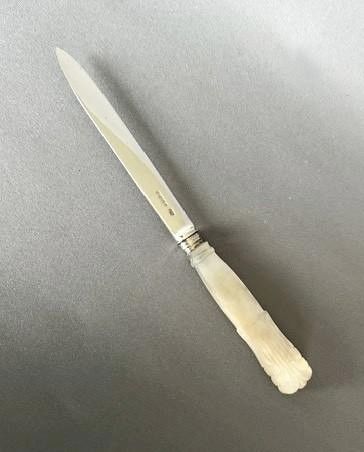
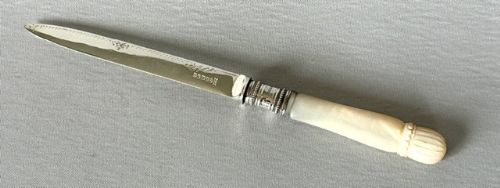
Handles combine solid silver or sterling silver mounts with organic inlay materials like mother-of-pearl, tortoiseshell, and agate. Some twentieth-century examples substitute traditional shell with early plastics such as celluloid.
Blades are fashioned from matching silver, steel, or organic page-turning materials fixed securely into the handle socket. Enamel work and fine hand engraving occasionally decorate the silver elements to depict sporting or personal motifs.
Silver Handled Letter Knife Retail Price Guide 2026
Typical asking prices for silver handled letter knife among the pieces listed under this phrase on Sellingantiques today, from the lower quarter to the upper quarter. They describe what is for sale here now, not the wider market.
Some Victorian birds peer out from your desk with distinct attitude, ready to defend your morning post from bills.
What varies in quality
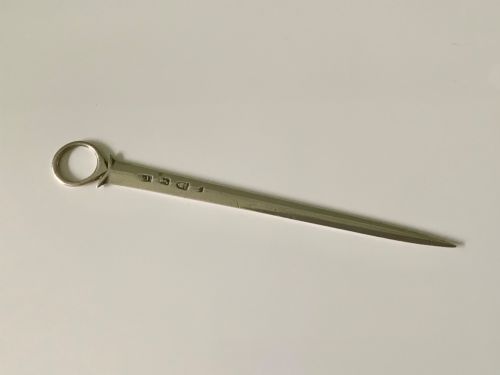
Quality rests on the crispness of the silver hallmarks, the depth of any hand engraving, and the sculptural detail in figural handles like birds. Workshop execution distinguishes standard utility pieces from ambitious specialty items.
The grade of inset materials such as iridescent mother-of-pearl, translucent tortoiseshell, or banded agate dictates the visual refinement of the handle. Intact unions between handle and blade determine structural integrity.
Moses Brent·A Barrett Piccadilly·Sampson Mordan Co
The Silver Handled Letter Knife Glossary
- Letter opener
- A bladed desk tool designed specifically for slicing open sealed envelopes. It shares a heritage with heavier page-turning implements.
- Page turner
- A long, flat desk accessory traditionally used for cutting and turning the folded pages of new books and periodicals.
- Mother-of-pearl
- The iridescent inner layer of certain mollusc shells used historically for decorative knife handles. Its lustrous surface catches the light differently from plain metal.
- Tortoiseshell
- A mottled brown and amber material derived from the shell of certain turtles, utilised for decorative desk wares before modern conservation laws. It provides a warm, translucent contrast against polished silver mounts.
- Celluloid
- An early form of thermoplastic developed in the nineteenth century to imitate natural materials like ivory or shell. It appears on mid-century desk accessories.
- Agate
- A variety of chalcedony quartz showing coloured bands or markings, prized for decorative stone handles. Its natural hardness makes it durable for daily handling.
Silver Handled Letter Knife: Frequently Asked Questions
What is a silver handled letter knife?
A silver handled letter knife is a desktop tool featuring a metal grip and a blade designed for opening post. These implements bridge practical correspondence and decorative desk art.
Examples range from simple Georgian blades to whimsical twentieth-century animal figures. They sit neatly among other writing accessories on a traditional desk.
How do I date a silver letter knife?
Dating relies heavily on stamped hallmarks that reveal the assay office, date letter, and silversmith's mark. Stylistic clues such as Art Deco geometry or Victorian ornamentation also help place the piece.
Inscriptions and accompanying materials like celluloid or tortoiseshell offer further chronological context. Comparing the construction methods to known production eras narrows the timeframe down.
What materials were used for handles?
Handles incorporate sterling silver paired with natural substances like mother-of-pearl, agate, and tortoiseshell. Novelty pieces feature solid silver cast into the shapes of birds and animals.
Later twentieth-century production introduced synthetic alternatives like celluloid to mimic traditional organic surfaces. Each material alters the balance and weight of the tool in the hand.
How do I care for silver and shell?
Maintenance involves gentle cleaning with a soft cloth to preserve the polish on the silver mounts without abrading softer organic inlays. Natural materials like shell and agate require protection from extreme temperature changes.
Keeping the piece dry and avoiding harsh chemical dips protects both metal and inlay. Regular, careful handling prevents undue stress on the join between handle and blade.