



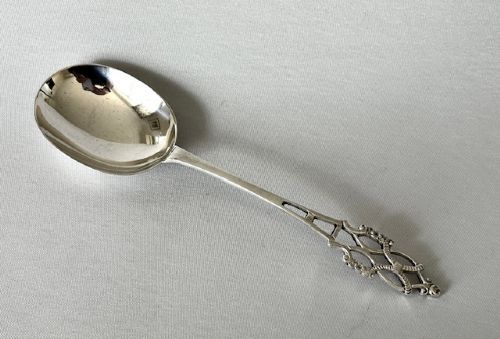


Silver Handled Flatware
Silver handled flatware brings together working utensils and precious metal handles, offering distinct service pieces from the Georgian, Victorian, and Edwardian periods.
Silver Handled Flatware
When you search for silver handled flatware, you encounter specialised implements ranging from butter knives and fruit sets to large basting spoons and fish servers. These items bridge formal dining and practical use, featuring metal blades paired with handles made from diverse materials. The selection spans the Georgian era through to the early twentieth century, including Edwardian and George V pieces.
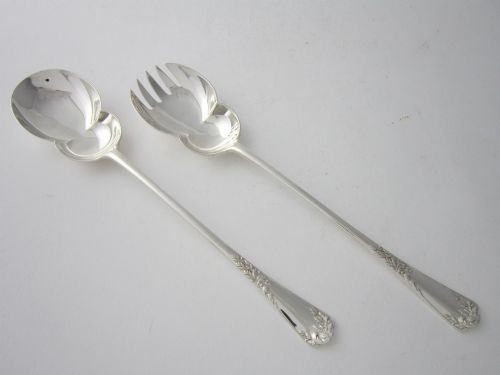
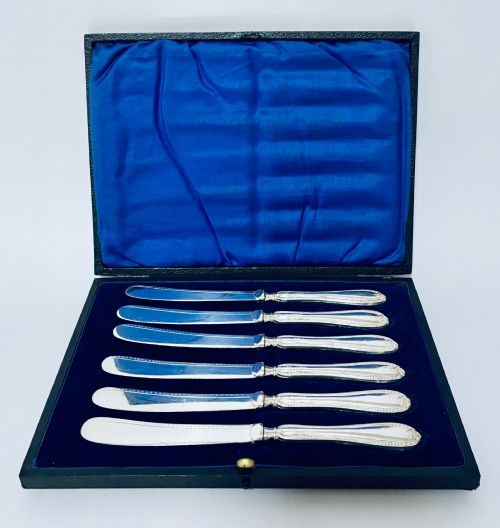
The most common items on this page are sets of butter knives, fruit knives, and fish servers, alongside single serving utensils like condiment ladles, caddy spoons, and stilton scoops. Styles vary from traditional Victorian and Regency designs to Arts and Crafts and Colonial Revival patterns. Each object was shaped for a specific table duty, whether slicing fruit or serving cheese.
How they were made
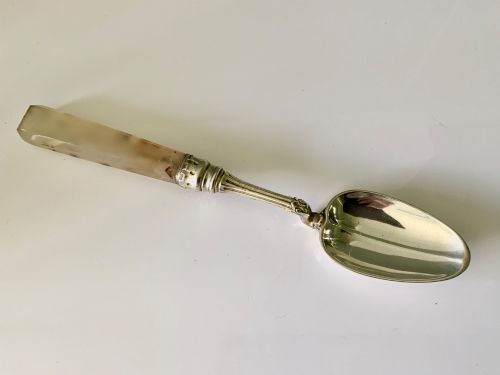
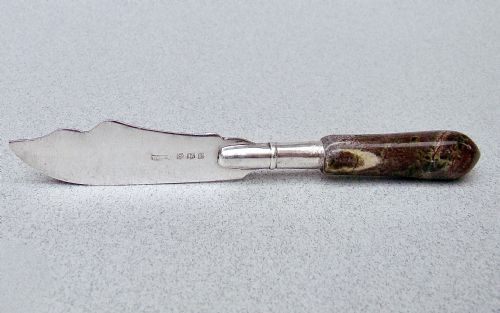
Makers combined silver and sterling silver handles with functional working parts forged from steel or cast in silver and silver gilt. Handles frequently incorporate organic materials such as bone, horn, mother of pearl, agate, and velvet, secured to the metal components through traditional silversmithing techniques. Workshops in Sheffield and Birmingham stamped their creations with hallmarks to denote metal purity and origin.
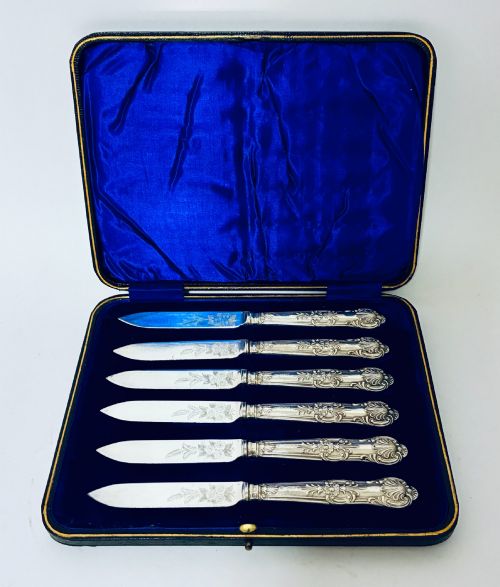
Specialist items demonstrate varied construction methods, from hollow silver handles to fitted cases lined with silk. Caddy spoons and fruit knives often feature engraved or pierced details on the metal blade. Antler, horn, and agate provide tactile grips that contrast with polished silver bowls and tines.
Silver Handled Flatware Retail Price Guide 2026
Typical asking prices for silver handled flatware among the pieces listed under this phrase on Sellingantiques today, from the lower quarter to the upper quarter. They describe what is for sale here now, not the wider market.
What varies in quality
Quality in silver handled flatware is determined by the weight of the silver, the precision of the hallmark, and the integrity of the handle material. Finer examples display crisp casting, balanced proportions, and maker marks from notable workshops. The join between handle and blade remains secure on superior pieces.
The choice of handle material influences the character and distinction of each utensil. Mother of pearl, agate, and well-preserved horn elevate a piece beyond standard utilitarian ware. Complete cased sets and matched pairs command greater interest than assembled groups.
Martin Hall & Co·Vale & John·William Devenport·Amy Sandheim·George Adams
The Silver Handled Flatware Glossary
- Hallmark
- Official stamps applied to precious metals indicating the maker, assay office, and year of testing. These marks provide a reliable guide to a piece's age and origin.
- Stilton scoop
- A specialised utensil with a long, curved blade designed for serving hard cheeses. They often feature ornate silver handles combined with bone or mother of pearl.
- Basting spoon
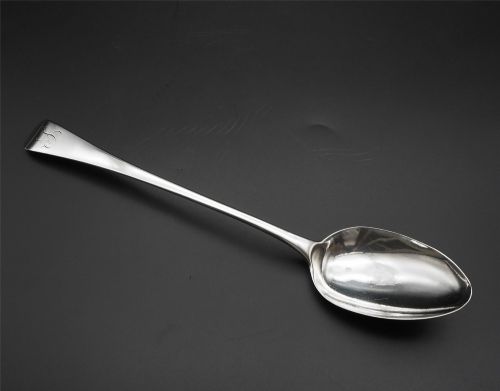
- A large serving implement used for distributing juices during roasting or serving large portions at the table. Georgian examples tend to be heavy and substantial in silver weight.
- Fish server
- A matched pair comprising a large knife and fork designed for portioning fish at the table. They frequently incorporate pierced blades and decorated silver handles.
- Caddy spoon
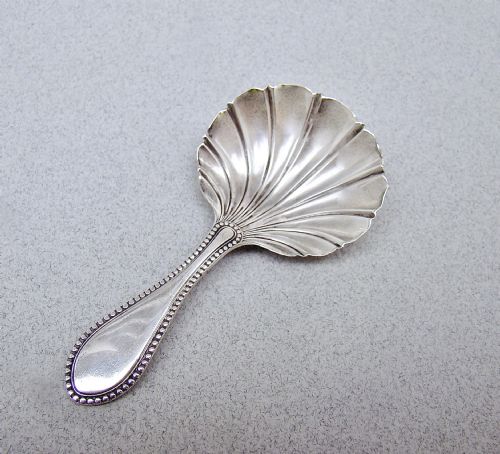
- A small spoon specifically sized for measuring loose tea leaves from a caddy. Victorian examples often display elaborate hand-engraved bowls and makers' marks.
Silver Handled Flatware: Frequently Asked Questions
How do I clean silver handled flatware?
Use a soft cloth and a gentle silver polish, avoiding harsh abrasive dips that can damage organic handle materials like bone, horn, or mother of pearl.
Keep handles dry and store pieces individually in lined boxes or rolls to prevent scratching.
What is a condiment ladle?
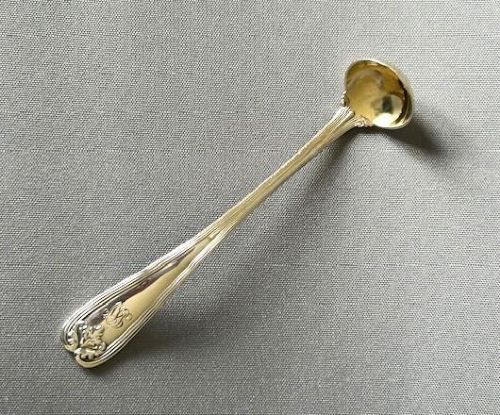
A condiment ladle is a small spoon with a deep bowl used for serving relishes, sauces, or preserves from a central table pot. They often feature decorative handles matching larger flatware services.
Examples range from plain Georgian designs to detailed Edwardian and Colonial Revival patterns.
How do I identify the date of a piece?
Look for the assay office town mark, standard purity mark, and date letter stamped directly onto the silver metal. These tiny hallmarks reveal the exact year and location of manufacture.
Stylistic cues such as Arts and Crafts simplicity or Victorian ornamentation also help narrow down the period.