


Silver Handled Dishes
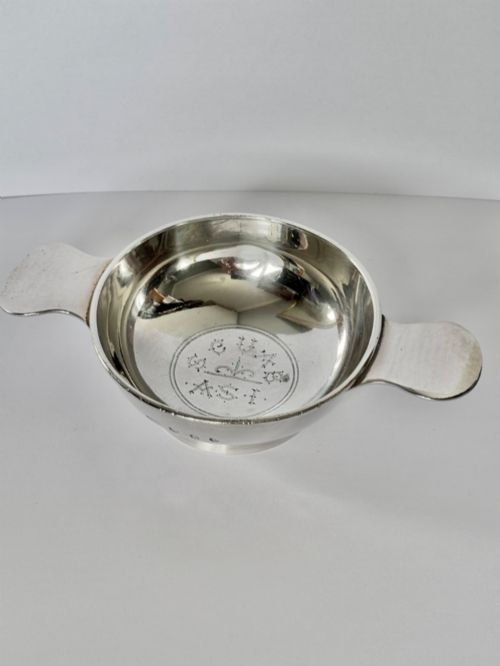
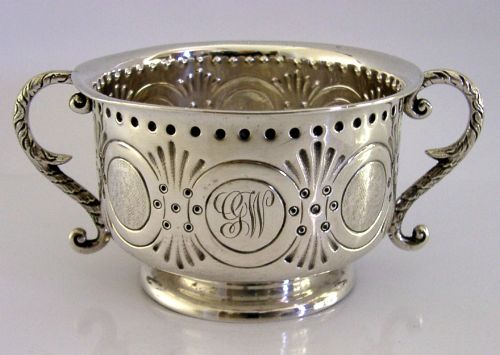
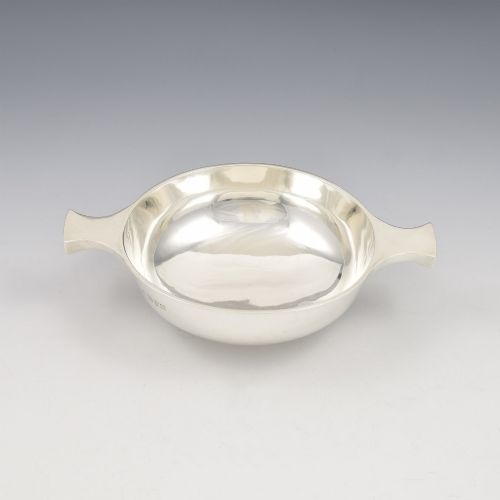
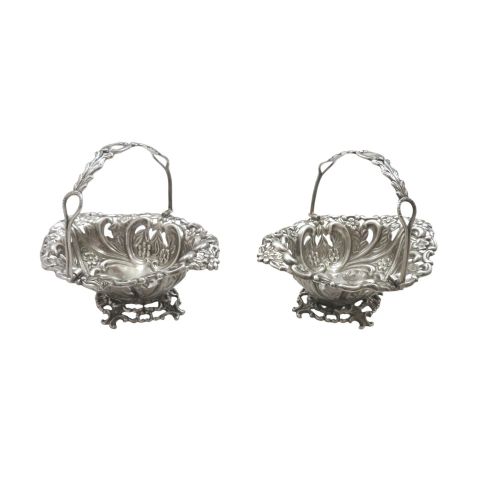
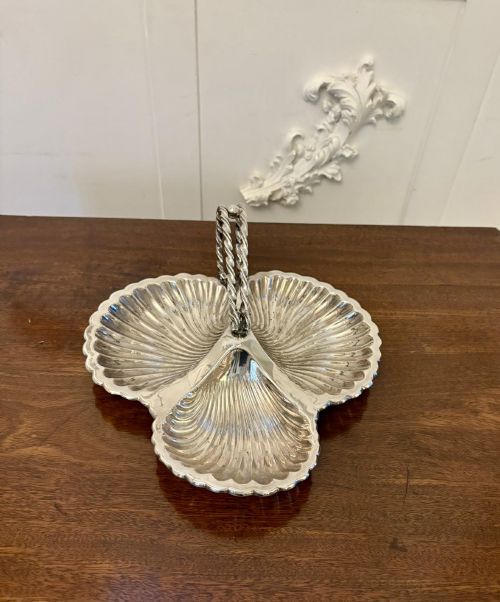
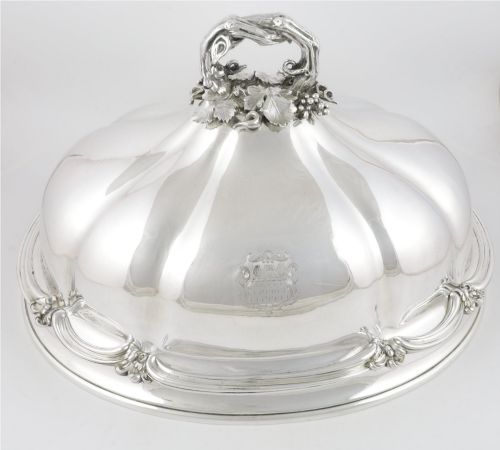
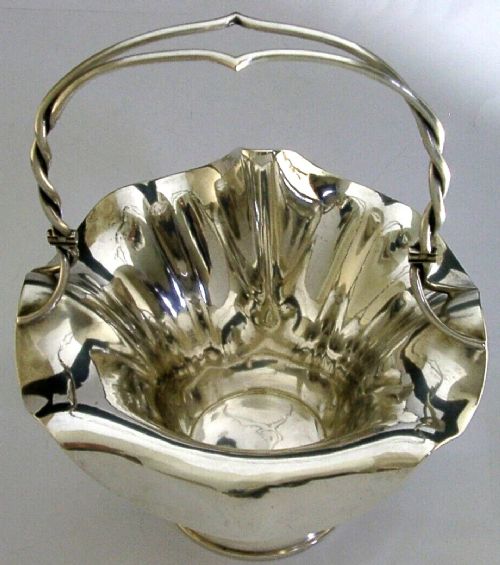
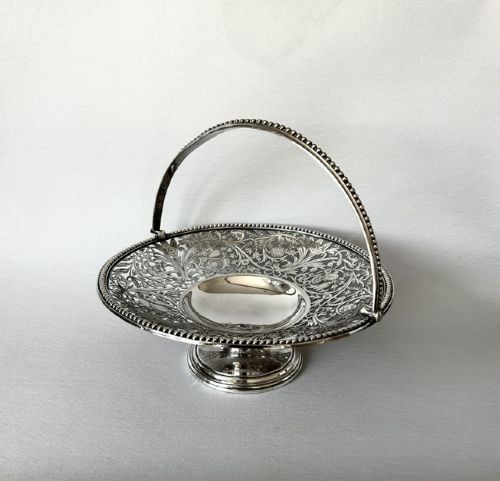
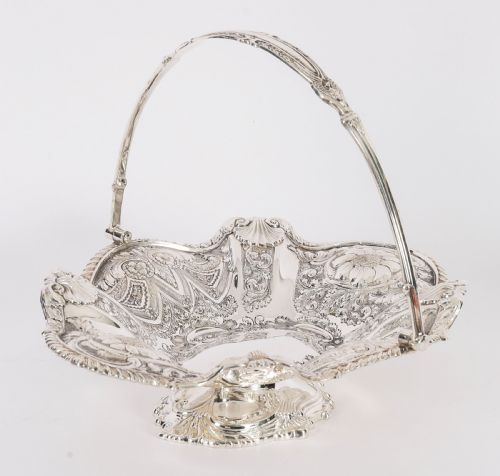
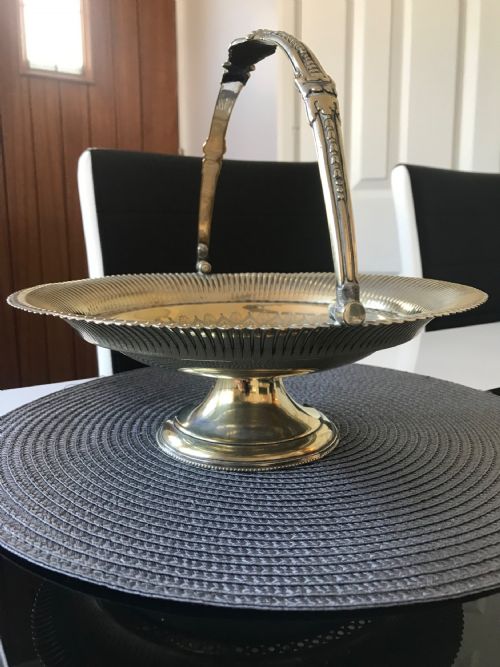
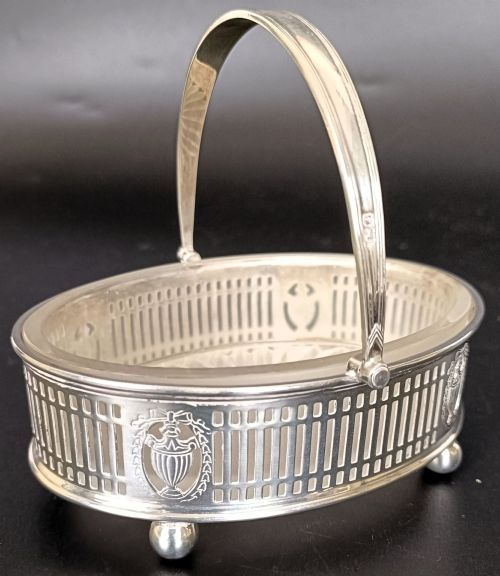
These silver handled dishes bring together sugar baskets, porringers, quaichs and fruit bowls shaped by Edwardian, Victorian and Georgian makers.
Silver Handled Dishes
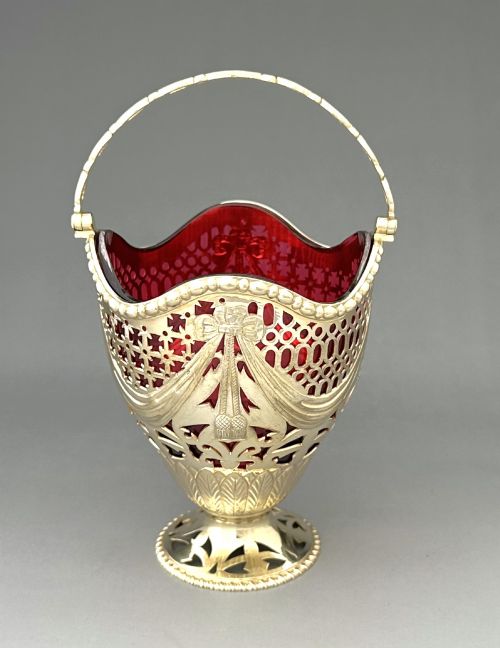
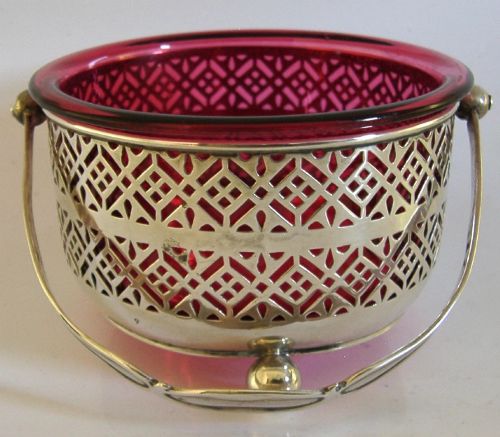
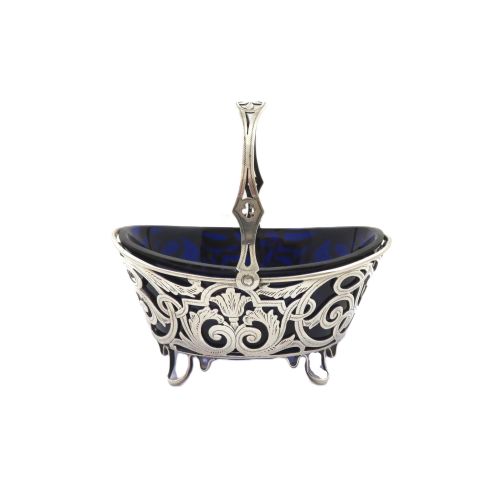
The forms span from deep pierced fruit baskets with glass liners to Georgian sugar baskets and Scottish quaichs. Many examples incorporate glass liners in cranberry or ruby tones, while others rely entirely on chased, pierced or repoussé metalwork.
How they were made
Makers shaped sterling silver and silver plate through hammering, piercing, casting and repoussé work, frequently mounting swing handles on pivoting pins. Old Sheffield plate and electroplated nickel silver form the foundation for many plated examples, while glass liners are blown and fitted to open metalwork baskets.
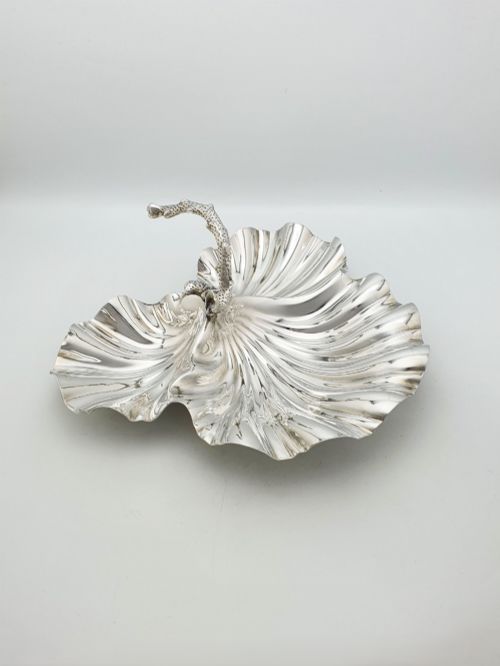
Handles range from cast floral motifs and stylised coral to simple reeded loops and ebonised wood attachments. Pierced designs often rely on symmetry and botanical motifs typical of the Edwardian and Art Nouveau periods.
Silver Handled Dishes Retail Price Guide 2026
Typical asking prices for silver handled dishes among the pieces listed under this phrase on Sellingantiques today, from the lower quarter to the upper quarter. They describe what is for sale here now, not the wider market.
Coral-handled shell dishes let Victorian diners bring the seabed to the dining table without getting their cuffs wet.
What varies in quality
Quality rests on the weight and gauge of the silver or plate, the crispness of pierced and repoussé ornamentation, and the structural integrity of handle attachments. Thicker gauge metal resists distortion under the weight of glass liners and contents.
Refinement in handle casting and the integration of original coloured glass liners distinguish finer workshop output from standard production pieces. Maker marks from established firms indicate higher standards of silversmithing and plating execution.
John William Kirwan·Asprey·Mappin & Webb·Nathan & Hayes·Roberts Cadman·George W. Scott & Sons Ltd·Henry Chawner·Hukin & Heath·Elkington·Thomas Bradbury·John Hunt
The Silver Handled Dishes Glossary
- Quaich
- A traditional Scottish two-handled drinking vessel or shallow bowl, often adapted with handles for serving.
- Porringer
- A small, shallow bowl with one or two flat horizontal handles, used historically for porridge or liquids.
- Repoussé
- A metalworking technique where the design is hammered into relief from the reverse side.
- Old Sheffield Plate
- An early fusing process of a thin layer of silver over a copper base, visible along cut edges.
- Swing Handle
- A pivoting handle attached to the rim of a basket or bowl by pins, allowing it to drop to the side.
Silver Handled Dishes: Frequently Asked Questions
What were silver handled dishes used for?
These vessels served various functions at the dining table, from holding sugar and fruit to presenting sweets and biscuits. Many included glass liners to contain food safely against the metal.
Over time, their roles shifted as dining customs evolved, turning practical tableware into decorative display pieces for sideboards and tables.
How do I care for silver handled dishes?
Maintenance requires gentle cleaning with appropriate silver polish to preserve the metal surface without wearing down thin plating. If the dish includes a removable glass liner, taking it out during cleaning prevents moisture trapping.
Storing pieces away from direct sunlight and damp environments helps maintain both the silver and any associated glass or wood components.
How can I tell the period of a piece?
Hallmarks stamped onto sterling silver items provide specific date letters, maker marks and assay office symbols that date the metal precisely. Stylistic clues such as Art Nouveau curves, Georgian restraint or Victorian naturalism also point to the era of manufacture.
Plated items without full hallmarks rely on maker marks and manufacturing techniques, such as Old Sheffield plate construction methods, to establish a general timeframe.
What is the difference between sterling and plate?
Sterling silver consists of solid silver alloyed to a legal standard of purity throughout the entire object. Silver plate involves a thin layer of silver bonded over a base metal such as copper or nickel silver.
Examining edges and wear points can reveal the underlying base metal on plated items, whereas sterling maintains uniform composition.