


Silver Handle Sword Stick
A silver handle sword stick combines daily walking support with a concealed blade, reflecting late Victorian and Edwardian gentlemanly self-defence.
Silver Handle Sword Stick
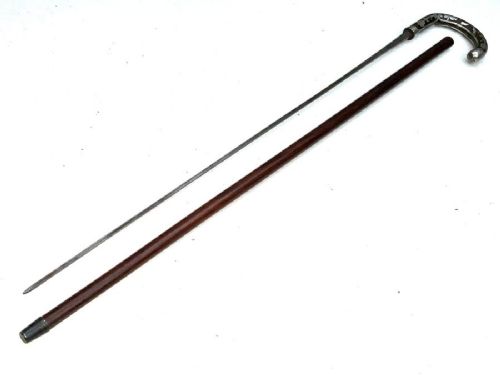
A silver handle sword stick serves as an everyday walking cane while housing a concealed steel blade within the shaft. When buyers search for this phrase, they encounter pieces originating from the nineteenth century into the early decades of the twentieth century, including Victorian and Edwardian examples.
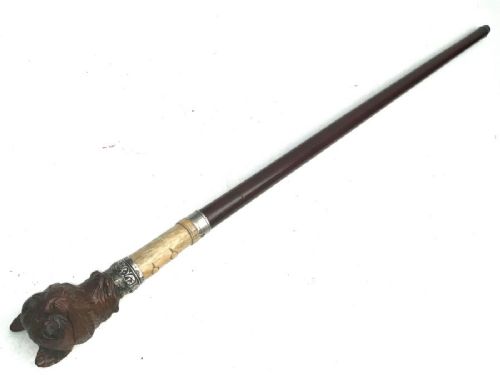
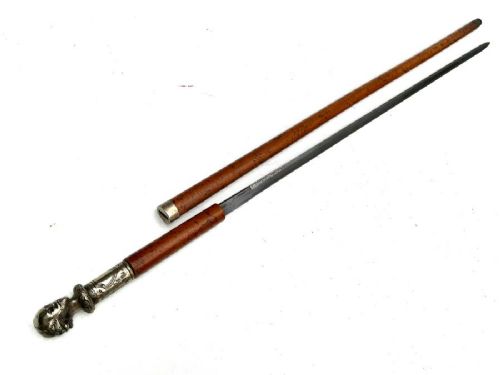
The most common versions on this page pair natural shafts of malacca cane or exotic woods with hallmarked silver collars, mounts, or sculptural handles. Examples range from simple crook handles to detailed repousse silver ornamentation and military-associated pieces.
Materials and construction methods
Shafts are constructed from resilient natural materials such as malacca cane, palmwood, rosewood, bamboo, and blackthorn, paired with handles fashioned from horn, bone, antler, and worked silver. Silver components frequently feature repousse decoration, engraving, or London and Birmingham hallmarks.
Internal blades utilise tempered steel, with notable specimens housing specialised blades originating from Toledo or bearing Wilkinson signatures. The blade mechanism typically secures within the wooden shaft via a screw or catch concealed beneath the silver mount or collar.
Listings feature natural shafts of malacca cane alongside exotic woods including palmwood, rosewood, and ebony.
Distinctions in quality and execution
Quality reveals itself in the substance of the silver work and the integrity of the concealed blade. Heavy gauge silver mounts with crisp repousse detailing or maker marks indicate superior workshop production compared to light silver plating.
The precision of the fit between the shaft and the handle determines the overall cohesion of the piece. Superior examples maintain a flush joint when closed, alongside a well-balanced steel blade that locks securely into place.
BRIGG·Wilkinson
The Silver Handle Sword Stick Glossary
- Silver collar
- A metal band encircling the upper shaft just below the handle. This mount often bears hallmarks indicating the assay office and year of manufacture.
- Malacca cane
- A mottled brown stem derived from the rattan palm. This material is prized for its flexibility and strength in walking cane construction.
- Repousse
- A metalworking technique where silver is hammered from the reverse side to form raised decorative reliefs on the handle or mount.
- Toledo blade
- A steel blade produced in a Spanish city renowned for historic sword-making traditions. These blades denote high-grade metallurgical execution.
- Knop
- A rounded or ornamental knob forming the top of the handle. This component is frequently cast in silver, bone, or horn.
Silver Handle Sword Stick: Frequently Asked Questions
How do you release the concealed blade?
Most pieces utilise a simple twist-release mechanism or a spring catch housed directly beneath the silver collar. Turning or pulling the handle disengages the internal locking point.
Once released, the steel blade slides smoothly out from the hollow interior of the wooden or cane shaft.
What periods do these canes date from?
The available pieces originate primarily from the Victorian and Edwardian eras, spanning the late nineteenth century through to the early twentieth century. Examples frequently display stylistic markers of this period.
Assay office hallmarks stamped onto the silver mounts provide precise dating for many individual pieces.
Were these used for military purposes?
Certain examples originate from military contexts, including pieces linked to Imperial German and Imperial Russian officers. These specimens often incorporate specific military styling or insignia.
The majority, however, served civilian gentlemen as personal protection or fashion accessories during urban walks.
How should I maintain the wooden shaft?
Natural wood and cane shafts benefit from occasional treatment with appropriate conditioning oils to prevent drying and cracking. Keeping the items away from extreme humidity preserves the organic materials.
The internal steel blade requires light oiling to prevent oxidation within the enclosed wooden channel.