


Silver Glass Vanity Pots
Silver glass vanity pots bring dressing table elegance to life with weighted cut crystal bases and hallmarked sterling silver lids.
Silver Glass Vanity Pots
When you search for silver glass vanity pots, you find lidded jars, trinket boxes, and dressing table accessories combining glass bodies with precious metal mounts. The examples you encounter span from the Victorian and Edwardian eras through Art Deco and Mid-Century Modern periods.
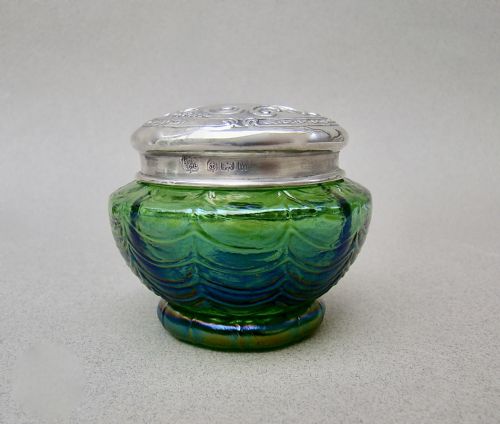
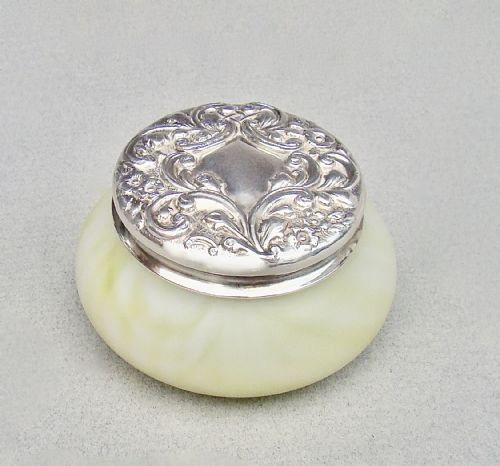
Most pieces on this page take the form of vanity jars, dressing table jars, and lidded bowls intended to hold cosmetics, pins, or trinkets. Bodies range from heavy cut crystal and satin glass to coloured vessels featuring blue, pink, or cranberry hues, alongside specialty glass types like Kralik, Clichy, and amethyst overlay.
Origins stretch across English assay offices in Birmingham, Chester, London, and Sheffield, alongside French workshops. You also see matched dressing table sets and desk sets containing multiple jars alongside mirrors and brushes.
Materials and construction
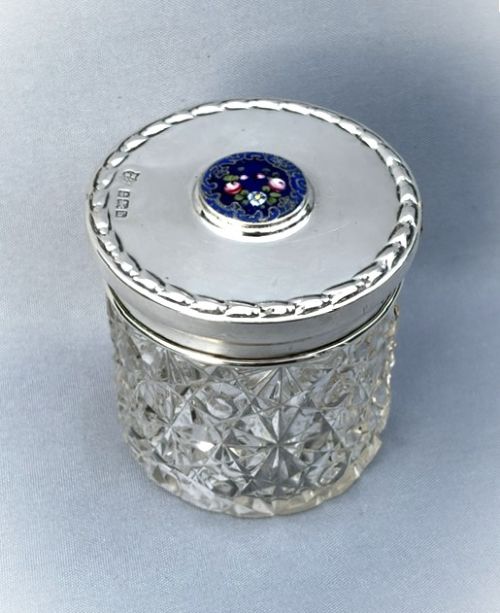
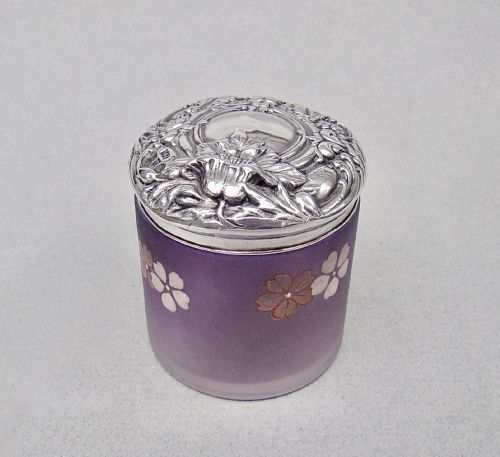
Vessels are formed from heavy blown or moulded glass, often deeply cut with geometric facets or starburst patterns to catch the light. Some pieces utilise coloured glass bodies, while others incorporate etched designs or frosted surfaces.
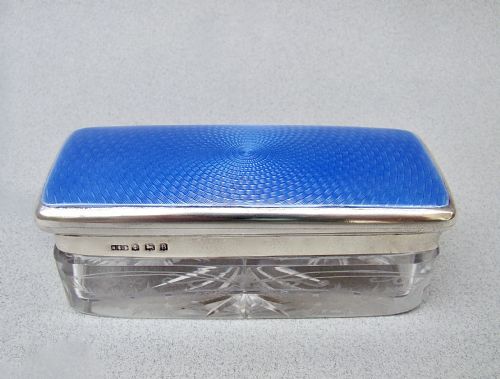
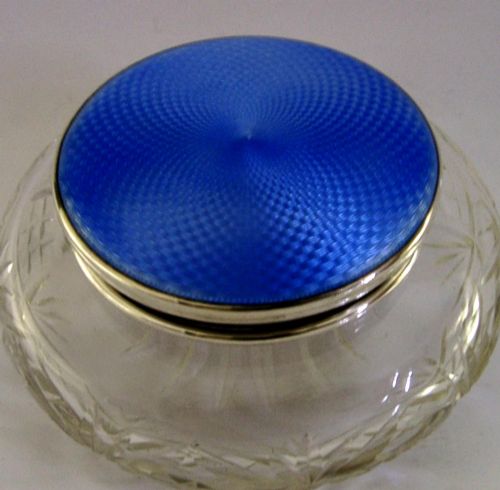
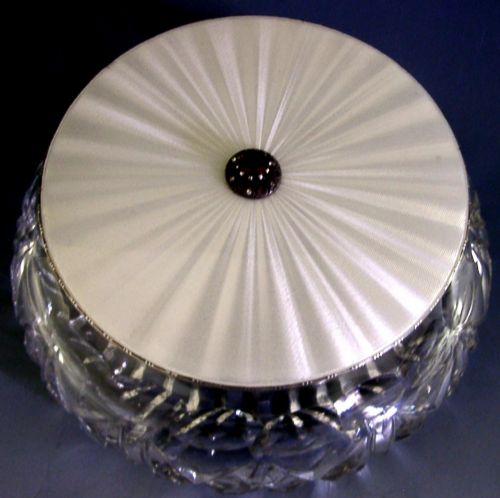
Lids and collars consist of solid sterling silver or silver plate, shaped to fit the glass rim precisely and secured with internal flanges. Many lids feature applied enamel, guilloché work with intricate engine-turned engraving, or inlaid tortoiseshell panels.
Listings span from the late nineteenth century through to the nineteen-sixties, featuring Sterling silver, cut crystal, and guilloche enamel.
Judging quality and craftsmanship
Quality rests on the depth and crispness of the glass cutting, the weight of the crystal base, and the thickness of the silver mount. Superior lids display crisp hallmark stamps, precise engine-turning on guilloché panels, and smooth hinge or push-fit action.
Enamel work separates standard examples from finer items, particularly where translucent coloured enamels reveal underlying engine-turned geometric patterns. The integration between metal collars and glass rims demands exacting silversmithing to ensure a flush, secure fit without movement.
A. J. Pepper & Co·Henry Clifford Davis·A. Bromet & Co·Jonathan Douglas·Asprey
The Silver Glass Vanity Pots Glossary
- Guilloche enamel
- A decorative technique where translucent enamel is layered over machine-turned metal engravings, creating rippling geometric patterns. It appears frequently on Art Deco vanity jar lids.
- Sterling silver
- An alloy consisting of ninety-two point five percent silver by mass, with the remainder usually copper. British pieces bear hallmarks confirming this standard.
- Cut crystal
- High-clarity glass containing lead oxide, which increases brilliance and weight. Artisans cut geometric facets into the surface to enhance light refraction.
- Satin glass
- Glass treated with acid or mechanical etching to produce a velvety, frosted texture. It diffuses light softly across Edwardian trinket boxes.
- Assay office
- An official body that tests the purity of precious metals and stamps items with legal hallmarks. Towns like Birmingham, Chester, London, and Sheffield maintained active offices.
Silver Glass Vanity Pots: Frequently Asked Questions
What were silver glass vanity pots used for?
These vessels held creams, powders, pins, and small personal trinkets on dressing tables during the nineteenth and twentieth centuries. They kept dressing tables tidy while displaying decorative glass and silver craftsmanship.
Larger jars accommodated soap or hair combs, while smaller trinket boxes held rings and brooches. Their placement on dressing trays formed part of a coordinated set of grooming accessories.
How do I date an antique silver vanity jar?
British pieces carry hallmarks on the silver lid or collar that include a date letter, a town mark, and a lion passant indicating sterling silver. Comparing the letter against assay office tables reveals the exact year of manufacture.
Stylistic cues also help narrow the period. Heavy faceted crystal with ornate floral scrollwork points to the Victorian or Edwardian eras, whereas geometric enamel work and streamlined shapes signal Art Deco design.
What is guilloche enamel on vanity pots?
Guilloche is a decorative technique involving mechanical engine-turning on a metal disk, over which translucent coloured enamel is applied. The engraved pattern shines through the coloured glaze in waves or sunbursts.
This finish is characteristic of Art Deco dressing table sets from the nineteen-twenties and nineteen-thirties. Popular enamel colours on these pieces include blue, pink, and green.
How should I clean silver glass vanity pots?
Wash the glass body gently in warm soapy water, taking care to keep moisture away from any glued collars or fabric linings. Dry the glass thoroughly with a soft cloth to prevent water spots.
Clean the silver mount using a mild silver polish applied with a cloth, avoiding contact with any enamel or tortoiseshell panels. Gentle maintenance preserves both the crystal clarity and the metal polish.