
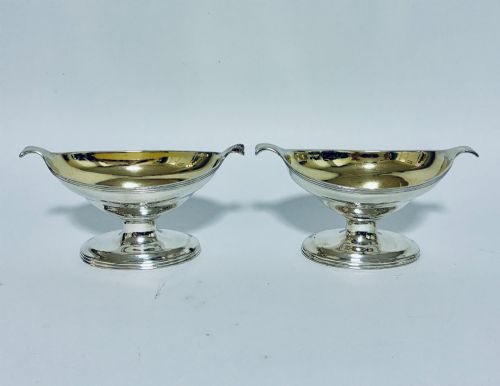


Silver Gilt Open Salts
These silver gilt open salts are small table vessels designed to hold loose salt, bringing rich golden warmth and historic craftsmanship to the dining table.
Silver Gilt Open Salts
Silver gilt open salts are small open vessels created to hold salt on the dining table, taking forms such as boats, trenchers, cauldrons, urns, and naturalistic flower designs. When searching for silver gilt open salts, buyers encounter various historical examples originating from the Georgian and Victorian eras, alongside 18th century and 19th century pieces.
The pieces listed here appear as individual items, pairs, sets of four or five, and complete condiment sets. Forms range from simple bowls and dishes to pedestal urns with lion paw feet and foliage trim.
Originating predominantly from British silversmithing traditions, these salt cellars reflect the formal dining customs of past centuries. Buyers most frequently meet matched pairs or larger sets dating from the Georgian and Victorian periods on this page.
How they were made
These items are constructed from sterling silver or solid silver, then finished with gold gilt, vermeil, or gold vermeil to create a rich golden interior or exterior surface over the silver base. Silversmiths employed traditional techniques of shaping, casting, and hand-finishing to produce heavy salt cellars and intricate decorative details.
Craftsmen applied decorative treatments including naturalistic flower designs, foliage trims, and cast lion paw feet to elevate the simple utility of the salt dish into an ornate table ornament.
Lion paw feet keep your salt safely elevated above the dining table gossip.
What varies in quality
The distinction between standard examples and top quality pieces lies in the crispness of the chasing, the weight of the solid silver structure, and the completeness of original sets. Heavier gauge silver and deeply defined ornamentation indicate superior workshop output.
The durability and evenness of the gold gilt or vermeil coating across the interior and exterior surfaces also influence the overall standard of the piece, as does the presence of fully legible hallmarks identifying notable makers.
David Hennell·William Bateman·Paul Storr·Thomas Smily·Edward Wood·Rebecca Emes·Joseph Angell I
The Silver Gilt Open Salts Glossary
- Silver Gilt
- Sterling silver that has been coated with a thin layer of gold. This process provides the rich yellow appearance associated with vermeil.
- Trencher Salt
- A low, heavy salt cellar usually square or round in shape. These were placed directly on the table for individual use during earlier dining periods.
- Cauldron Salt
- A small bowl-shaped salt cellar resembling a cooking pot, typically raised on three feet. This form enjoyed particular popularity during the Georgian era.
- Vermeil
- High quality silver gilt where gold is applied over sterling silver. The term denotes a specific standard of gilding.
- Hallmark
- A series of official marks stamped on precious metals indicating the standard of silver, the assay office, the maker, and the year of manufacture.
Silver Gilt Open Salts: Frequently Asked Questions
How were open salts used on the table?
Dinners of the eighteenth and nineteenth centuries featured open salt cellars placed near each place setting or shared between guests. Dinners used small spoons or pinches of fingers to take salt from the open vessel.
Larger master salts sat centrally, while smaller pairs and sets accompanied individual diners throughout the meal.
How do I care for silver gilt items?
Silver gilt requires gentle maintenance because harsh chemical dips can strip away the delicate gold layer over the silver base. Warm water, mild soap, and a soft cloth keep the surfaces clean without causing damage.
Proper storage in anti-tarnish cloth prevents excessive oxidation and preserves the rich golden finish.
How can I tell Georgian salts from Victorian ones?
Georgian salt cellars often display simpler classic proportions, boat shapes, or heavy cauldron forms with cast feet, reflecting eighteenth-century design standards. Victorian examples tend to introduce heavier naturalistic ornamentation, floral motifs, and varied box sets.
Checking the official hallmarks stamped on the base provides the exact year of assay and confirms the period.