




Silver Geometric Pendant
These silver geometric pendant pieces bring sharp lines and period edge, offering the linear clarity that defines mid-century and art deco design.
Silver Geometric Pendant
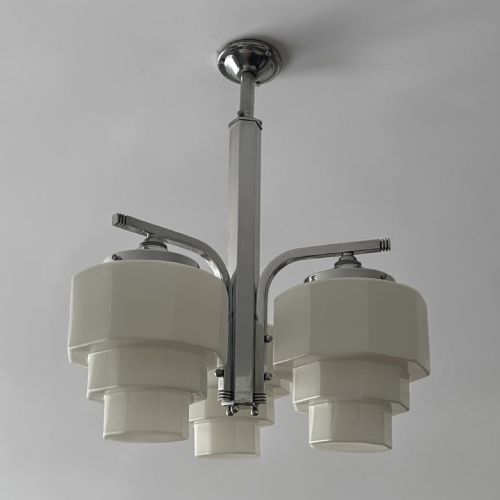
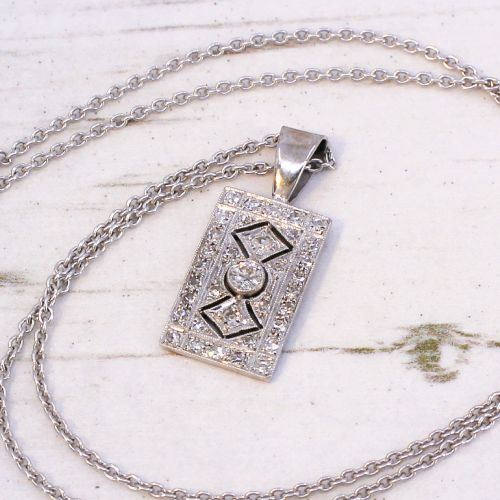
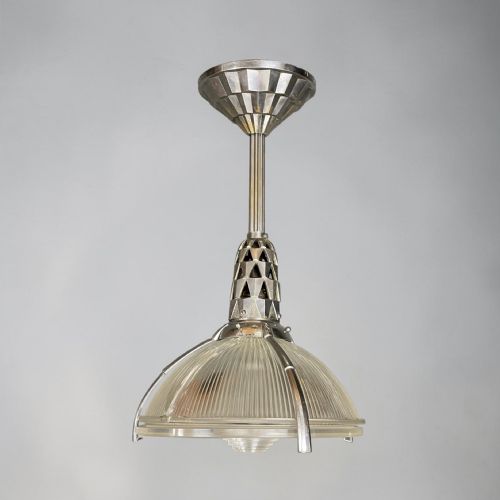
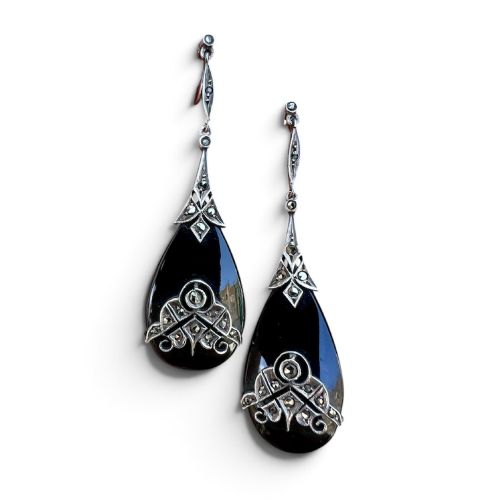
A silver geometric pendant centres on clean shapes and architectural angles, spanning necklaces, drop earrings, and hanging pendant lights. The examples seen here lean heavily into art deco and modernist vocabularies, pulling forms from the 1920s, 1930s, and 1940s alongside mid-century Finnish design.
Buyers encounter everything from delicate platinum and diamond drops to bolder chrome, steel, and glass ceiling fixtures bearing the same angular DNA. These items unite personal adornment and interior lighting through a shared devotion to symmetry and straight lines.
Materials and construction
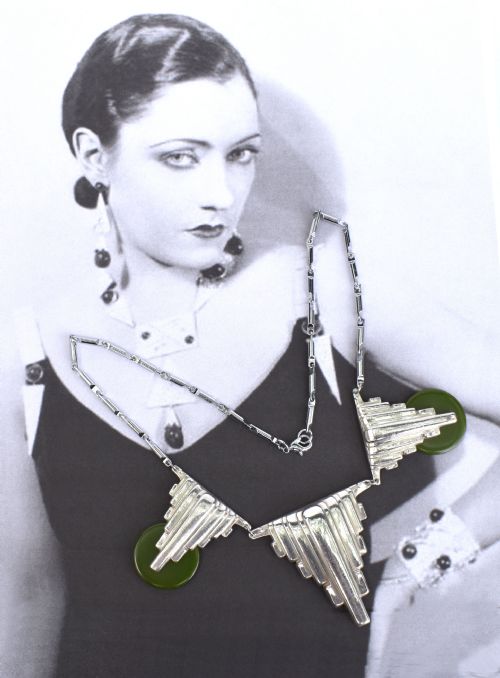
Construction relies on working metals like silver, platinum, chrome, and steel into rigid, structured mounts. Artisans combined these metals with contrasting inlays of onyx, marcasite, amazonite, enamel, bakelite, and galalith to emphasise the sharp partitions of the design.
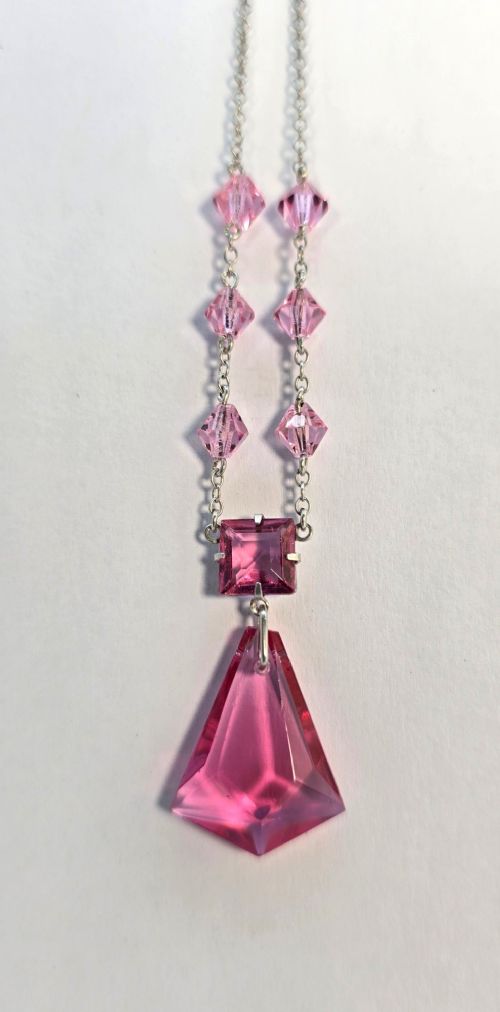
Gemstones such as diamonds appear hand-cut into old cuts, paired with pink crystal, green glass, and onyx to build depth within the linear frameworks. Pendant lights utilise chrome frames housing shaped glass panels to catch and refract light through geometric apertures.
Some items forged from steel and chrome started life illuminating interwar hallways before finding new purpose hanging from modern ceilings.
Assessing quality and execution
Quality rests on the crispness of the angles and the precision with which contrasting materials sit flush within their metal tracks. Finer examples display meticulous stone-setting and substantial metal gauges that hold their shape under daily wear.
Simpler pieces rely on plated finishes and stamped components where the junctions between materials appear softer. The distinction lies in whether the geometry feels integrated into the structure from inception or merely applied as a surface motif.
Émile-Jacques Ruhlmann·Jakob Bengel
The Silver Geometric Pendant Glossary
- Art Deco
- A design style emerging in the 1920s and 1930s characterised by sleek lines, symmetry, and geometric abstraction. It draws heavily on machine-age influences and architectural forms.
- Modernist
- A movement rejecting traditional ornamentation in favour of functionalism, industrial materials, and stark geometric purity. Pieces often utilise chrome, steel, and synthetic resins.
- Marcasite
- Small faceted polished iron pyrite stones set closely together to create a glittering, dark metallic border. This material frequently frames art deco silver jewellery.
- Galalith
- An early semi-synthetic plastic made from milk casein, widely utilised in the 1930s for vibrant geometric necklace links. It takes a high polish and mimics the appearance of horn or amber.
- Platinum
- A dense, durable white precious metal used in high-end jewellery to securely hold diamonds and delicate settings without adding heavy bulk.
Silver Geometric Pendant: Frequently Asked Questions
How do I date a silver geometric pendant?
Dating relies on identifying the underlying material palette and the specific stylistic vocabulary of the metalwork. Pieces from the 1930s often pair sterling silver or chrome with synthetic resins like galalith or natural stones like onyx.
Examining the clasp construction, chain links, and stone-cutting techniques provides further clues. Earlier items incorporate old-cut diamonds in platinum settings, whereas mid-century examples lean towards simpler silver forms.
Are pendant lights cleaned the same way as necklaces?
Pendant lights and necklaces demand entirely different maintenance approaches based on their exposure to dust and skin oils. Lighting fixtures require careful cleaning of chrome frames and glass panels using appropriate metal polishes.
Jewellery needs gentler care to protect softer inlays like enamel, galalith, or amazonite from harsh chemicals. Regular soft-cloth wiping preserves both metal lustre and stone stability.
What is the difference between art deco and modernist styles?
Art deco balances geometric rigour with decorative luxury, frequently incorporating diamonds, platinum, and polished onyx. It aims for a glamorous, streamlined aesthetic.
Modernist design strips away the luxury stones to focus purely on industrial materials like chrome, steel, and bakelite. The emphasis shifts entirely to structural utility and stark linear purity.
How should I style a geometric pendant necklace?
These necklaces suit simple necklines that allow the angular metalwork and contrasting stones to remain the focal point. Solid block colours provide a neutral backdrop for complex multi-link designs.
Matching earrings in a similar chrome or silver geometric style creates a cohesive look without overpowering the main pendant piece.