

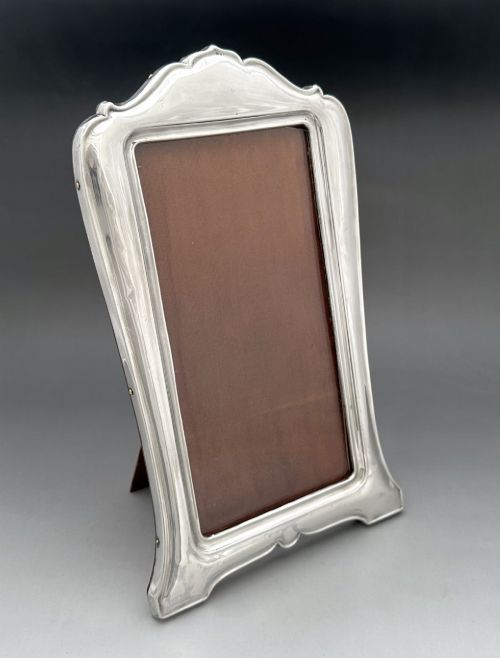
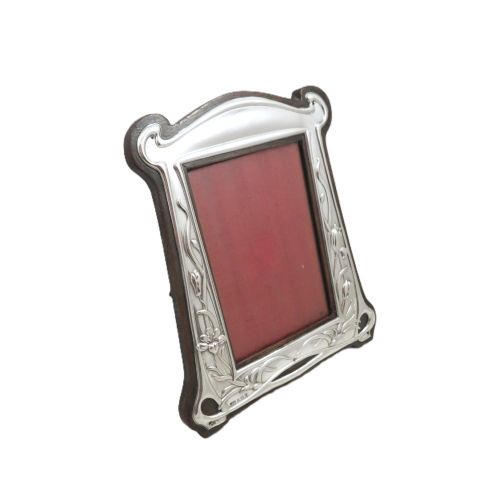
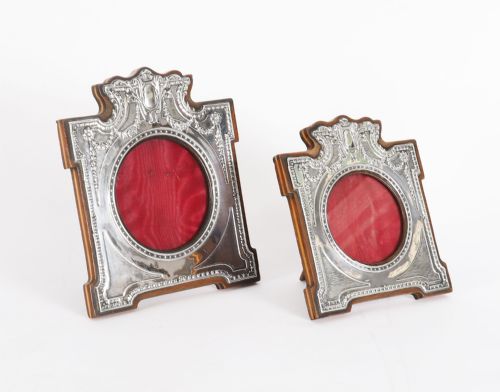

Silver Framed Photograph Holder
A silver framed photograph holder displays a cherished portrait while bringing lasting metalwork to a desk or mantelpiece.
Silver Framed Photograph Holder
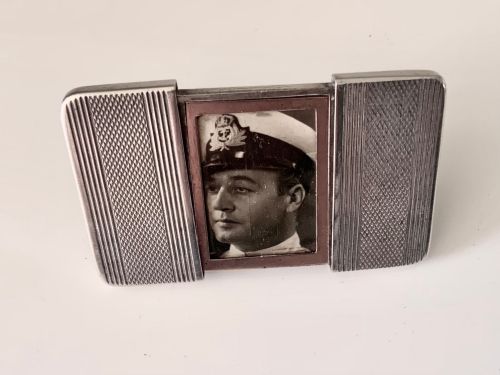
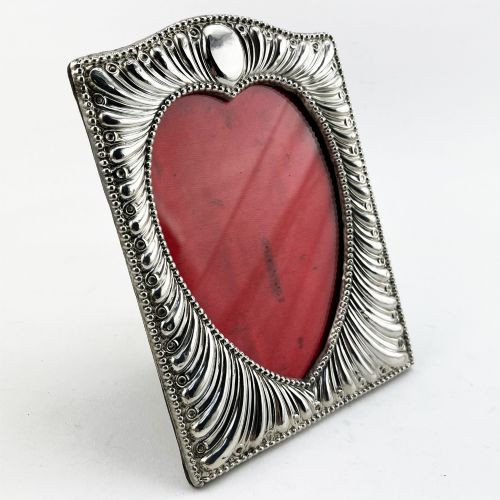
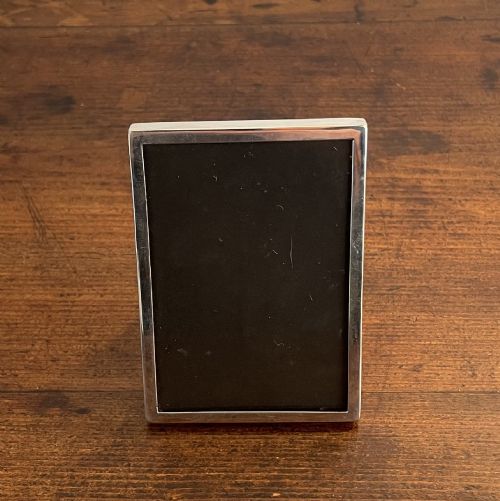
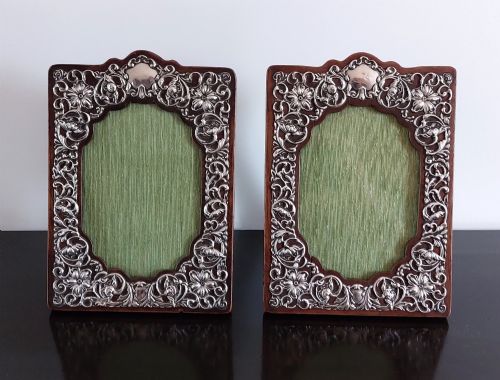
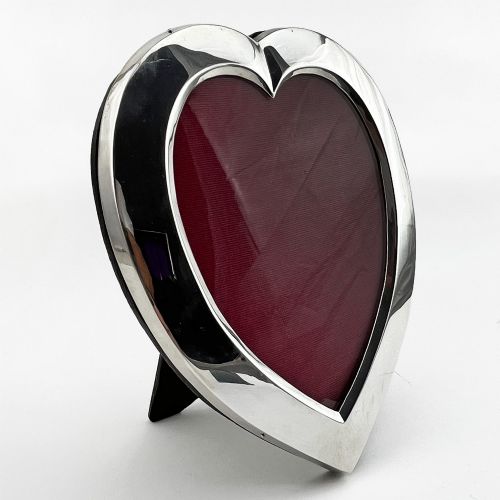
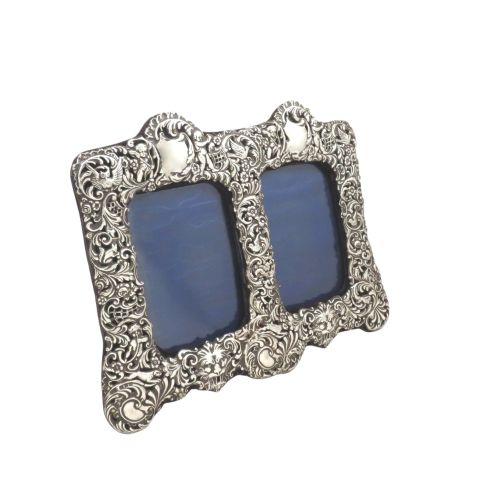
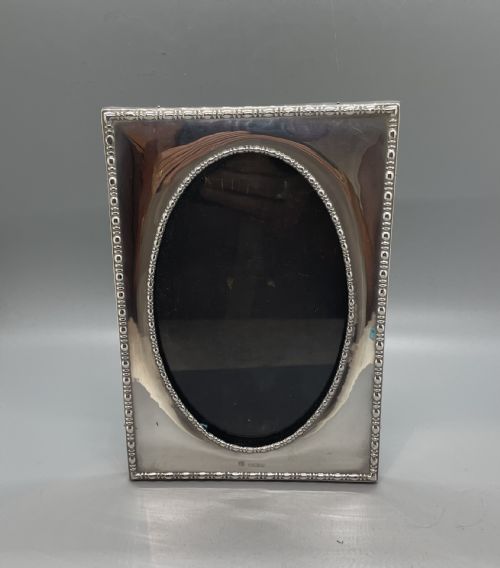
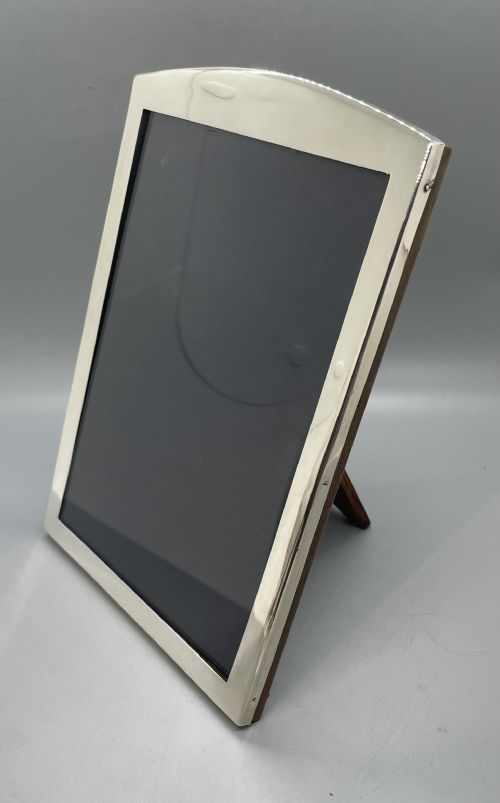
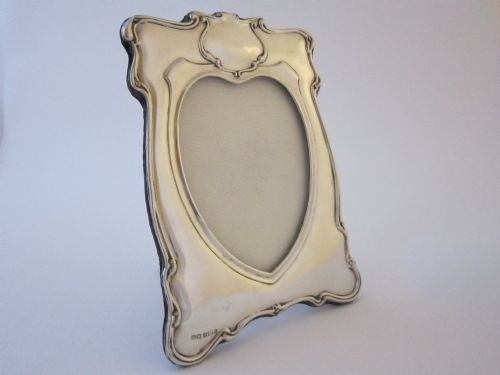
A silver framed photograph holder encompasses portable picture and photo frames encountered across the Victorian, Edwardian, and Art Deco periods. These pieces range from single upright mounts to double configurations and heart shapes designed for domestic display.
The selection on this page leans heavily toward Edwardian and George V sterling silver examples, often bearing hallmarks from Birmingham or Sheffield. Makers and retailers such as William Comyns, Mappin Bros, and Syner & Beddoes shaped the standard forms seen here.
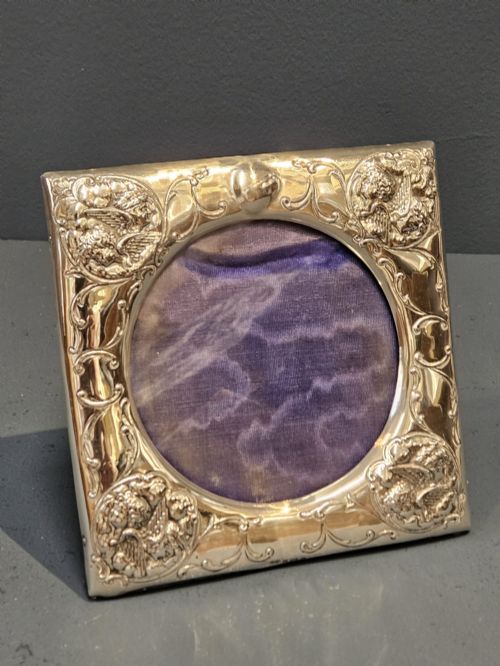
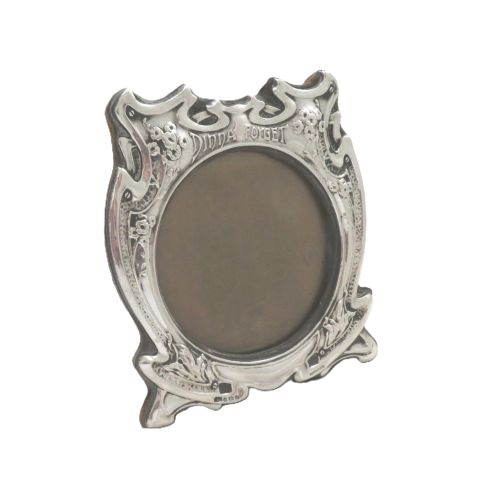
Beyond standard rectangles, surviving specimens include embossed or engraved borders, heart outlines, and engine-turned surfaces. Pieces from the turn of the twentieth century frequently display Art Nouveau motifs or cherub designs.
Assessing quality
Quality rests in the crispness of the hallmarks, the depth of the metalwork, and the preservation of embossed or engraved details on the silver. Finer examples display meticulous hand-chasing and substantial gauge metal rather than thin pressed sheets.
Silver Framed Photograph Holder Retail Price Guide 2026
Typical asking prices for silver framed photograph holder among the pieces listed under this phrase on Sellingantiques today, from the lower quarter to the upper quarter. They describe what is for sale here now, not the wider market.
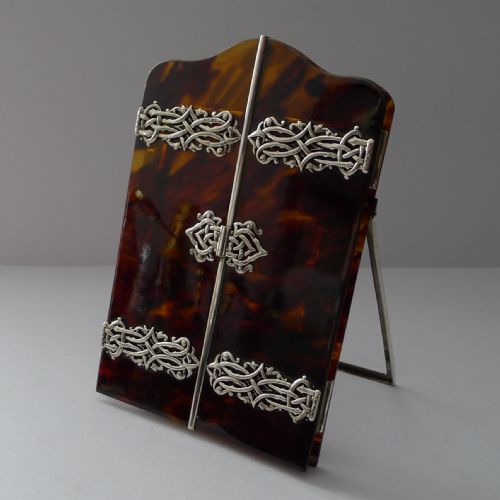
The listings span from the nineteenth century through the Art Deco period, incorporating sterling silver, glass, wood, and tortoiseshell.
William Comyns·Mappin Bros·Syner & Beddoes·Hardy Brothers·Emile Langlois
The Silver Framed Photograph Holder Glossary
- Sterling silver
- A silver alloy containing 92.5 percent pure silver by mass and 7.5 percent other metals, usually copper. This standard composition is frequently stamped with official assay office hallmarks.
- Hallmark
- An official stamp applied to precious metals indicating the standard of purity, the assay office, and the year of testing. British pieces commonly show town marks and date letters.
- Engine-turned
- A method of mechanical ornamentation that etches precise geometric patterns into metal surfaces. This technique appears on numerous twentieth-century frames.
- Tortoiseshell
- The shell of certain turtle species utilised historically as a decorative overlay on metal objects. It is often secured beneath pierced silver mounts.
- Velvet
- A type of woven tufted fabric featuring evenly distributed short threads, commonly utilised as the backing material on the reverse of photograph frames.
Silver Framed Photograph Holder: Frequently Asked Questions
How do I date a silver photo frame?
Dating relies primarily upon the assay office hallmarks stamped into the metal, which include specific date letters corresponding to the year of testing.
Stylistic indicators such as Art Nouveau curves or Art Deco geometric lines also help assign a piece to periods like the Edwardian era or the nineteen-thirties.
What materials support the silver front?
Most antique photograph holders utilise a sturdy wooden or hardwood internal structure to maintain rigidity behind the metal mount.
The reverse is typically finished with fabric, velvet, or leather, paired with a folding strut for desktop display.
Are double photo frames common?
Double configurations appear among Victorian and later pieces, allowing two portraits to be displayed side by side within a hinged or unified mount.
These double formats are often encountered in sterling silver or silver-plated variants.
How should I clean a silver frame?
Maintenance involves gentle cleaning with a specialised silver cloth to remove tarnish while preserving the integrity of the underlying metal and hallmarks.
Care must be taken to avoid applying liquid polish directly to delicate backing fabrics or inset materials like tortoiseshell.