


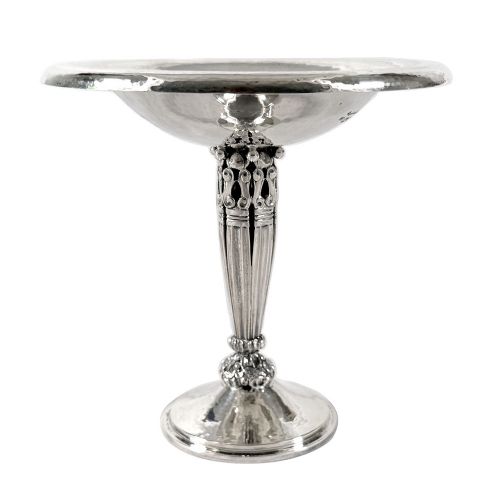


Silver Footed Dishes
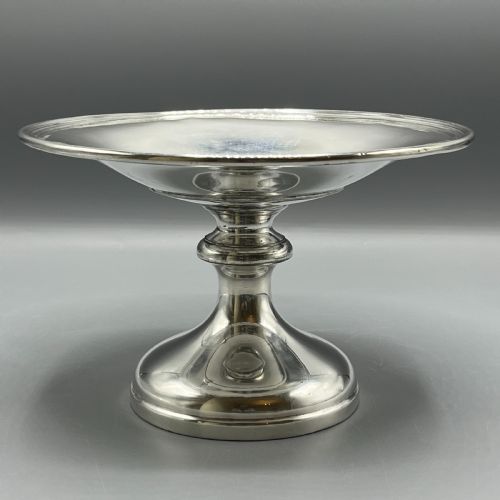
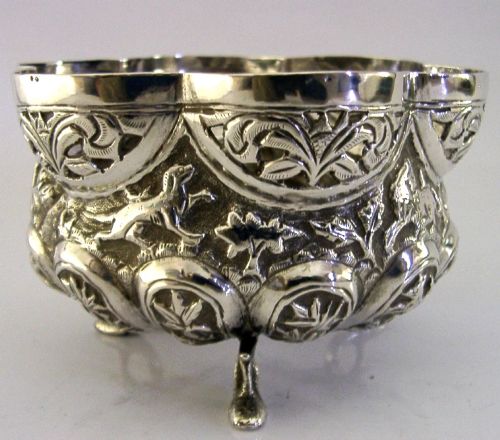
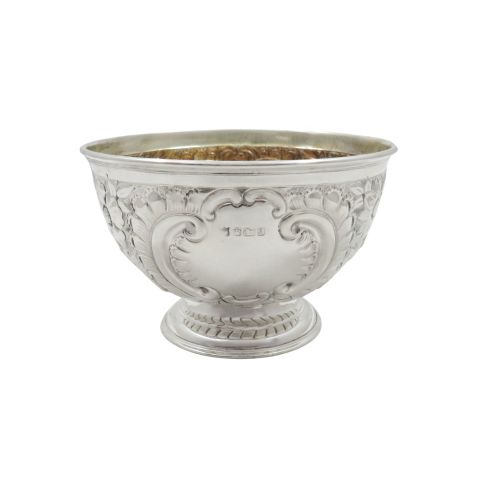
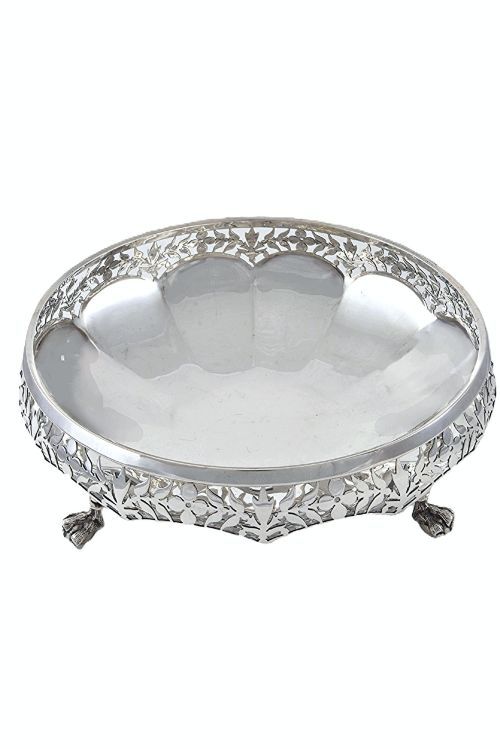
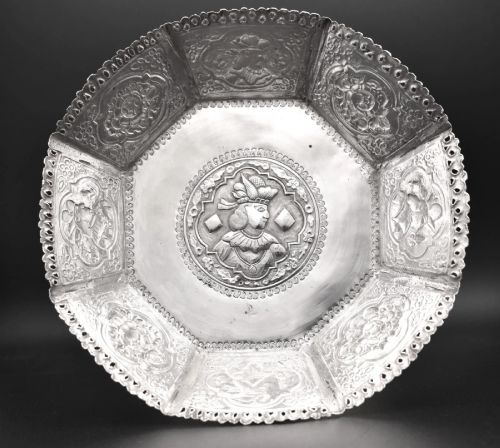
Silver footed dishes gather everything from Georgian patens to Art Deco tazzas raised upon small feet.
Silver Footed Dishes
Silver footed dishes encompass a wide spectrum of elevated tableware, taking the form of bonbon bowls, sweet dishes, sugar baskets, salt cellars and grand centrepieces. When buyers search for silver footed dishes, they encounter items raised on pedestals, claw feet, dolphin feet, or simple bracket supports across multiple centuries.
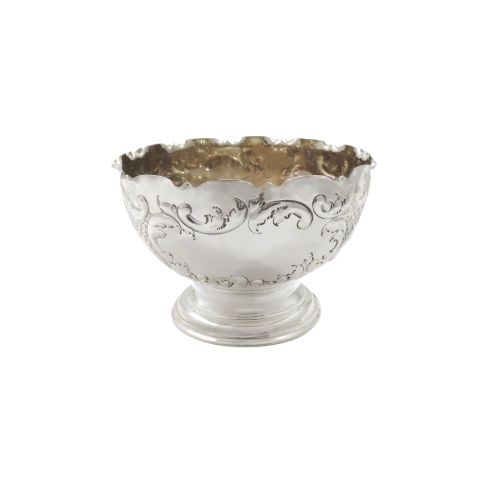
Victorian sterling silver pedestal bowls and salt cellars appear frequently alongside Edwardian pierced baskets and Art Deco pieces. Regional variations emerge through Chinese export work, Anglo-Indian repoussé bowls, and solid silver Indian wirework compotes.
Form follows function closely across the selection, ranging from miniature condiment salts to substantial centrepiece bowls. The raised base serves to lift the vessel clear of the surface, framing the contents for display upon dining tables or side furniture.
How they were made
Makers utilised sterling silver, solid silver, and heavy silver plating over base metals, often pairing the metalwork with ruby glass liners or cut-glass inserts. Construction methods combined traditional smithing with piercing, wirework, and repoussé hammering to achieve intricate surface relief.
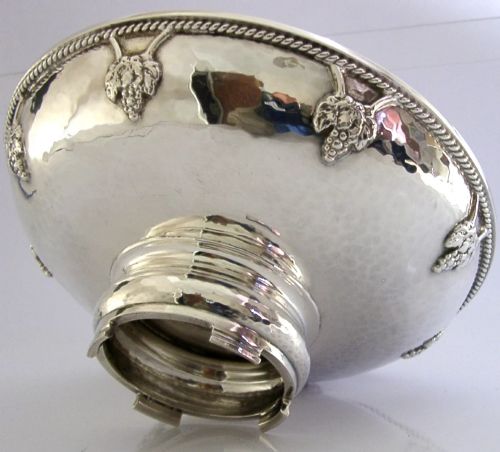
Individual components such as feet, handles, and pierced galleries were cast or cut separately before being soldered or riveted to the main body of the dish. Hammered finishes, seen in Arts and Crafts and Art Deco examples, show visible tool marks left by the silversmith shaping the heavy gauge metal.
Silver Footed Dishes Retail Price Guide 2026
Typical asking prices for silver footed dishes among the pieces listed under this phrase on Sellingantiques today, from the lower quarter to the upper quarter. They describe what is for sale here now, not the wider market.
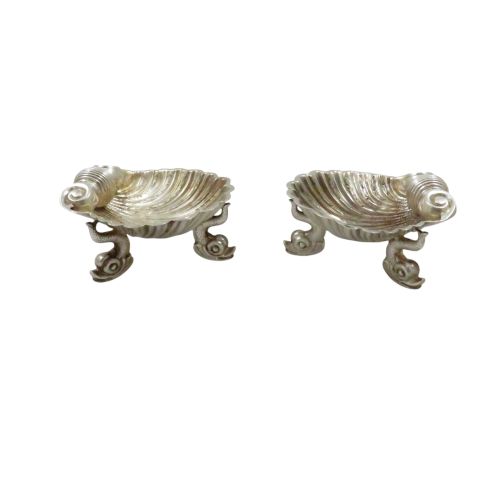
Several tiny silver salt cellars stand upon miniature dolphin feet, keeping watch over the dinner table.
What varies in quality
Quality rests upon the weight of the metal and the crispness of the chased or pierced decoration, distinguishing heavy gauge commemorative pieces from lighter pressed items. The integrity of the feet and their attachment to the body dictates stability and structural success.
Maker attribution and regional craftsmanship elevate certain works, particularly signed pieces from known workshops or detailed oriental repoussé. The survival of original glass inserts in salt cellars and sweet dishes adds significantly to the completeness of an object.
A E Jones·Charles Boyton·William Garrard·Fenton
The Silver Footed Dishes Glossary
- Tazza
- A shallow bowl or dish mounted on a stem and foot, used historically for serving small portions of food or displaying fruit.
- Repoussé
- A metalworking technique where the artisan hammers the design from the reverse side to create a raised pattern in relief on the front.
- Salt Cellar
- A small open vessel or dish designed to hold table salt before the invention of the modern spring-loaded salt shaker.
- Paten
- A small shallow plate or dish, often associated with ecclesiastical use but applied to domestic flat silver vessels from the eighteenth century.
Silver Footed Dishes: Frequently Asked Questions
What were silver footed dishes used for?
These elevated vessels served multiple dining purposes, from holding individual portions of salt to displaying sweetmeats, fruit, and bonbons. Larger examples functioned as dining table centrepieces.
Their raised design kept contents visible and protected them from damp or spilled liquids on the table surface during formal meals.
How do I date a silver footed dish?
Dating relies upon hallmarking stamps denoting the assay office, date letter, and maker's mark where present on British sterling silver. Stylistic indicators such as Victorian repoussé work, Edwardian piercing, or Art Deco geometric lines also point to specific eras.
Unmarked pieces or foreign silver require stylistic comparison with known regional techniques and historical manufacturing periods.
How should I clean silver footed dishes?
Maintenance requires gentle polishing with a dedicated silver cloth or mild cream to preserve the underlying metal and any fine chasing. Harsh abrasives must be avoided, particularly on thin silver plate or delicate wirework.
Removable glass liners should be washed separately in warm soapy water before being placed back into the metal baskets.
Can I use antique silver dishes daily?
Solid silver and heavy gauge pieces withstand regular use provided they are washed by hand rather than placed in modern dishwashers. Items with delicate glass inserts or fine wirework benefit from more careful handling during service.
Regular use helps prevent tarnish accumulation while keeping these historical objects integrated into modern dining routines.