
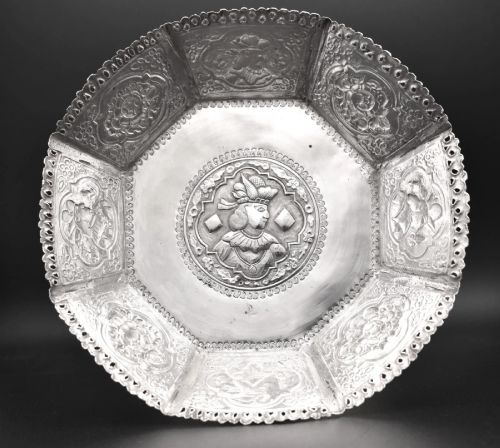


Silver Footed Dish
A silver footed dish brings raised elegance to any table, spanning centuries of craftsmanship from delicate salts to grand centrepieces.
Silver Footed Dish
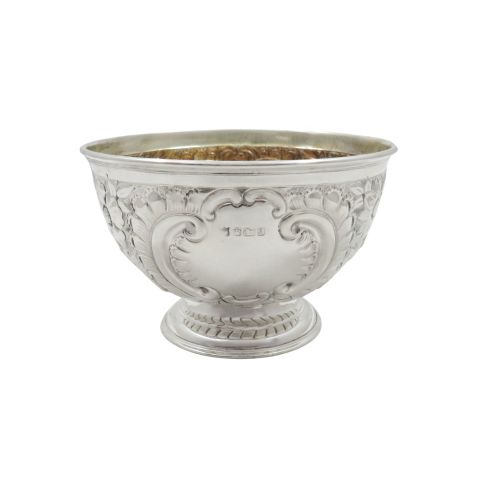
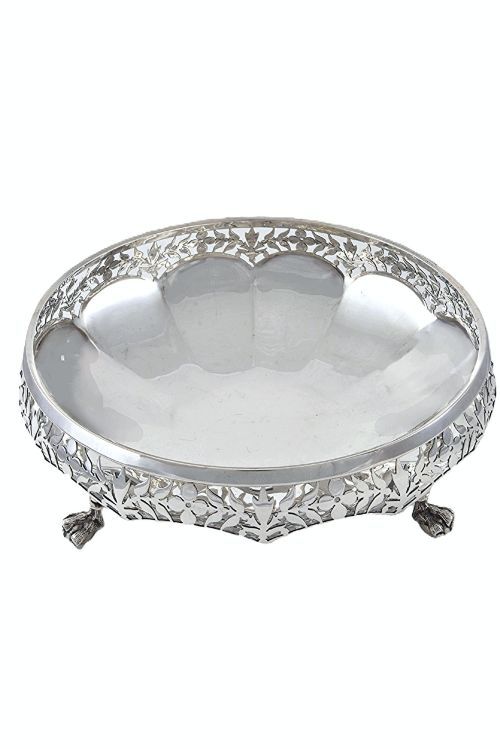
A silver footed dish encompasses a wide variety of raised vessels designed for display, dining, and storage, including tazzas, bonbon dishes, salt cellars, and centrepiece bowls. You will frequently encounter Victorian and Edwardian examples on this page, alongside earlier Georgian pieces and later Art Deco designs.
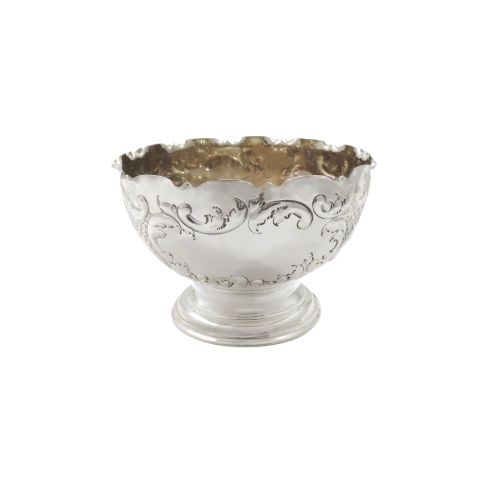
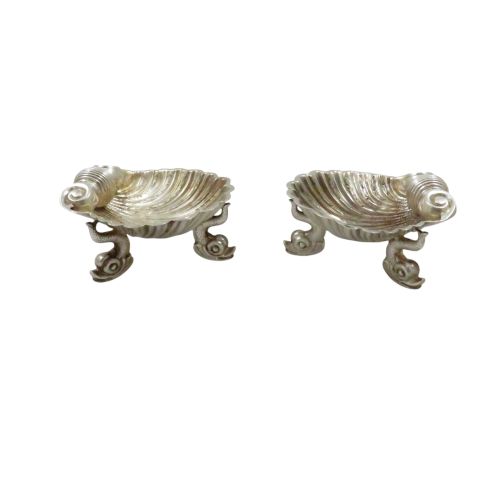
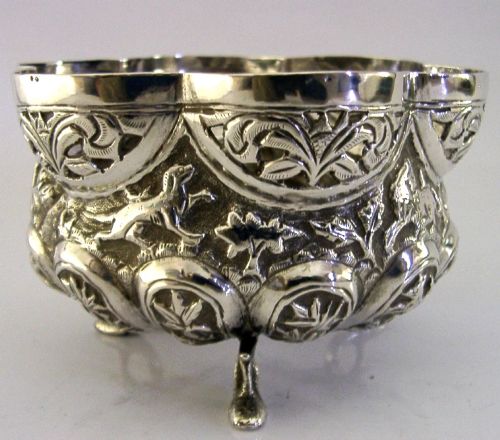
The selection ranges from small open salt cellars with dolphin feet to large centrepiece bowls and comport dishes on pedestal feet. Styles stretch across traditional British periods to include Anglo-Indian repoussé work, Chinese export pieces, and Persian patterns.
Makers utilise elevated bases ranging from simple low feet to ornate cast pedestals, lifting the bowl above the surface. These pieces serve functions from holding sweets and fruit to organising trinkets and serving condiments.
Materials and Technique
Silversmiths constructed these vessels primarily in sterling silver, solid silver, and heavy gauge silver plate, often combining them with ruby glass liners, cut-glass inserts, or mahogany and walnut frames. White metal and pewter also appear in specific regional or modernist works.
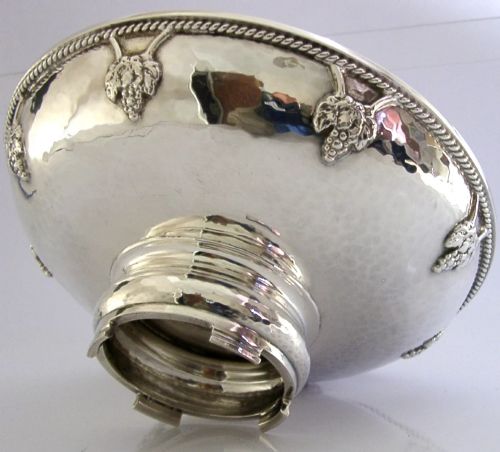
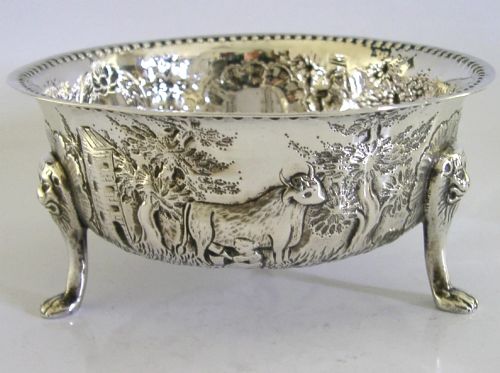
Craftsmen employed techniques such as piercing, repoussé, hammering, and wirework to decorate the surfaces with floral motifs, lattice patterns, and animal figures. Bases and feet were frequently cast separately and soldered to the main bowl body.
Listings feature items spanning the eighteenth, nineteenth, and twentieth centuries, including Victorian, Edwardian, and Art Deco periods.
The Measure of Quality
Quality rests in the weight of the metal and the crispness of the hand-worked detail, separating heavy gauge pieces from thinner stamped items. Pierced work and repoussé design require precise execution by the smith to maintain structural integrity and sharp ornamental lines.
The integration of the foot to the bowl indicates the maker's standard of construction, ensuring balance and stability without visible weakness at the joints. Superior examples feature well-preserved hallmarks and harmonious proportions between the vessel and its elevated base.
A E Jones·Charles Boyton·William Garrard·Fenton·Mappin & Webb·Harrods
The Silver Footed Dish Glossary
- Tazza
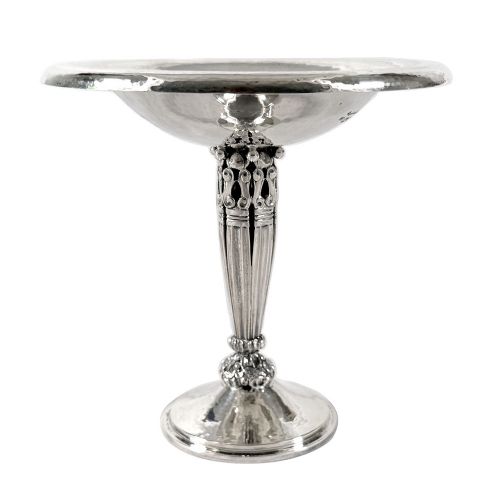
- A shallow bowl or plate mounted on a stem and foot, used historically for serving small items or fruit. These elevated display pieces often feature decorative borders and chased surfaces.
- Repoussé
- A metalworking technique where the artisan hammers the design from the reverse side to create a raised pattern in relief. This method produces deeply textured floral and figurative scenes.
- Salt Cellar
- A small open dish designed to hold loose salt at the dining table, frequently elevated on three or four small feet. They often accompany condiment spoons and occasionally include coloured glass liners.
- Comport
- A large standing dish or bowl used for serving fruit or sweets at the centre of a table. They stand on a distinct foot or pedestal base.
- Hallmark
- An official stamp applied to precious metals indicating the standard of purity, the assay office, and the date letter. These marks provide definitive evidence of origin and age.
Silver Footed Dish: Frequently Asked Questions
What is a tazza?
A tazza is a shallow saucer or bowl raised upon a central foot or pedestal stand. Silversmiths designed these vessels primarily for the display of fruit, sweets, or decorative items.
On this page, you will find tazzas ranging from Arts and Crafts hammered examples to ornate nineteenth-century pieces. Their raised form adds height and visual interest to table settings.
How were silver salts used?
Antique silver salts served as individual or shared table vessels for holding loose salt before the invention of free-flowing table salt. Diners used small spoons or pinched the salt by hand to season their food.
These tiny dishes frequently stand on three feet, dolphin supports, or pedestals. They often include coloured glass liners to protect the silver from corrosive salt.
How do I clean a silver footed dish?
Clean silver footed dishes gently using a specialised silver cloth or mild polish designed for antique metals. Avoid harsh abrasive pads that can wear away thin plating or delicate repoussé details.
Take extra care around soldered joints where the foot meets the bowl. Store the piece in a dry environment to slow down natural tarnishing.
How do I date a silver dish?
Dating a silver dish relies heavily on reading the stamped hallmarks, which include maker marks, city assay office symbols, and date letters. Comparing these stamp sequences against official registry records reveals the exact year of manufacture.
Stylistic indicators such as Art Deco geometric lines or Victorian floral chasing also help determine the period. When hallmarks are absent, classification depends on the manufacturing technique and material composition.