


Silver Flatware Tea Scoop
These silver flatware tea scoop examples are small, highly individual implements designed to measure dry leaves from the caddy, bringing tactile elegance to daily brewing.
Silver Flatware Tea Scoop
A silver flatware tea scoop, predominantly encountered as a caddy spoon, is a specialised utensil created to handle loose tea leaves. The selections span from the Georgian period through the Victorian era into twentieth-century Danish Modern designs.
Most items appearing in this category take the form of dedicated caddy spoons, featuring shallow bowls and short handles tailored to fit tea canisters. Regional variations include Scottish Provincial, Irish, and English town marks, alongside continental work.
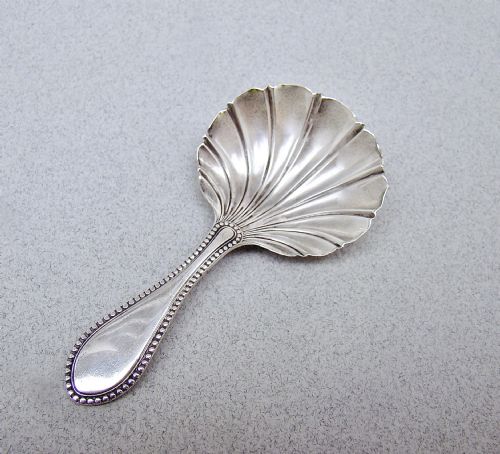
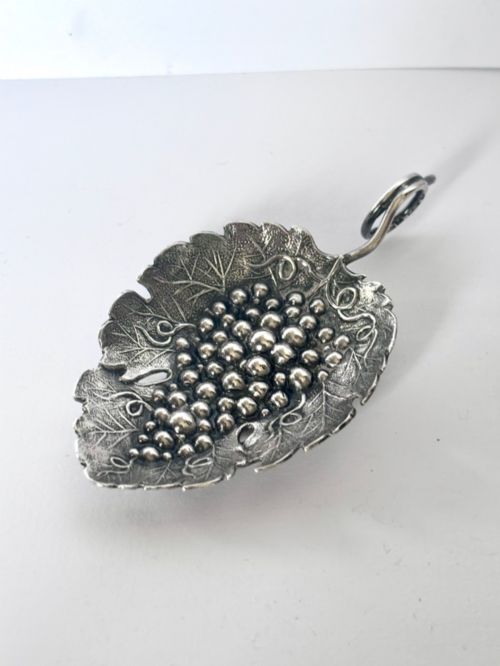
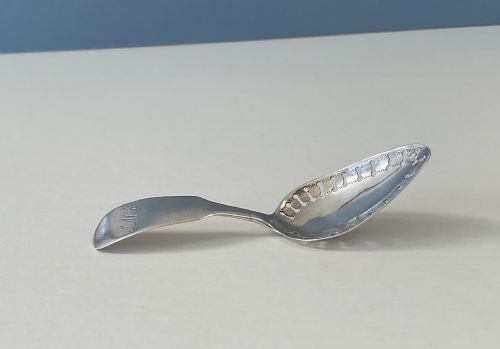
Forms range from simple shovel bowls to elaborate vine leaf and grape motifs, reflecting changing tastes across the eighteenth, nineteenth, and twentieth centuries.
Materials and construction
The primary material across the pieces is sterling silver, occasionally supplemented by silver-gilt finishes that provide a rich golden tone over the silver base. Makers utilised techniques such as striking, piercing, and hand engraving to ornament the bowls and stems.
Silversmiths formed the characteristic leaf, shovel, and rectangular bowl shapes through careful hammering and stamping, attaching handles designed for balance and decorative effect.
Some spoons take the exact shape of a cupped vine leaf, ensuring your tea leaves travel via miniature foliage.
Distinctions in quality
Quality in these implements rests upon the crispness of the maker's mark and the depth of any chasing or engraving. Pieces featuring specialised motifs, such as naturalistic vine leaves or double-struck handles, demonstrate greater labour in the workshop.
The clarity of town marks, date letters, and sterling silver hallmarks contributes significantly to the standing of an individual spoon, as does the preservation of the original surface texture and bowl geometry.
Martin Hall And Co·Joseph Willmore·George Unite·Georg Jensen·George Wintle
The Silver Flatware Tea Scoop Glossary
- Caddy spoon
- A short-handled spoon specifically designed for measuring tea leaves from a caddy. These small implements display notable variety in bowl shape and handle decoration.
- Sterling silver
- A silver alloy containing ninety-two point five percent silver by mass, with the remainder being other metals. This standard is verified by official hallmarking.
- Silver-gilt
- Silver that has been coated with a thin layer of gold on its surface. This technique adds warmth and protects the underlying metal.
- Double struck
- A method where the die is applied twice during manufacturing to sharpen the decorative relief on flatware handles. It results in ornamentation appearing on both sides or with exceptional depth.
- Provincial mark
- A hallmark applied outside the main assay offices, indicating manufacture in regional towns such as Glasgow. These marks often add local historical interest.
Silver Flatware Tea Scoop: Frequently Asked Questions
How do I identify a Georgian tea scoop?
Georgian examples often feature hallmarks indicating London, Birmingham, or Dublin manufacture between the late eighteenth and early nineteenth centuries. Their forms include plain shovel bowls and early engraved patterns.
Examining the punch marks and style of engraving helps separate these earlier pieces from Victorian or twentieth-century revivals.
What is the difference between sterling silver and silver-gilt?
Sterling silver is the standard alloy of silver used for British flatware, marked to guarantee its metal purity. Silver-gilt simply refers to sterling silver that has received a superficial application of gold.
This gold wash provides a distinct two-tone appearance that enhances decorative details like engraved leaves.
How should I care for antique silver tea scoops?
Gentle washing in warm soapy water with a soft cloth is usually sufficient for regular maintenance. Avoid harsh abrasive cleaners that can wear away crisp hallmarks and fine hand engraving.
Storing pieces in a dry environment prevents excessive tarnishing and preserves the integrity of the silver surface.