


Silver Equestrian Accessories
Silver equestrian accessories translate the language of the stable and the hunting field into sterling silver, desk ornaments, and desk tidy forms that collectors prize.
Silver Equestrian Accessories
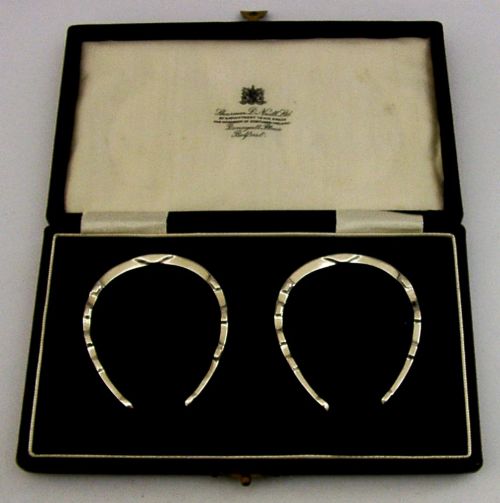
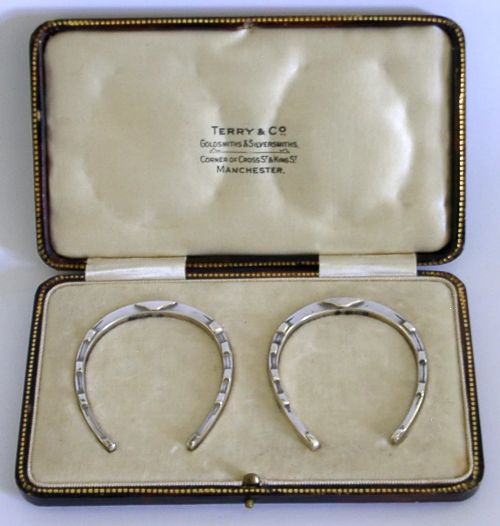
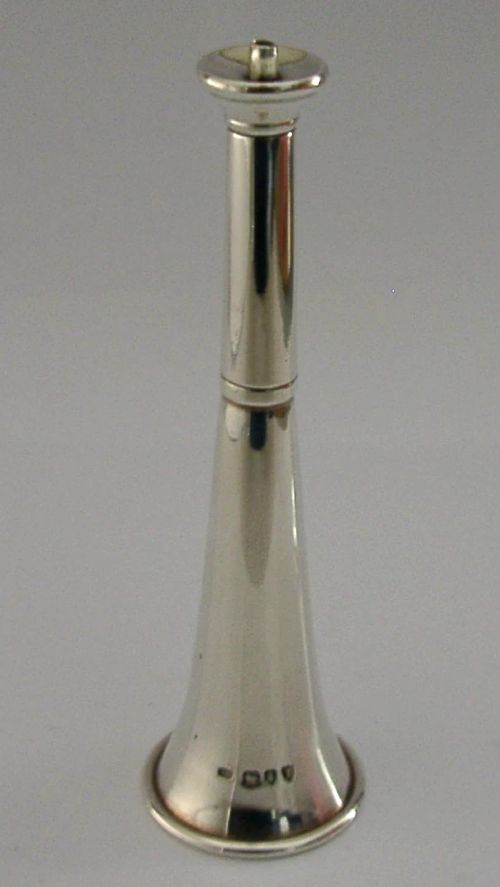
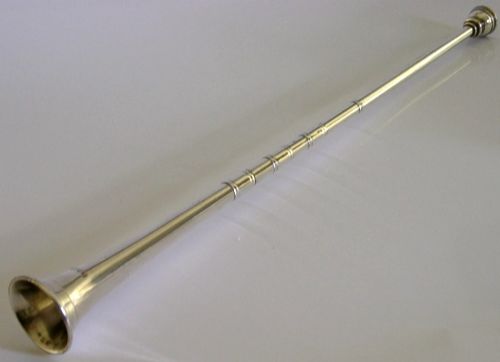
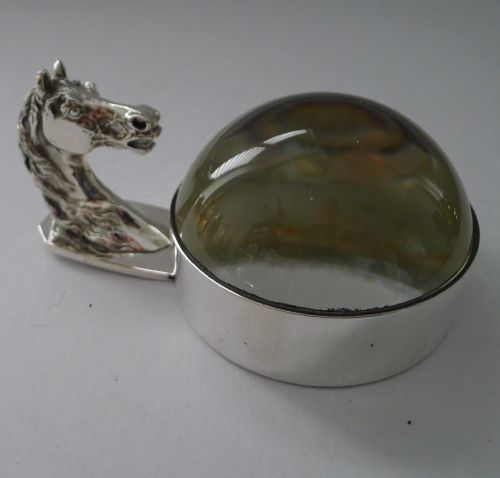
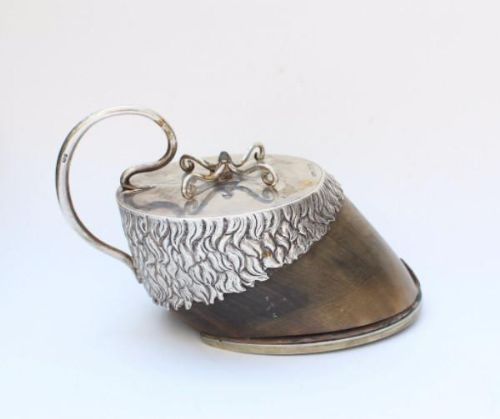
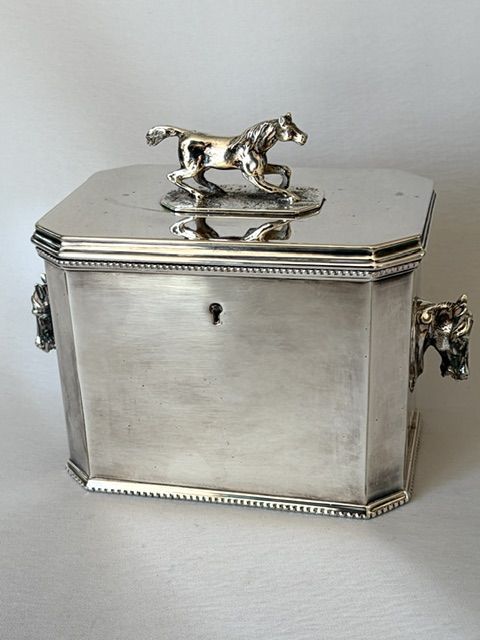
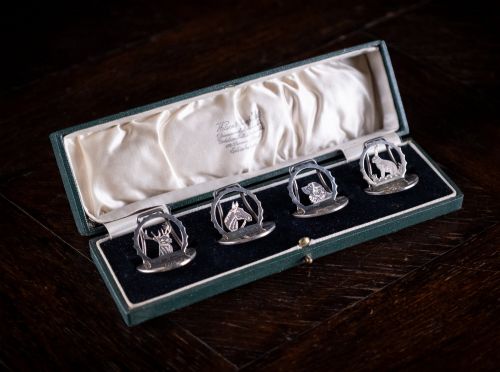
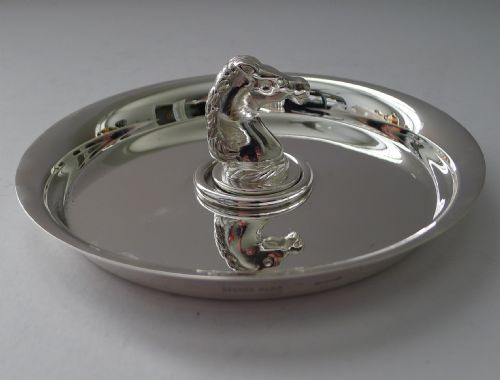
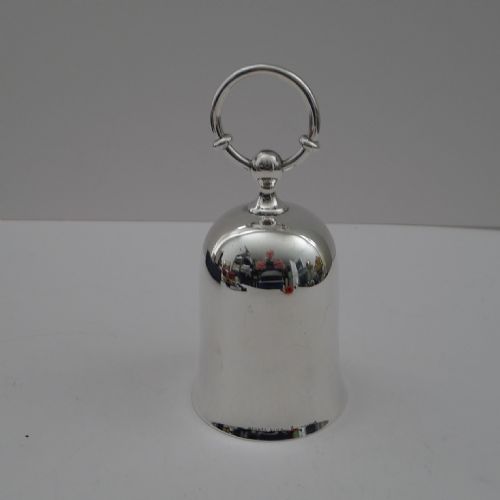
Silver equestrian accessories encompass a diverse range of functional and decorative items modelled after horses, hunting horns, horseshoes, and riding gear. When searching for silver equestrian accessories, buyers encounter everything from cased horseshoe napkin rings and jockey cap pin cushions to substantial desk pieces incorporating actual horse hooves.
The objects span from the Victorian and Edwardian eras through the Art Deco period and into mid-century modern designs by makers such as Hermes. Common forms include table lighters, menu holders, vesta cases, and magnifying glasses, all sharing a distinct thematic devotion to horses and hounds.
What varies in quality
Quality rests upon the crispness of the casting and the fidelity of the anatomical details in subjects like horse heads, foxes, and chess knights. Superior examples display fine hand-chasing that defines muscle structure, mane texture, and tack without relying solely on stamped decoration.
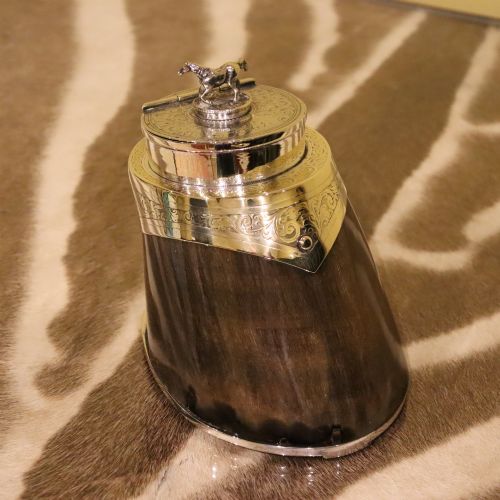
The integration of mixed materials also dictates distinction, particularly in taxidermy pieces where the preservation of the hoof and the snugness of the silver mounts show the maker's hand. Maker attribution to notable silversmiths or luxury houses elevates the standing of an individual piece.
A good number of Victorian horses must have looked rather light on their feet once their hooves were converted into desktop inkwells and tobacco boxes.
Braham·Sampson Mordan·Hermes·A Wilcox·William Neale
The Silver Equestrian Accessories Glossary
- Vesta
- A small pocket case designed to hold matches, often fashioned here into the shape of a horseshoe or a jockey cap. These items featured spring-loaded lids and striking surfaces on the base.
- Vide poche
- A small tray or dish intended for emptying pockets of coins and keys, frequently encountered in novelty horse head designs. The term translates from French as empty pocket.
- Caddy spoon
- A short-handled spoon specifically created for measuring loose tea from a caddy, often modelled as a jockey cap in equestrian silver. The form allowed the bowl of the spoon to sit neatly inside the tea canister.
- Stirrup cup
- A traditional drinking vessel handed to a rider before a hunt, which inspired related stirrup-shaped napkin rings and clips. The original form allowed the rider to drink without dismounting.
- Desk tidy
- A desk accessory organised to hold inkwells, pens, and stamps, sometimes constructed using a horse hoof as the primary reservoir. These desk pieces anchored the writing furniture of country houses.
Silver Equestrian Accessories: Frequently Asked Questions
What periods do these silver pieces come from?
The pieces span from the nineteenth century through the Edwardian era and into the mid-twentieth century. Victorian and Edwardian examples sit alongside later Art Deco and 1960s designs.
Design styles shifted across these decades from elaborate taxidermy and naturalism to sleek mid-century reinterpretations by luxury houses.
How were horse hoof items used originally?
Equine hooves were mounted in silver and turned into practical desk accessories such as inkwells, paperweights, and tobacco boxes. Country houses and estate offices utilised them daily for correspondence and writing.
Taxidermy was common in the nineteenth century, allowing owners to preserve a favourite animal or a notable hunter as a functional ornament.
Are these items made of solid silver?
The selection includes both solid sterling silver and silver plated items, alongside pieces incorporating mixed materials like ebony, tortoiseshell, and horse hoof. Makers stamped sterling pieces with standard hallmarks to denote the silver purity.
Checking the base or rim usually reveals the maker's mark and the silver standard.