






Silver Enamel Set
A silver enamel set brings together precious metal and coloured glasswork into matched groupings created for the dining table, dressing table or personal wear.
Silver Enamel Set
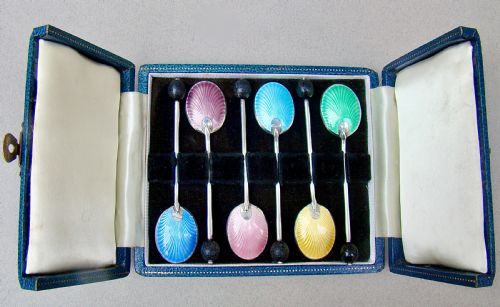
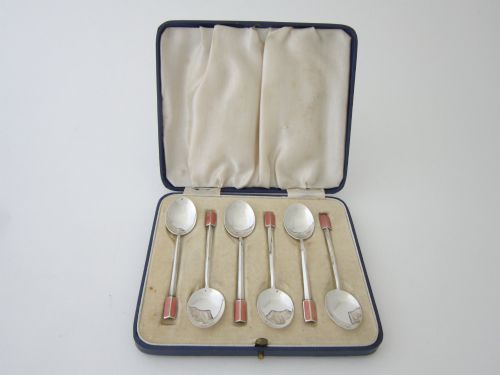
A silver enamel set comprises matched items combining silver bases with vitreous glass coatings, originating largely from the nineteenth century through to the mid-twentieth century. Buyers encounter these pieces organised into cased teaspoons, cocktail sticks, cruet sets, and matching vanity accessories such as brushes and hand mirrors.
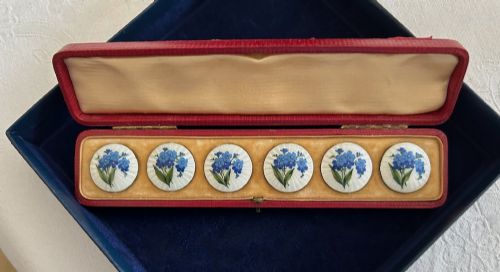
The selection ranges from Edwardian button collections and Arts and Crafts brooches to Art Deco coffee spoons and Scandinavian modern tableware. Many surviving examples retain their original fitted presentation cases, indicating their original purpose as giftware for significant occasions.
Makers across Britain, Scandinavia, Russia, and continental Europe applied coloured, translucent, and opaque enamels to sterling silver and silver gilt. The groupings vary from small quantities of four menu holders or pin dishes up to full sets of twelve cocktail sticks or demitasse spoons.
Materials and technique
Silversmiths formed the structural elements from sterling silver or silver gilt, employing techniques such as casting, stamping, and guilloche engine-turning to pattern the metal surface. This mechanical engraving beneath the glaze created radiating geometric waves or sunburst patterns visible through translucent enamel.
Glass fluxes were ground into fine powders, mixed with metal oxides for coloration, and applied by hand to the metal recesses before being fired in a kiln. Artisans also utilised cloisonné wirework to partition distinct colour areas or plique-a-jour methods without a backing metal to let light pass directly through the enamel.
Wood, cut glass, satin, and black lacquer occasionally supplemented the primary metal and glass components, particularly within larger dressing table boxes, poker sets, and barware groupings.
Silver Enamel Set Retail Price Guide 2026
Typical asking prices for silver enamel set among the pieces listed under this phrase on Sellingantiques today, from the lower quarter to the upper quarter. They describe what is for sale here now, not the wider market.
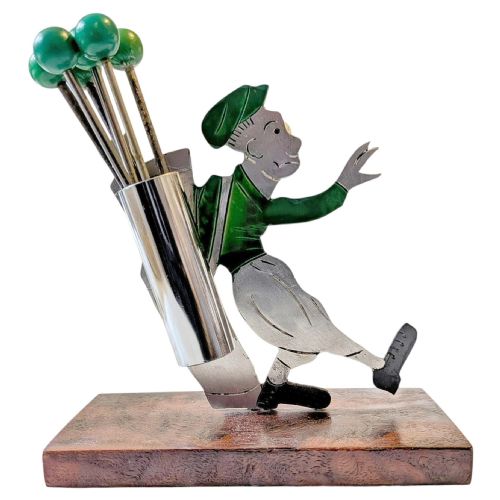
Comical golfer cocktail sticks with caddy figures show that formal dining accessories did not take themselves too seriously in the interwar years.
Judging quality
Quality rests upon the precision of the metalwork and the clarity and evenness of the glass fusion. Superior items demonstrate crisp engine-turned detailing beneath perfectly smooth, unblemished enamel surfaces free from warping or discolouration.
The complexity of the enamel technique elevates a piece, distinguishing standard opaque fills from intricate plique-a-jour, multi-coloured cloisonné, or delicate hand-painted motifs. Furthermore, the presence of an original, undamaged fitted presentation case adds distinction to a matched grouping.
Renowned international workshops and identifiable designers command greater attention through superior weight in the silver, heavier gold gilding where applied, and immaculate execution of miniature decorative details.
Sudre·Harold Arthur Lazarus·Dmitrii Nikolaevich Nikolaev·David Andersen·Martin Mayer·Jakob Bengel·Liberty And Co·Henry Clifford Davis·A Scott·Egon Lauridsen·Walker And Hall·Simon Groth·Volmer Bahner·Anton Michelsen·Turner And Simpson·Thune
The Silver Enamel Set Glossary
- Guilloche
- Mechanical engraving applied to metal beneath a translucent enamel layer. This technique creates repeating geometric patterns that catch the light through the coloured glaze.
- Cloisonne
- Enamelling method where thin metal wires are soldered to a base plate to create enclosed cells for different coloured glass pastes. The resulting grid forms distinct compartments before kiln firing.
- Plique-a-jour
- Open-backed enamelling technique resembling miniature stained glass where translucent enamel spans empty metal cells without a backing. Light passes directly through the suspended coloured glass.
- Silver gilt
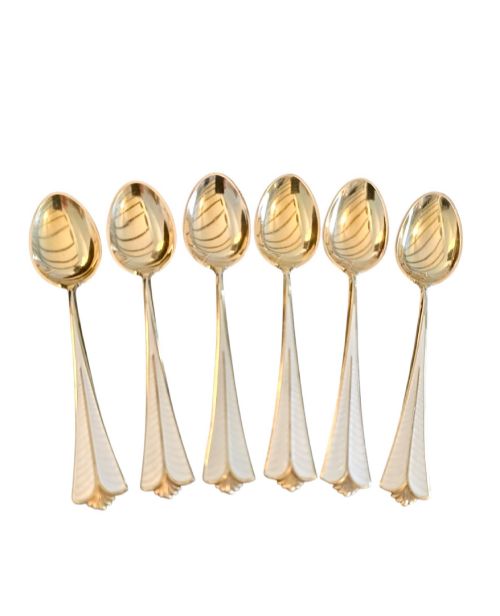
- Sterling silver that has been coated with a thin layer of gold. This treatment produces a rich yellow gold appearance over the silver substrate.
- Demitasse
- Small coffee cup, which gave its name to the matched sets of miniature spoons designed specifically for use with after-dinner coffee.
Silver Enamel Set: Frequently Asked Questions
What are silver and enamel cocktail sticks used for?
These small decorative implements were placed on tables during formal gatherings to spear hors d'oeuvres, olives, or fruit garnishes in cocktails. They were frequently produced in matched sets of six or twelve, often featuring animal finials such as cockerels.
They usually came housed in custom velvet or silk-lined presentation boxes to protect the delicate enamel details on the handles when not in use.
How do I care for antique enamel tableware?
Enamel is essentially glass fused to metal, meaning it requires gentle handling to avoid chipping or scratching against hard surfaces. Cleaning should be done using warm water and mild soap, avoiding harsh silver dips that can seep underneath or damage fragile glass glazes.
Items should be dried thoroughly with a soft cloth and stored in protective cases or dry environments away from direct sunlight, which can alter certain vintage pigments over decades.
What is the difference between guilloche and standard enamel?
Standard enamel involves applying coloured glass paste directly onto a smooth or recessed metal surface, producing a solid opaque or translucent block of colour. Guilloche enamel requires the silver base to be mechanically engraved with precise geometric patterns before the translucent glaze is applied.
The underlying pattern shines through the glassy surface, creating depth and shimmering light effects that change depending on the viewing angle.