

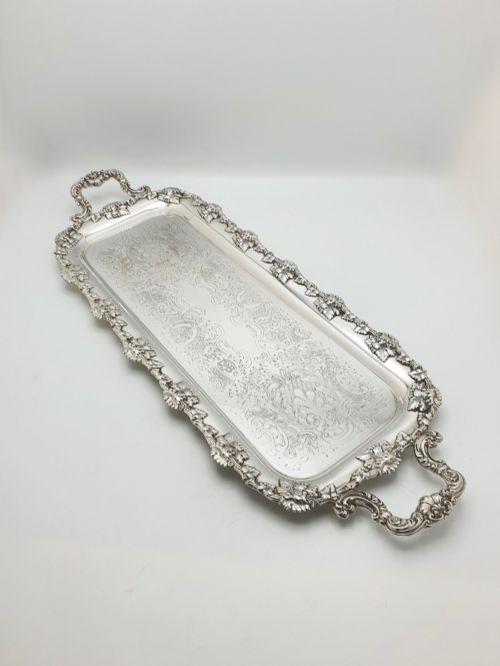
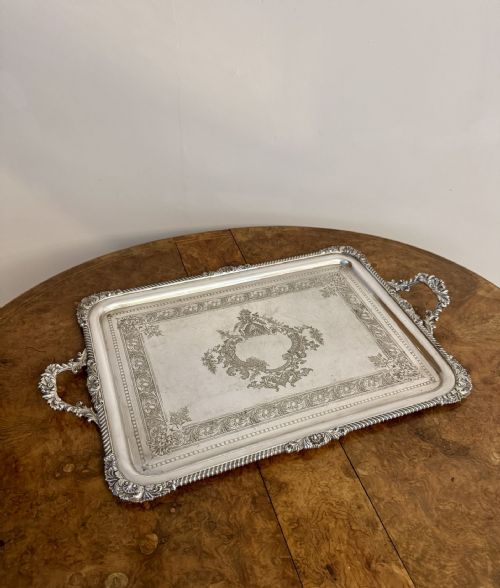


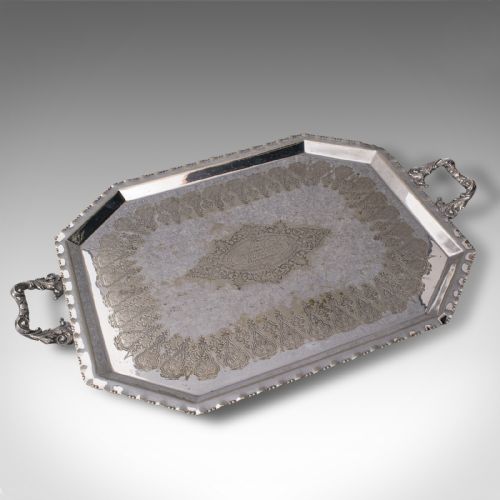


Silver Electroplate Serving Tray
When you handle a silver electroplate serving tray, you hold a functional piece of dining history spanning the Victorian, Edwardian, and Art Deco periods.
Silver Electroplate Serving Tray
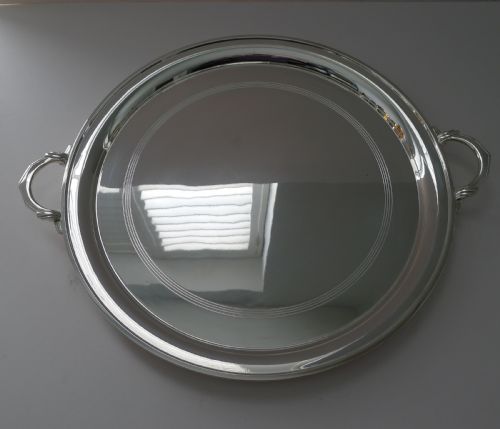
A silver electroplate serving tray covers a broad category of domestic metalware designed for drinks, tea, and formal service. The pieces range from large Victorian circular salvers and engraved tea trays to geometric Art Deco cocktail trays from the 1930s.
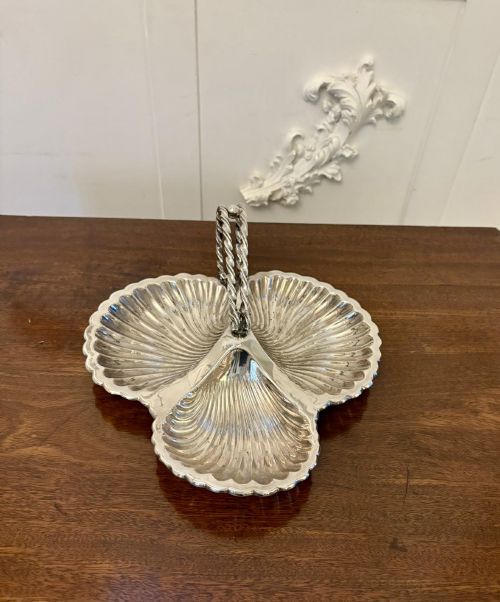
Buyers searching for this phrase encounter various forms including serving dishes, entree dishes, chargers, and platters. The selection on this page bridges the nineteenth century and the early twentieth century, showing shifts from heavy floral engraving to clean modernist lines.
How they were made
The primary construction relies on base metal, nickel silver, or EPNS, which is then electroplated with a thin layer of silver. This technique allowed manufacturers to produce durable dining items with the appearance of solid silver at a lower cost.
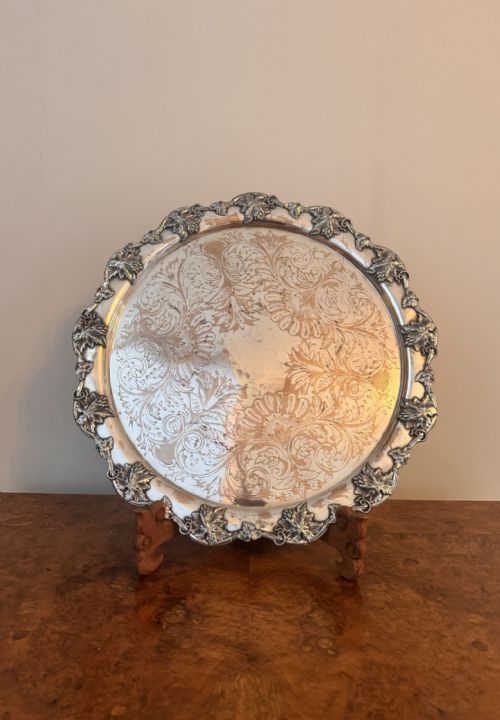
Decoration was applied through hand engraving, cast grapevine borders, and structured handles. Makers utilised stamping and rolling techniques alongside traditional silversmithing methods to shape trays, salvers, and serving dishes.
Silver Electroplate Serving Tray Retail Price Guide 2026
Typical asking prices for silver electroplate serving tray among the pieces listed under this phrase on Sellingantiques today, from the lower quarter to the upper quarter. They describe what is for sale here now, not the wider market.
The listings span the Victorian, Edwardian, and Art Deco periods, utilising materials such as EPNS, nickel silver, and base metal.
What varies in quality
Quality in these pieces depends on the thickness of the silver deposit and the crispness of the chased or engraved decoration. Substantial weight in the base metal and well-defined cast borders distinguish finer productions from lighter domestic items.
The reputation of the maker also dictates distinction, with pieces from established Sheffield and Birmingham firms showing superior attention to detail in handles, feet, and surface ornamentation.
Mappin & Webb·Elkington·Walker & Hall·James Dixon & Sons·Atkin Brothers
The Silver Electroplate Serving Tray Glossary
- EPNS
- Electroplated nickel silver. This acronym denotes a base alloy of copper, nickel, and zinc coated with a layer of silver.
- Salver
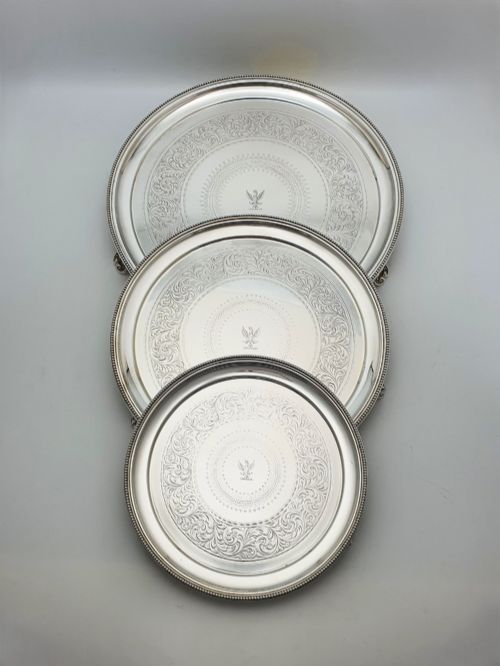
- A tray, usually circular and footed, used for serving drinks or presenting items. In Victorian dining, these were central to formal hospitality.
- Entree dish
- A covered serving vessel intended for the main course of a meal. Pairs of these dishes often feature detachable handles for versatile presentation.
- Charger
- A large decorative plate or tray placed under other dishes or used independently for display and service. These often display elaborate floral borders.
Silver Electroplate Serving Tray: Frequently Asked Questions
How do I clean an electroplated tray?
Use a specialised silver cloth or mild polish designed for plated items to maintain the shine without wearing through the thin silver layer to the base metal underneath.
Avoid harsh chemical dips or abrasive scrubbers, as these can permanently damage the surface engraving and strip the plating entirely.
How do I tell Victorian trays from Art Deco ones?
Victorian examples generally feature heavy floral engraving, grapevine borders, and ornate handles that reflect elaborate nineteenth-century tastes.
Art Deco pieces, such as those from the nineteen-thirties, favour clean geometric lines, streamlined forms, and minimalist decoration associated with designers like Keith Murray.
What is the difference between a salver and a tray?
Salvers are traditionally smaller, rigid, circular plates raised on small feet, primarily intended for presenting glasses, letters, or calling cards.
Trays are typically larger, often rectangular or oval with handles, designed specifically for carrying heavier sets of tea ware or cocktail services.