



Silver Drink Flask
A silver drink flask is a portable pocket companion built for spirits on the move, combining precious metalwork with practical design.
Silver Drink Flask
When you search for a silver drink flask, you encounter pocket-sized vessels designed for carrying spirits during field sports, travel, and social outings. These items span from the Victorian era through the Edwardian period and into the Art Deco years, reflecting shifting tastes in personal accessories.
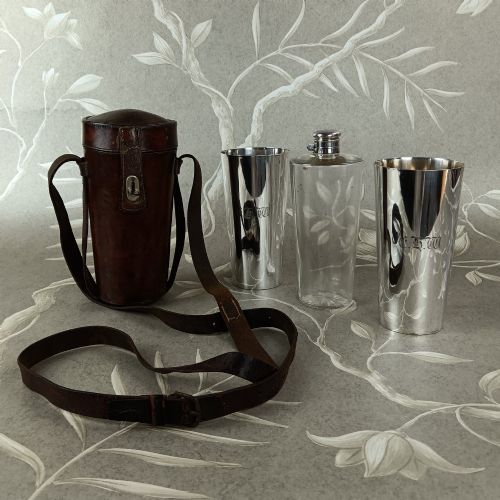
You are most likely to meet silver and glass combinations alongside solid sterling silver examples, often featuring removable drinking cups at the base. Leather cases and crocodile skin coverings also appear frequently, adding texture and grip to the metal body.
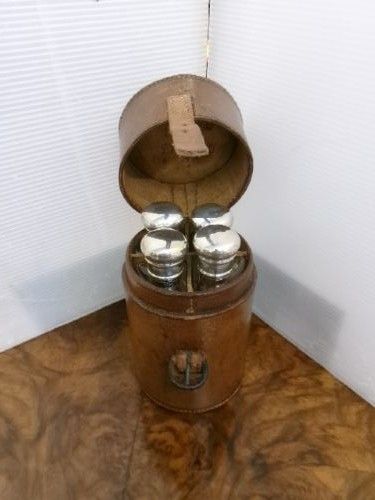
The forms range from flat hip flasks designed to follow the curve of a pocket to round leather cases housing multiple smaller flasks for field campaigns. Makers such as James Dixon & Sons and JB Chatterley & Sons produced many of the enduring examples recorded across our records.
How they were made
Makers shaped sterling silver and silver plate into curved bodies using traditional silversmithing techniques, often incorporating hinged flip tops and threaded cork stoppers to prevent spills. Glass bodies received cut decoration and protective silver mounts, secured with collars soldered directly to the glass neck.
Outer coverings of leather and crocodile skin were tightly stitched and fitted to the silver or glass cores, providing a secure grip for the user. Hallmarks stamped into the metal surface indicate the assay office, year, and maker, anchoring each piece to a specific British workshop and period.
Listings feature sterling silver, silver plate, cut glass, and leather materials spanning Victorian, Edwardian, and Art Deco styles.
What varies in quality
The weight and thickness of the sterling silver body set the baseline for quality, distinguishing solid metal construction from thinner silver plate over base metal. Substantial gauge silver resists denting and maintains crisp engraving on floral patterns and monogram panels.
The integration of fitted components marks the division between standard production and finer output. Removable cups fit flush against the base, hinged caps snap shut with precision, and cut glass bodies display deep, sharp faceting without surface ripples.
James Dixon & Sons·JB Chatterley & Sons
The Silver Drink Flask Glossary
- Hip flask
- A curved pocket container designed for holding spirits. Its gentle arc allows it to sit comfortably against the body.
- Sterling silver
- An alloy containing a high proportion of pure silver combined with other metals for durability. It carries distinct hallmarks denoting its standard.
- Silver plate
- A layer of silver fused to a base metal core. This technique offered a bright finish at a lower cost than solid silver.
- Flip top
- A hinged cap mechanism operated by a thumbpiece for quick access. It relies on an internal cork or washer to maintain a seal.
- Removable cup
- A small drinking vessel fitted to the lower portion of the flask body. It slides off to serve the spirit poured from the container.
Silver Drink Flask: Frequently Asked Questions
How do you use a silver drink flask?
You fill the vessel with your preferred spirit using a small funnel, securing the contents with the attached cork stopper and screw or flip top. The detachable cup at the base slides off to provide a ready measure for drinking.
They were originally designed to fit neatly into jacket pockets or attach to leather field campaign gear for easy access outdoors.
How do I date a silver flask?
Dating relies heavily on the hallmarks stamped into the silver components, which indicate the assay office, standard, and specific year of manufacture. Stylistic indicators, such as Art Deco geometric lines or Victorian floral engraving, also point toward specific decades.
Materials like crocodile skin and cut glass further help narrow down the production era based on prevailing manufacturing trends.
How do I care for silver and glass flasks?
Regular dusting and gentle cleaning with a soft cloth preserve the finish of sterling silver and silver plate without wearing down engraved details. Glass bodies benefit from warm water rinsing to prevent residue buildup from stored spirits.
Leather and crocodile skin coverings require conditioning to keep the organic material supple and prevent cracking over time.