




Silver Double Inkstand
A silver double inkstand brings symmetry and permanence to the desk, housing twin reservoirs for writing.
Silver Double Inkstand
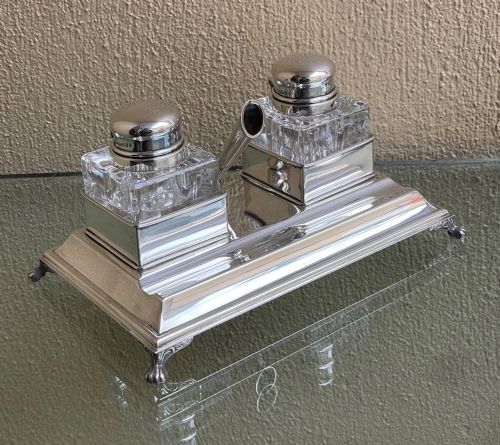
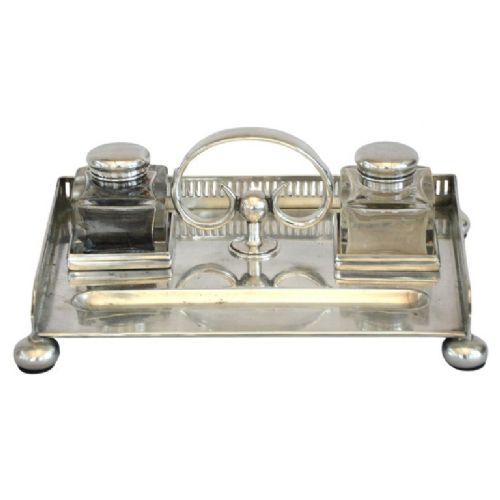
A silver double inkstand provides two matched inkwells mounted upon a desk tray or standish, designed for correspondence and ledger work. These desk accessories appear across various periods from the Georgian era through to the mid-twentieth century, including Victorian and Edwardian examples.
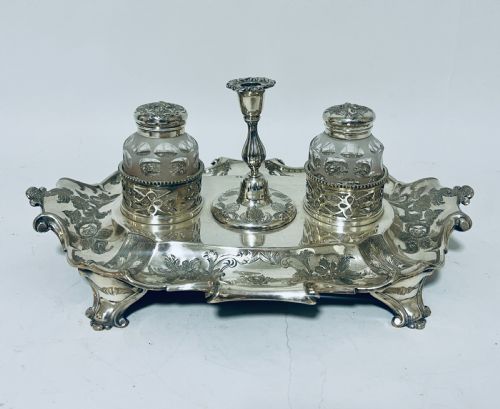
The pieces on this page span solid sterling silver, silver plate, and Sheffield plate, frequently paired with glass or cut glass reservoirs. Some variants incorporate additional desk furnishings such as a chamberstick, taperstick, or stamp box upon the stand.
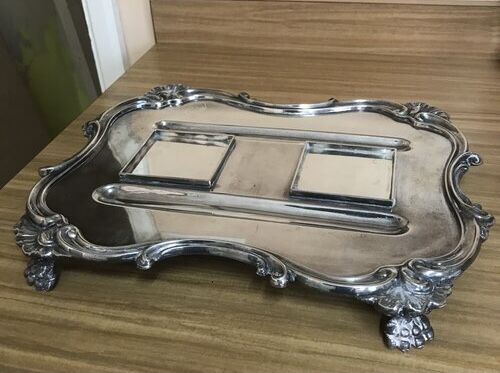
Makers utilised distinct regional styles, producing items ranging from plain silver-plated trays to elaborate Victorian Gothic Revival and Rococo Revival forms. Oak and horn also appear alongside metal bases in the wider selection of desk sets.
Materials and Construction
Silversmiths constructed solid sterling silver and silver-plated stands through forming, casting, and piercing sheet metal, often adding applied borders and decorative feet. Sheffield plate combined a fused layer of silver over a copper base, visible along cut edges and wear points.
Inkwell inserts relied on heavy-pressed or cut glass, topped with hinged silver collars and lids to prevent ink from drying. Organic elements such as horn, oak, and even deer hoof were occasionally integrated into the stands alongside metal components.
Assessing Quality and Execution
Quality rests in the weight of the metal and the crispness of the chased or pierced ornamentation on the tray. Superior pieces maintain matching glass inserts that fit securely within their designated collars.
Maker attribution and London, Birmingham, or Sheffield hallmarks elevate the standing of a piece, particularly when paired with substantial gauge silver. The inclusion of integrated candleholders or stamp boxes demonstrates higher ambition in desk set design.
Walker And Hall·Daniel Holy·Maurice Dufrene·Martin Hall·Elkington And Company·W And R Rabone
The Silver Double Inkstand Glossary
- Standish
- A portable desk stand or tray fitted with inkwells, pen rests, and sometimes a taperstick. It served as the central writing accessory in affluent households.
- Chamberstick
- A small portable candlestick with a pan to catch dripping wax, frequently incorporated into nineteenth-century desk stands for sealing letters.
- Sheffield plate
- An early form of plated metal created by fusing a sheet of silver to a copper core. This technique predates modern electroplating.
- Hallmark
- A stamp or series of marks applied to precious metals indicating standard of purity, place of assay, and year of manufacture.
- Cut glass
- Glass decorated by cutting facets or patterns into the surface using a wheel. It adds weight and brilliance to the inkwell reservoirs.
Silver Double Inkstand: Frequently Asked Questions
What is a silver double inkstand?
A desk accessory featuring a tray and two inkwells for holding black and red ink.
These stands provided a dedicated writing station for correspondence.
How do I date a silver inkstand?
Assay office hallmarks on sterling silver pieces reveal the exact year of manufacture.
Stylistic cues such as Rococo Revival curves or Edwardian simplicity also indicate the period.
Can I still use antique inkwells?
Glass inserts hold modern ink safely if the collars and hinges remain intact.
Careful cleaning prevents corrosion of the silver or plated surfaces.
What is Sheffield plate?
A fused metal technique sandwiching silver over copper before electroplating was invented.
Items from the Georgian period often utilise this method.