



Silver Dining Forks
Silver dining forks bring period weight and traditional craftsmanship to the table, ranging from Georgian table forks to Victorian fish servers.
Silver Dining Forks
Silver dining forks encompass a varied collection of cutlery, serving utensils, and specialised pieces designed for formal meals. When you search for silver dining forks, you encounter everything from single Georgian table forks to canteens and cased fish servers.
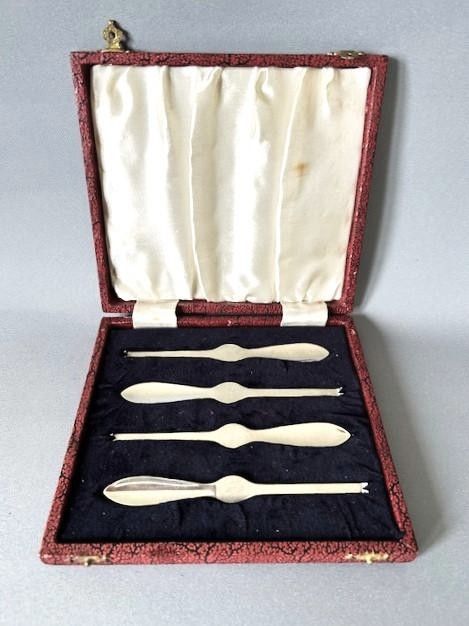
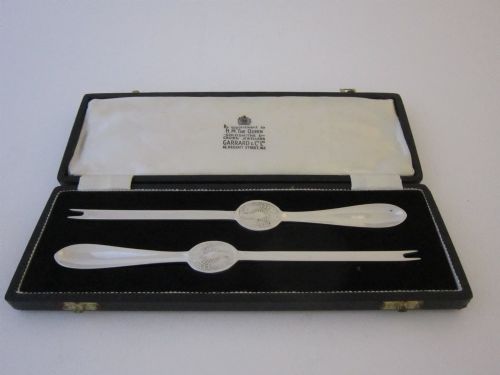
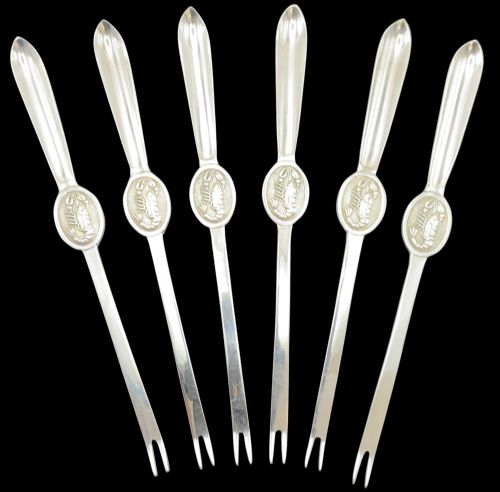
The pieces on this page span several centuries, featuring items from the Georgian and Victorian eras alongside mid-century examples. You will find specific forms such as lobster picks, hors d'oeuvres sets, and roasting forks alongside standard table cutlery.
Originating predominantly from British traditions, these utensils reflect changes in dining habits from the eighteenth century through to the twentieth. They combine functional utility with the decorative styles of their respective periods, including traditional British and mid-century modern designs.
What varies in quality
The distinction between standard items and superior examples lies in the depth of hand-engraving and the quality of the metalwork. Pieces bearing crisp hallmarks and detailed decoration demonstrate a higher level of original craftsmanship.
The choice of handle material significantly alters the character and desirability of a set. Natural additions like mother-of-pearl, horn, and antler require careful selection and shaping by the maker, separating utilitarian items from luxury table services.
Silver Dining Forks Retail Price Guide 2026
Typical asking prices for silver dining forks among the pieces listed under this phrase on Sellingantiques today, from the lower quarter to the upper quarter. They describe what is for sale here now, not the wider market.
Listings incorporate materials spanning sterling silver, silver plate, steel, horn, mother-of-pearl, velvet, and leatherette.
Garrard·Walter & John Barnard
The Silver Dining Forks Glossary
- Sterling silver
- A silver alloy containing 92.5 percent pure silver by mass, standard for quality British tableware.
- Hanoverian pattern
- A traditional eighteenth-century cutlery style distinguished by a central ridge down the stem and a upturned terminal.
- Canteen
- A fitted box or case designed to store a complete set of matching cutlery securely.
- Fish servers
- A matched pair comprising a large fork and knife or slice specifically shaped for serving fish dishes.
Silver Dining Forks: Frequently Asked Questions
How do I clean antique silver forks?
Use a soft cloth and a specialised silver polish designed to remove tarnish without abrading the metal surface.
Avoid harsh chemical dips, particularly on pieces with organic handles like horn, mother-of-pearl, or antler, as these materials require gentle care.
Can I use antique silver forks daily?
Many people enjoy using sterling silver cutlery for everyday meals, provided they wash the pieces by hand promptly after use.
Silver plate items also withstand regular use, though older plated pieces require care to preserve the underlying metal.
What is the difference between sterling and plate?
Sterling silver consists of solid precious metal throughout the entire piece, marked with standard assay office symbols.
Silver plate involves a thin layer of silver bonded to a base metal substrate, which was common in Victorian and twentieth-century manufacturing.